What Most People Get Wrong
Most homeowners here treat weatherstripping as a grab-it-off-the-shelf fix. It isn't, not in this city. Brooklyn Park's housing stock runs from 1957 through 2007, with the bulk of it going up through the 1980s and 90s. That's a fifty-year spread of door frame depths, track widths, and bottom-seal channel shapes. A seal kit sized for a 2005-built garage won't seat right on a door frame from a 1970s build, even though both look like a standard single or double bay from the driveway.
The second mistake is buying the thickest seal available and assuming thicker means tighter. On an older frame with a shallow channel, an oversized bottom seal just buckles under the door weight instead of compressing flat. You end up with a seal that looks installed but still lets a draught through at the corners, where the door meets the jamb. We see this on calls where someone already "fixed" the gap themselves within the past year and the cold air is still coming through in the same spot.
Leaving It Alone
A cracked or pulled seal doesn't stay a small problem through a Minnesota winter
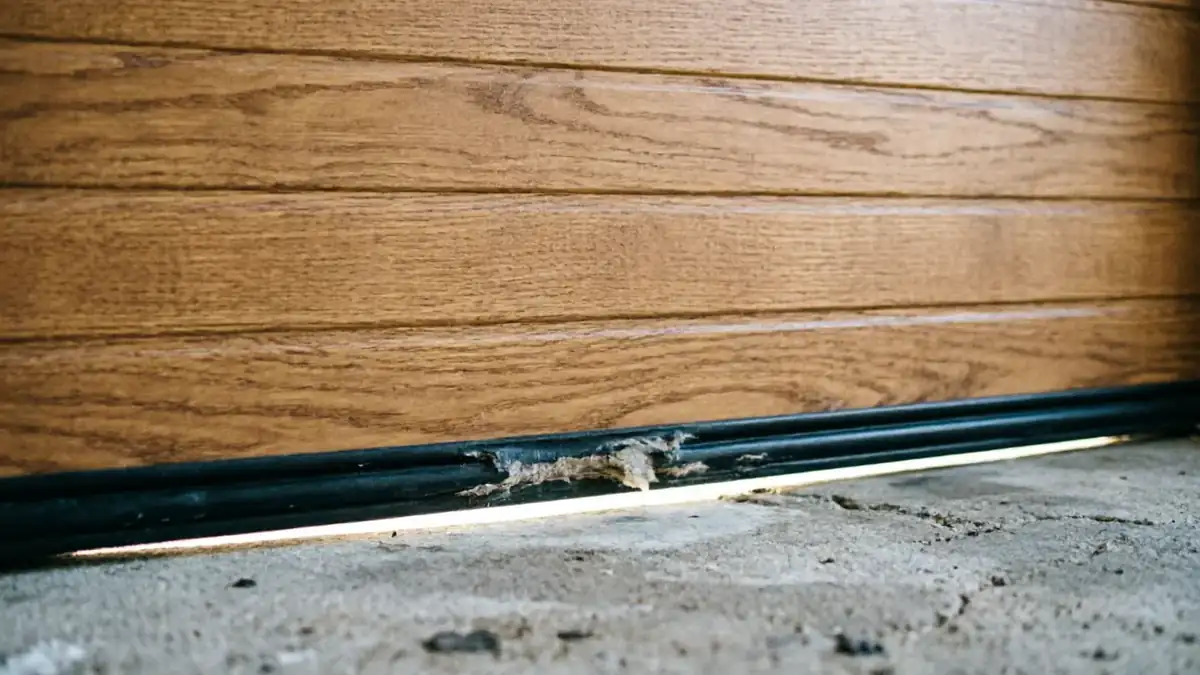
Brooklyn Park sits in a severe cold climate band, and that means repeated freeze-thaw cycling on anything rubber or vinyl mounted outside. Each cycle flexes the material a little more. A seal that's merely stiff in November is often split by February, and once it splits, the gap doesn't just let in cold air - it lets in meltwater that refreezes against the bottom of the door panel.
On the older end of this city's housing stock
Doors built before the 1990s often have thinner bottom astragals to begin with, so there's less material to crack before you're looking at a visible gap under the door. Left alone, that gap widens the hardware too - the retainer track holding the seal can pull loose from repeated ice expansion, which turns a seal replacement into a track repair. It's a cheap fix early and a more involved one if you wait a season.
The Problem
The actual failure point is almost always the same: a seal compound that was fine for the temperature range it was made for, installed on a frame from an era when seal channels were cut to a different standard. Across Brooklyn Park's mix of 1980s-90s construction and the smaller share of newer builds up through 2007, we see two distinct channel depths and at least three bottom-seal profiles still in service.
When a seal doesn't match the channel, it either sits loose and whistles in wind, or it's forced in tight and splits along the flex line within a season or two of severe cold. Side seals have it worse - they're stapled or screwed into jamb trim that's often original to the house, and that trim has shrunk or warped over decades of temperature swings. Re-sealing without checking the channel and trim condition first just repeats the failure. The honest limitation here: if the jamb trim itself has rotted or pulled away from the framing, no seal kit fixes that - the trim needs replacing before the seal will hold.
How Local Conditions Play In
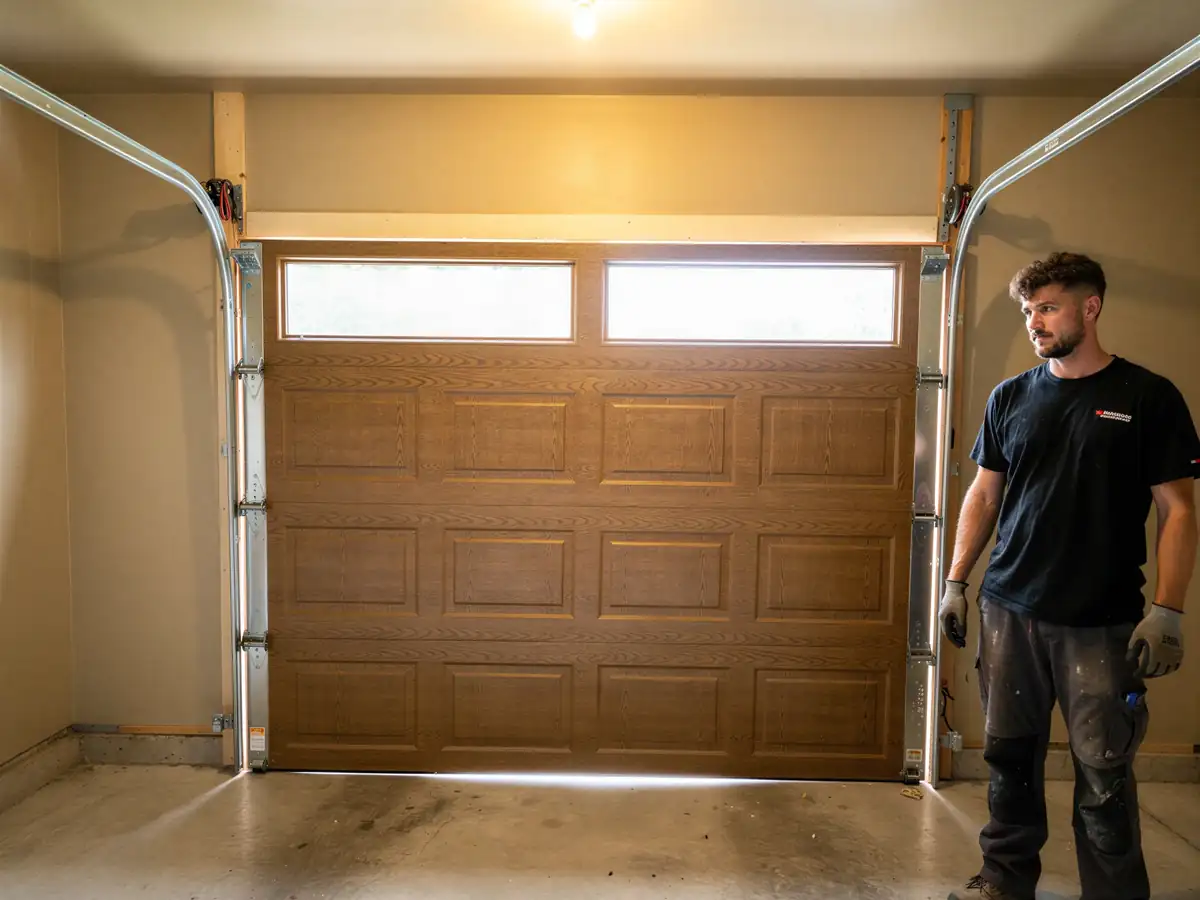
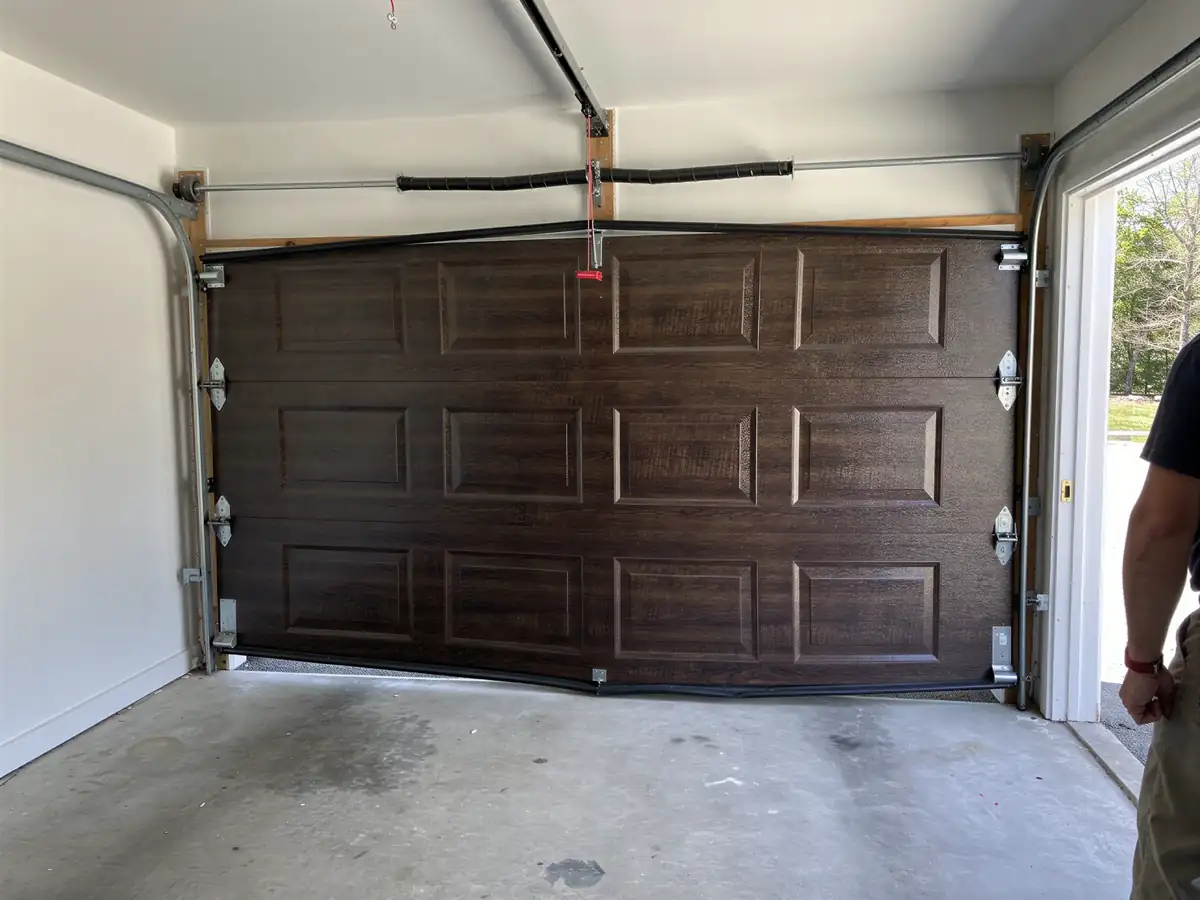
Severe cold doesn't just make seals brittle - it changes how the door behaves against them. Steel panels contract in deep cold, which opens a small gap at the bottom corners even on a door that was sealing fine in October. On houses built in Brooklyn Park's peak construction years, from the late 1970s through the 1990s, that contraction gap lands right where the original seal channel is narrowest, so the draught shows up first at the corners, not the center.
Frost heave under the slab adds another layer specific to this area's older poured floors. A quarter-inch of floor movement over a cold winter is enough to throw off a seal that was compressing evenly when it was installed. We check slab level as part of any seal call here, because resealing a door sitting on a heaved slab just means doing the job again next year.