Doing It Yourself
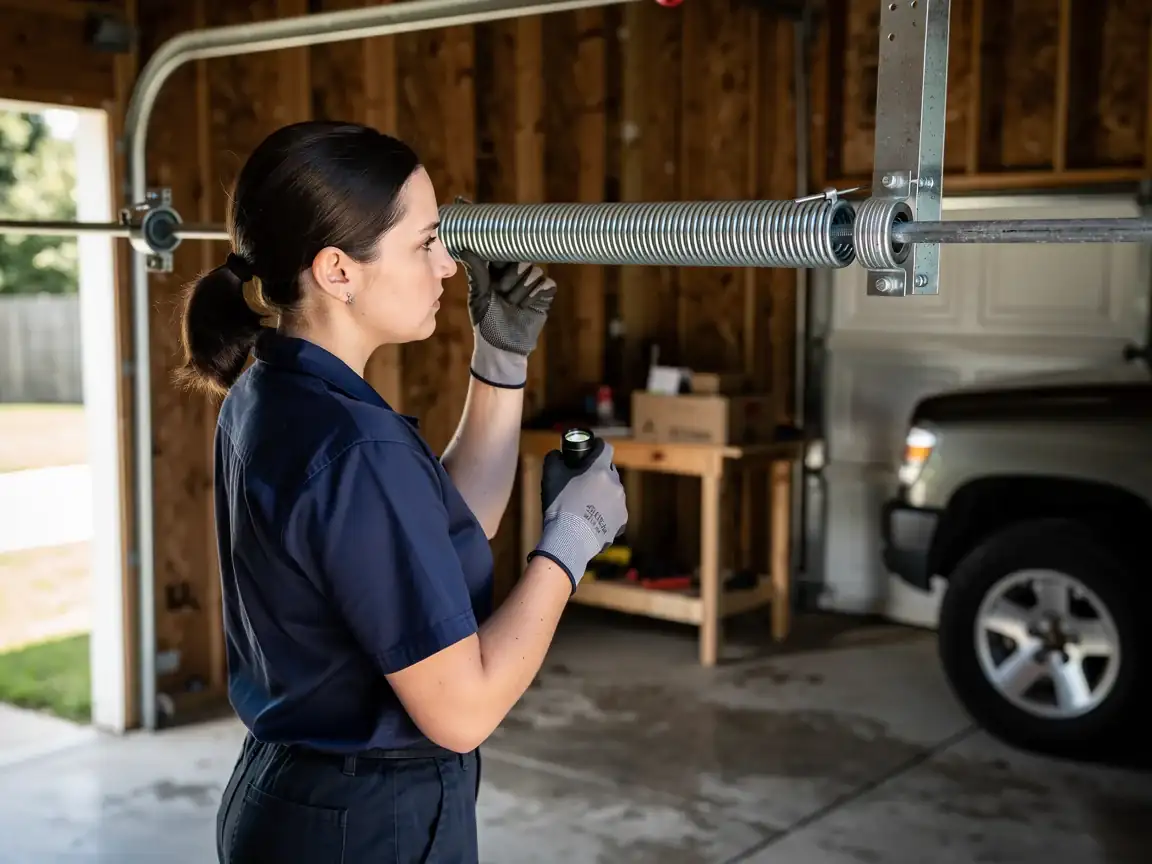
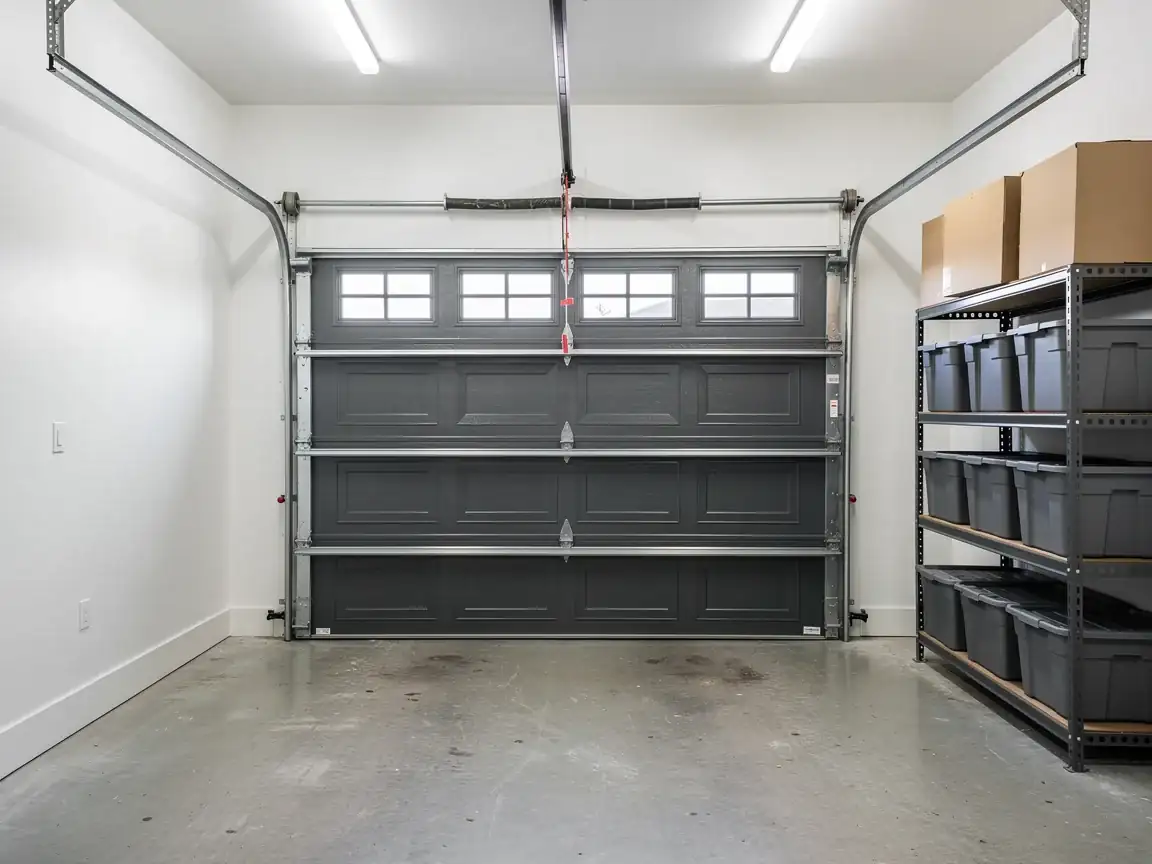
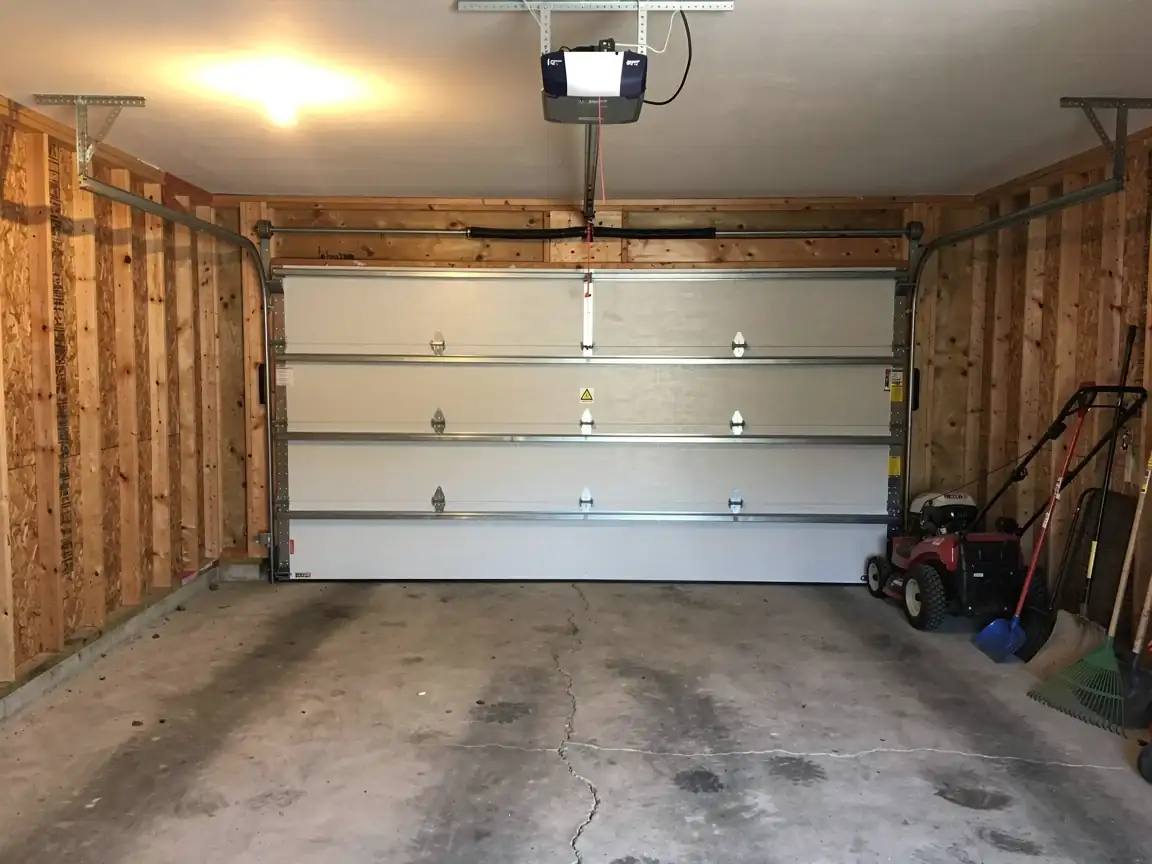
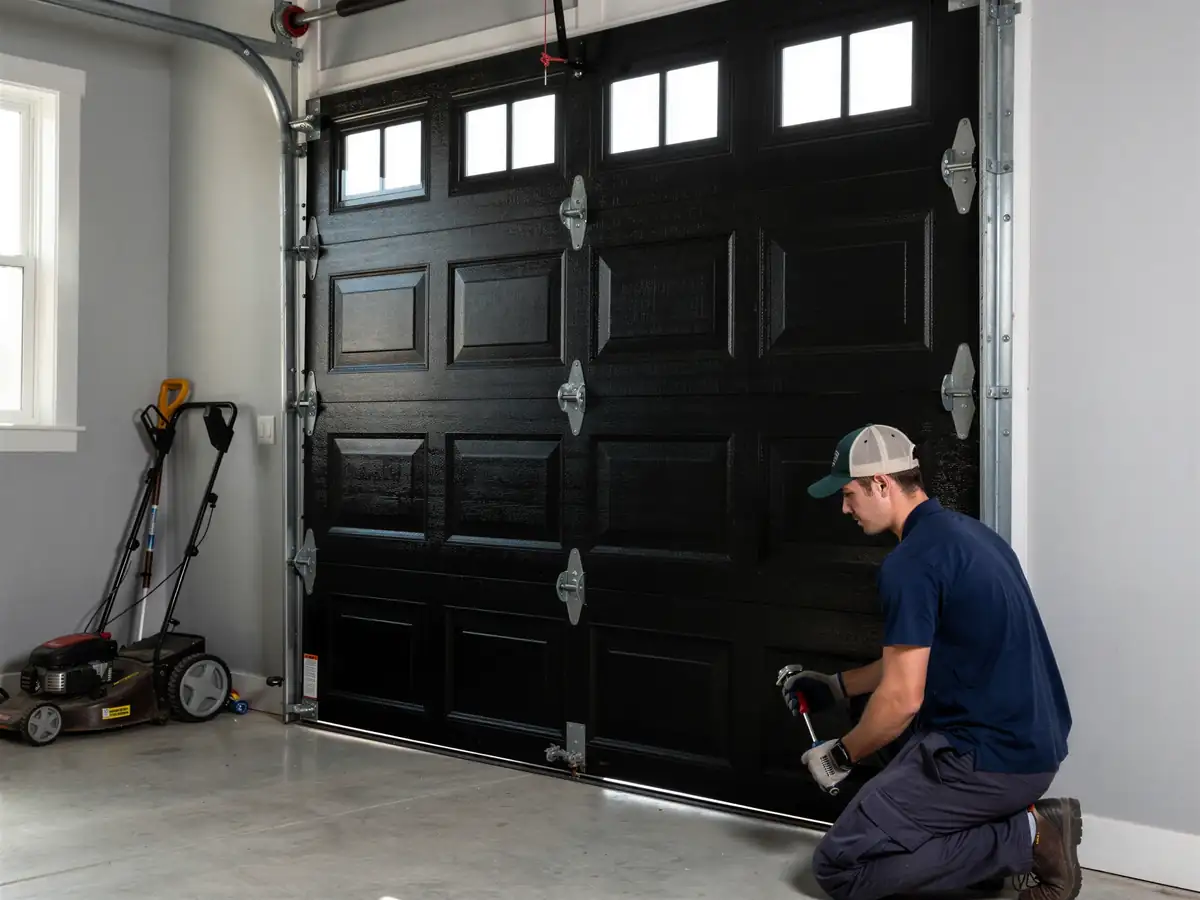
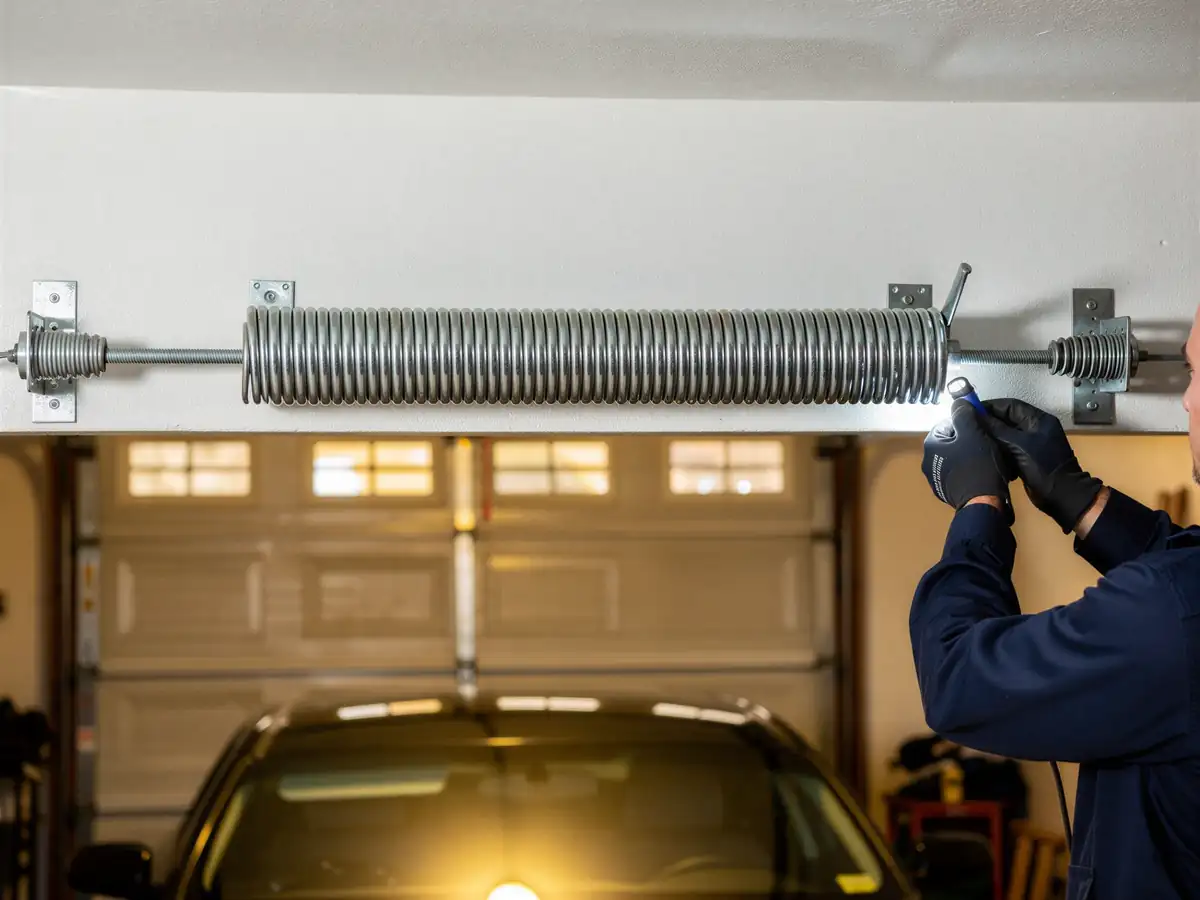
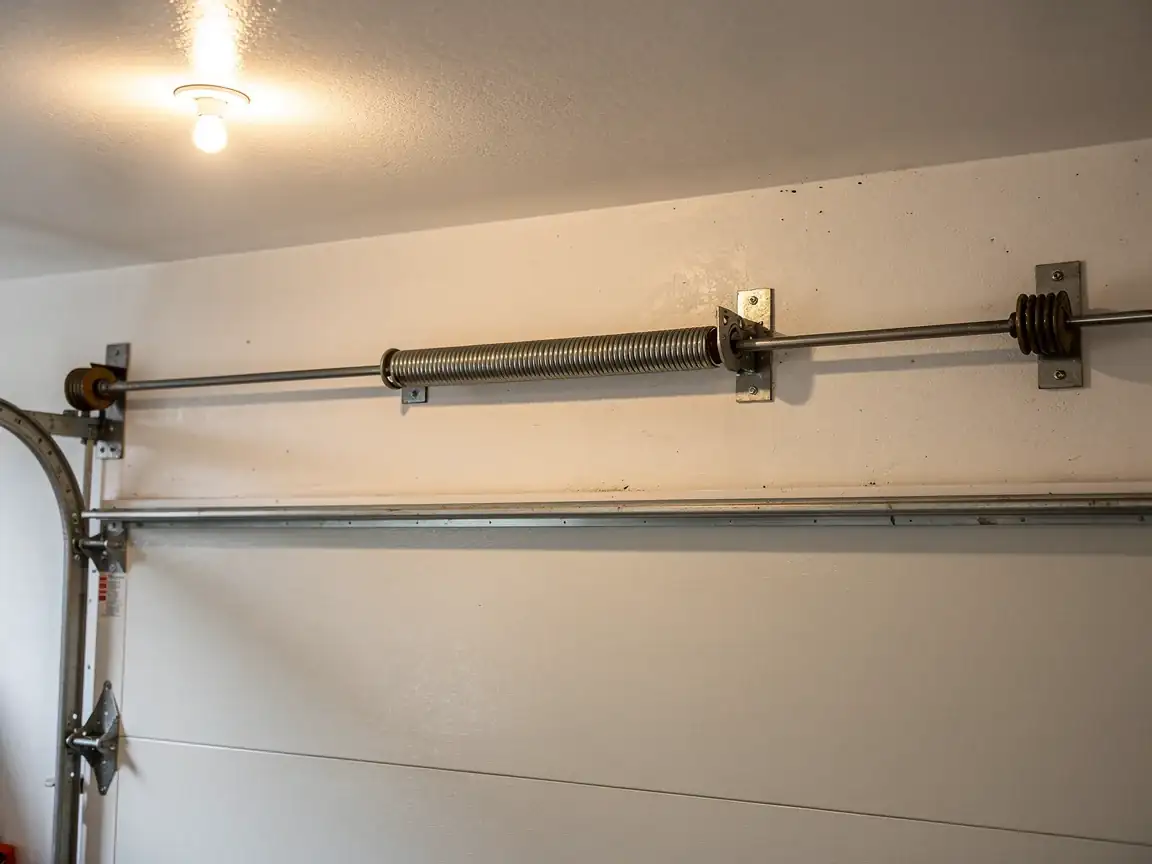
If your door is heavy to lift by hand with the opener disconnected, that's a torsion spring doing less work than it used to, and that's not a weekend fix. Torsion springs are wound under real tension and the tools to wind or unwind them safely aren't something most garages have lying around. You can do a few things yourself without much risk: check that the track bolts are snug, clean dirt off the rollers, and listen for grinding versus just loud clunking. A grinding noise usually means a bearing or roller is going. A loud bang followed by the door refusing to open almost always means a spring has let go, and at that point the door is dangerous to touch - the cable is holding tension with nothing backing it up. With median household income in this area around $110,833, we understand the instinct to save the service call, but a spring job is one of the few garage door repairs where a mistake can break a hand or worse. Weatherstripping swaps and bulb changes are fair game for a homeowner. Springs, cables, and anything under the torsion bar are not.
Why It Happens Here
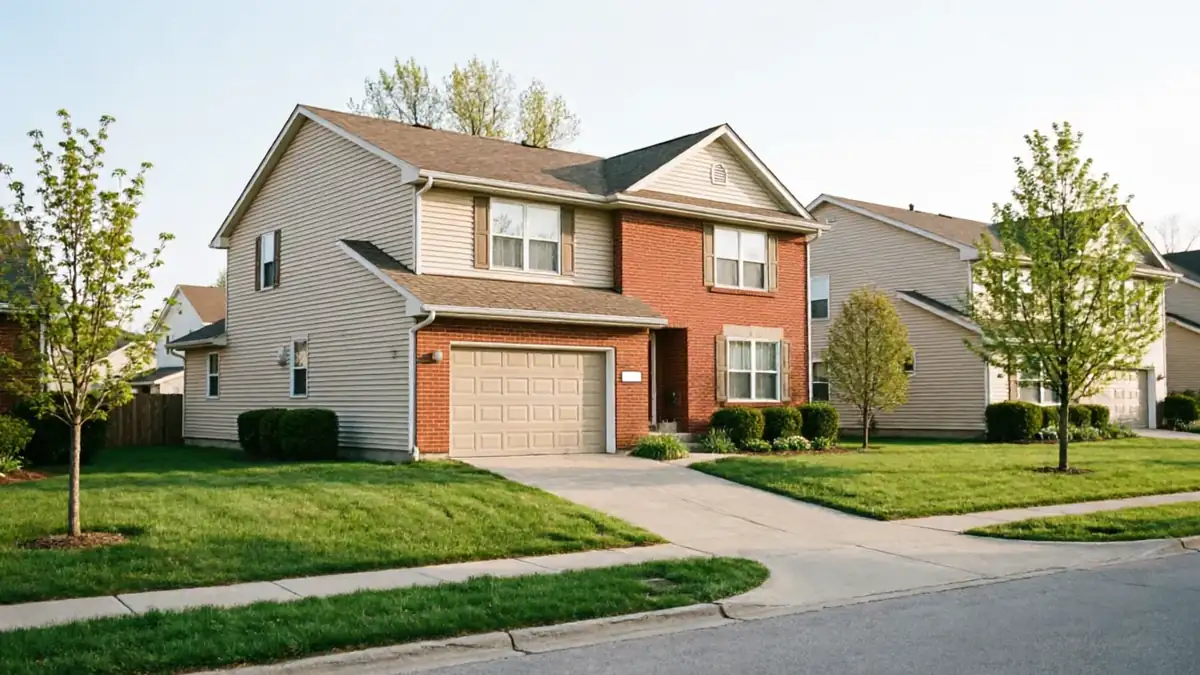
Housing across this service area was built mostly between 1957 and 2007, with the bulk going up in the 1980s and 90s - which means a lot of torsion springs are now 25 to 40 years into a part rated for roughly 10,000 open-close cycles. That's an age where spring steel has simple fatigue working against it, and our winters make it worse. This is a cold-severe climate zone, and steel contracts and gets more brittle as temperatures drop, so a spring that's been slowly weakening all year is more likely to actually snap on a sub-zero morning than in July. We see the calls spike the same way every winter: a door that lifted fine in October suddenly won't budge, or lets go with a bang, once overnight lows settle in. It's not bad luck, it's a spring at the end of its rated life meeting a 15-below morning. Houses in the Osseo, Brooklyn Center, and Champlin area share the same housing-era profile, so the pattern isn't unique to one block - it's the stock itself aging out at the same pace.
How It Shows Up
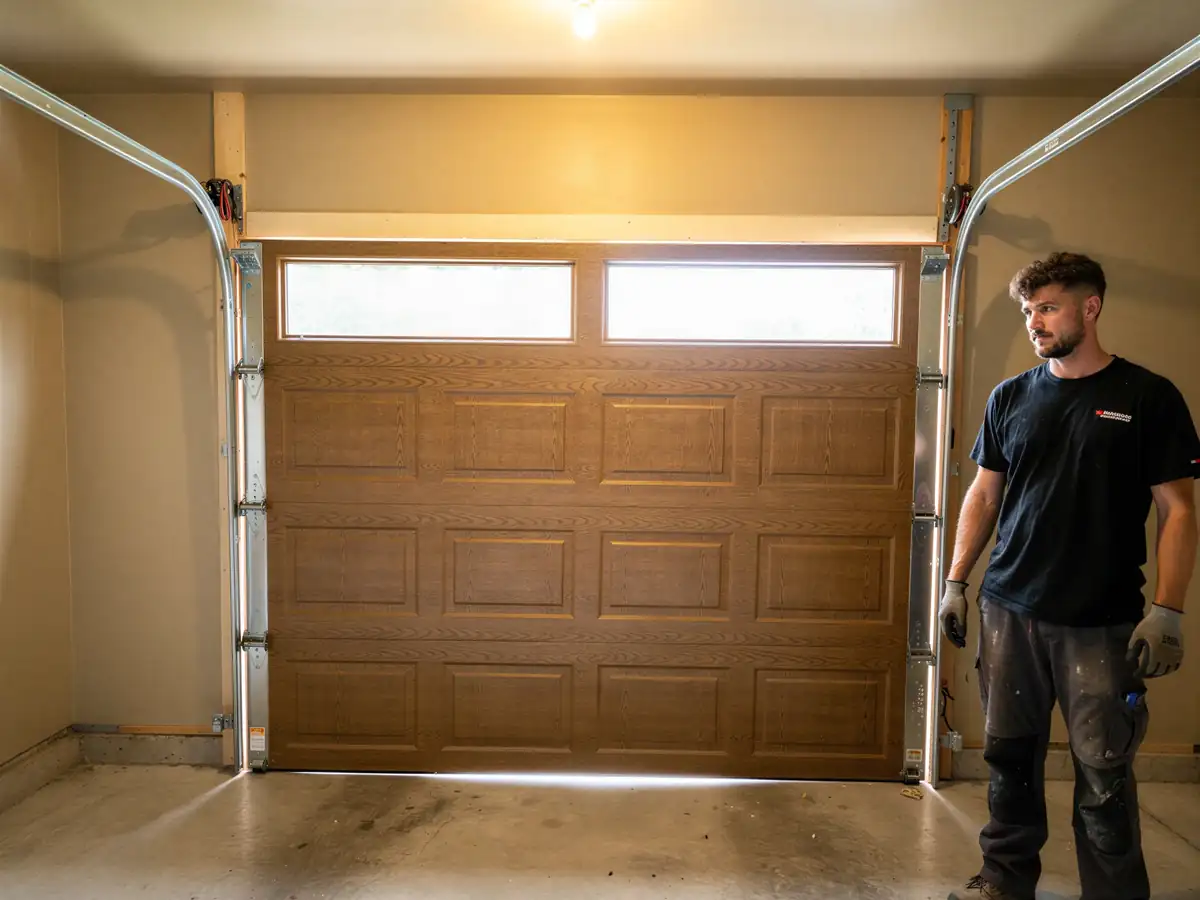
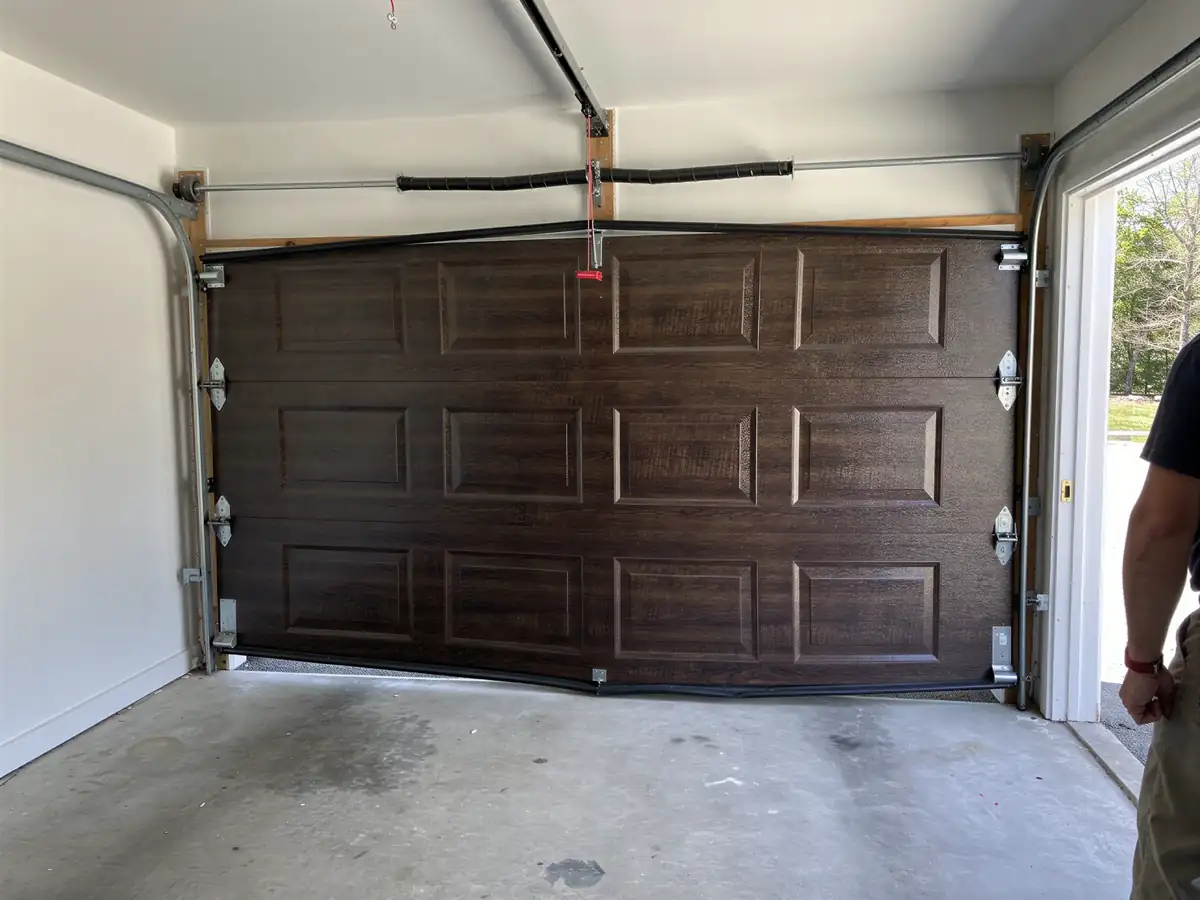
Most spring failures don't start with a bang - they start with a door that's gotten noticeably heavier to lift by hand over a few months, or an opener that strains and takes longer to get the door moving. Some owners notice the door hanging slightly crooked, one side higher than the other, which usually means one spring has already lost tension while its partner is still holding. Others hear a sharp metallic snap from the garage with no warning at all, usually on a cold morning, and find the door stuck shut or stuck open depending on where it was sitting. On older openers paired with worn springs, you'll sometimes see the opener motor smoking faintly or smelling hot, because it's been compensating for the lost spring tension for weeks before giving out itself. If you're hearing a new grinding or squealing sound layered under normal door operation, that's usually a roller or bearing issue riding along with the spring wear, not a separate problem.