Doing It Yourself
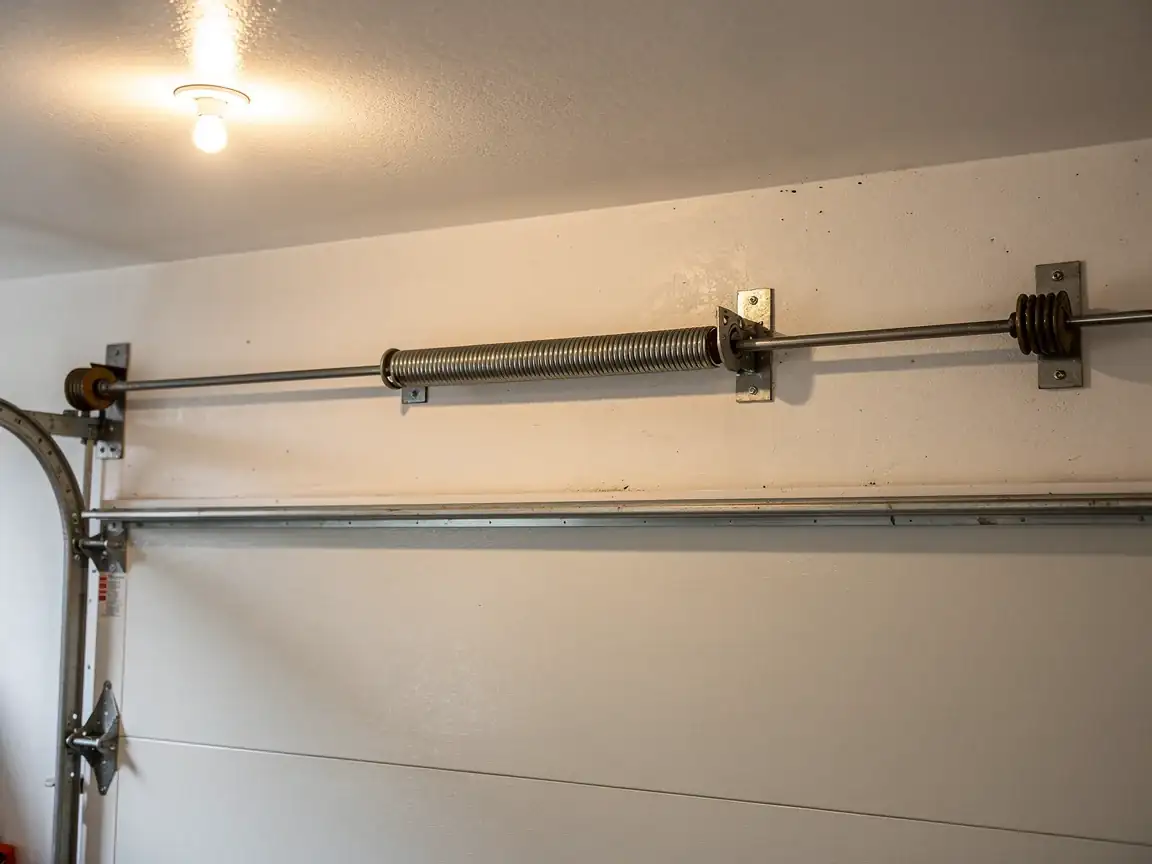
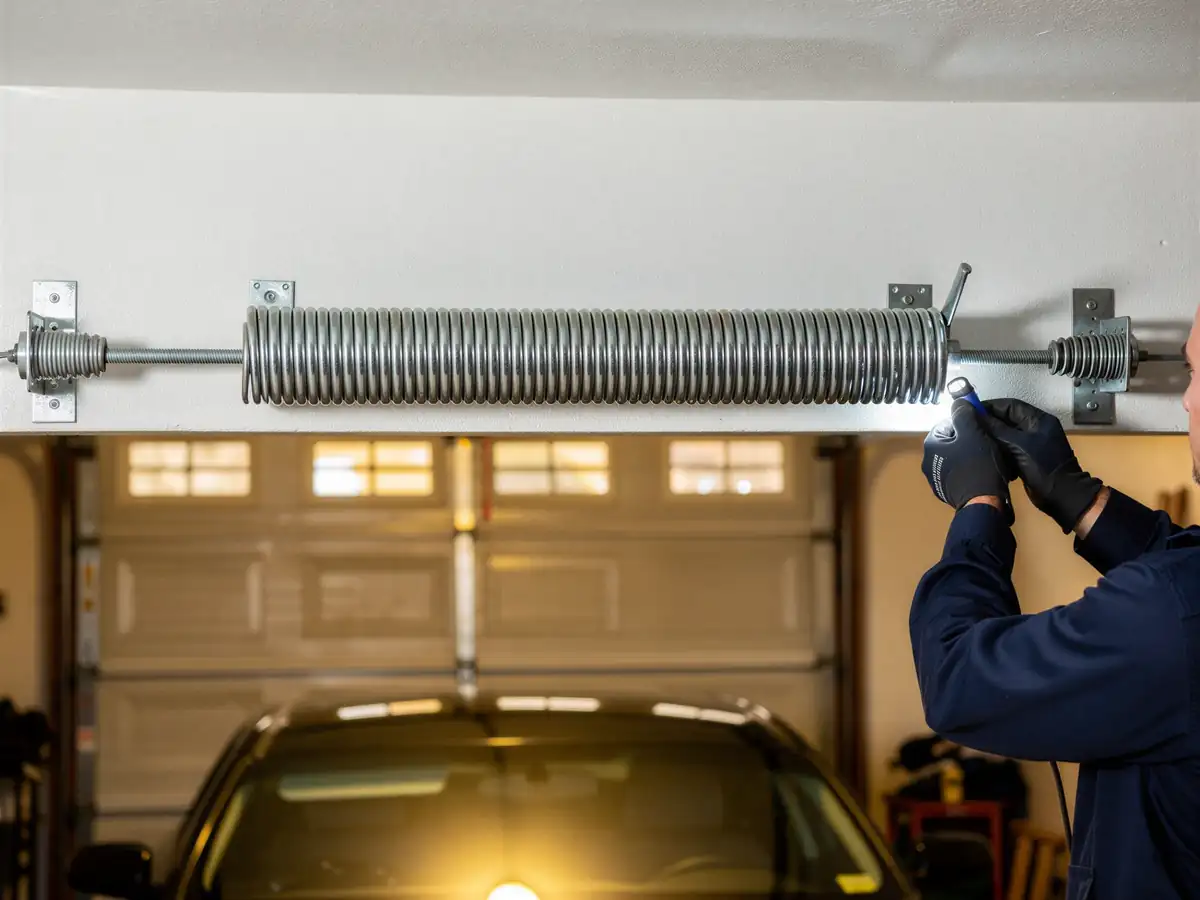
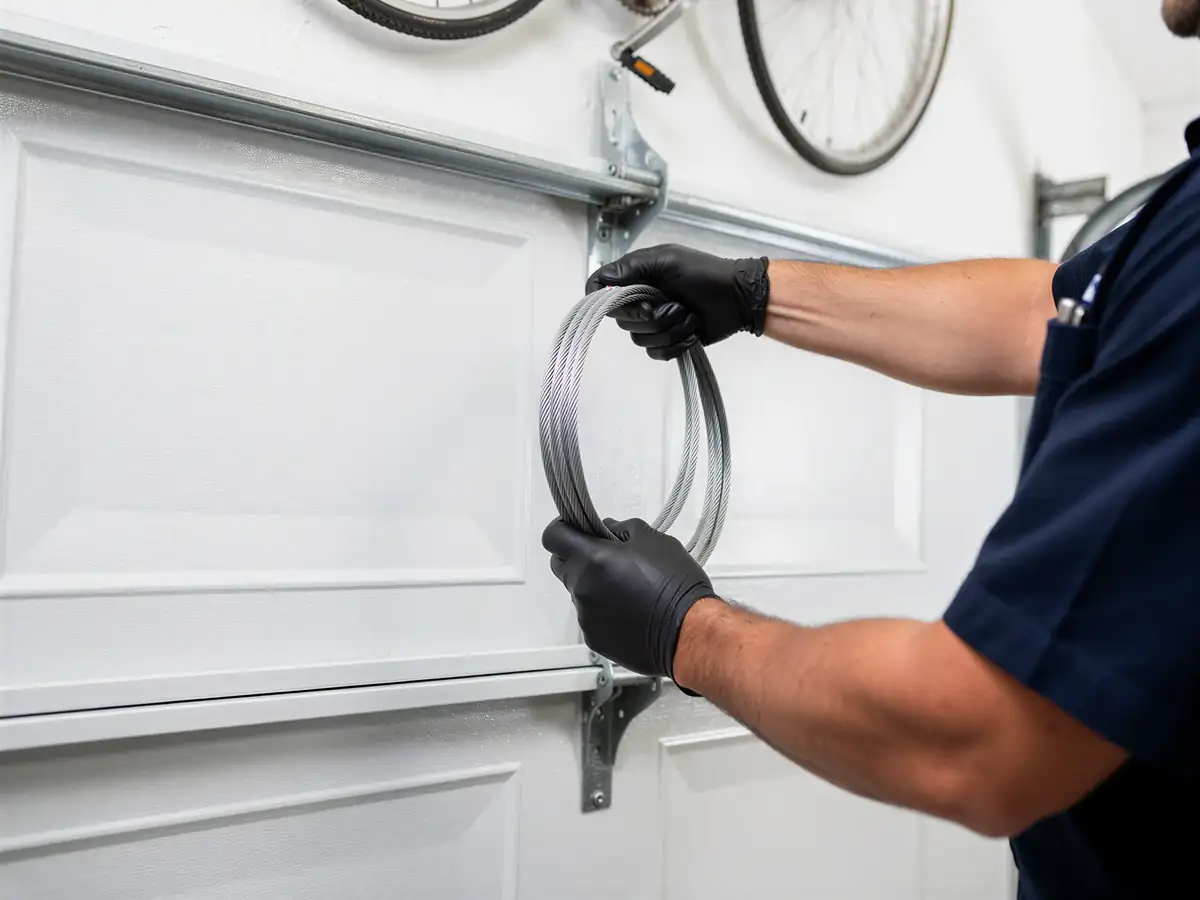
A lift cable looks like a simple piece of hardware - a length of aircraft cable running from the bottom bracket up to the drum. What's not simple is the tension sitting behind it. On most residential doors, that cable works against a wound torsion spring or a pair of extension springs, and either one can let go with enough force to break a finger or worse.
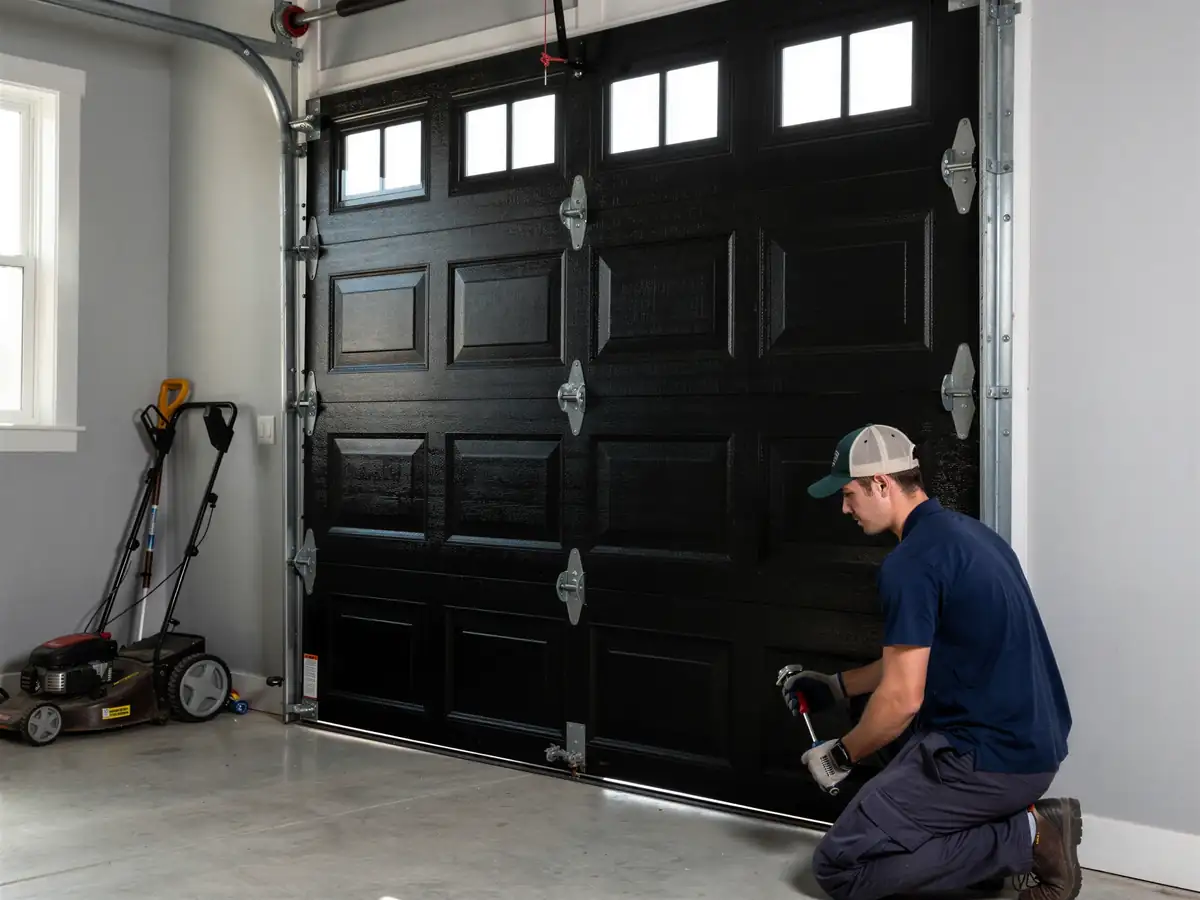
We won't tell you cable repair is a weekend project, because it isn't. Replacing a frayed or snapped cable means releasing spring tension safely first, and that step is where most DIY attempts go wrong. If you're comfortable with basic maintenance, you can check for fraying at the bottom bracket, keep the tracks clear of debris, and listen for a cable that's started to hum or pop during travel - that's worth calling in before it fully lets go.
Here's the honest limit: if the cable has already snapped and the door is sitting crooked or jammed in the track, don't try to force it open or closed, and don't cut the old cable yourself. That's a service call, not a project. Open the door manually only if the opener is disengaged and the door is otherwise free to move.
What the Fix Involves
A proper cable repair starts with figuring out why the cable failed, not just swapping it out
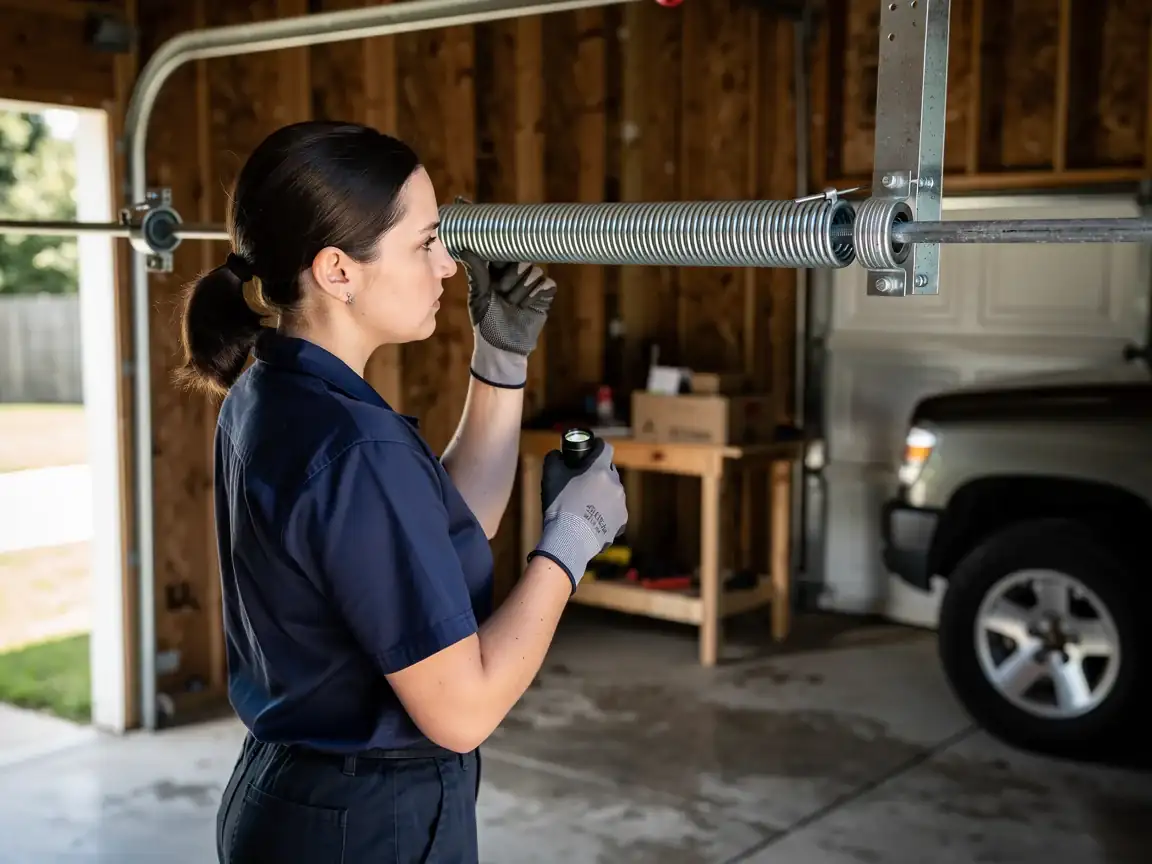
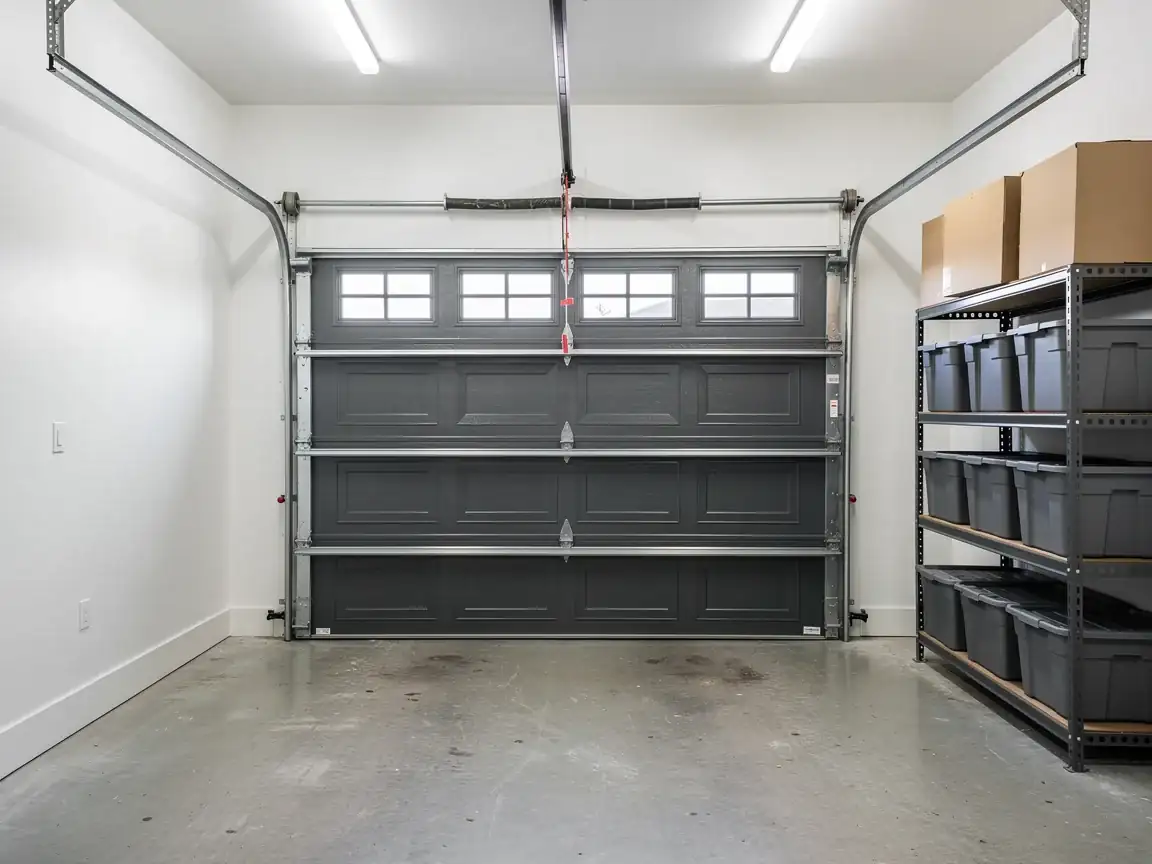
We check the drum for grooving or a chip that's been sawing at the cable, check the bottom bracket for a bent or sharp edge, and check that the track is straight enough that the cable isn't riding under load it was never built for.
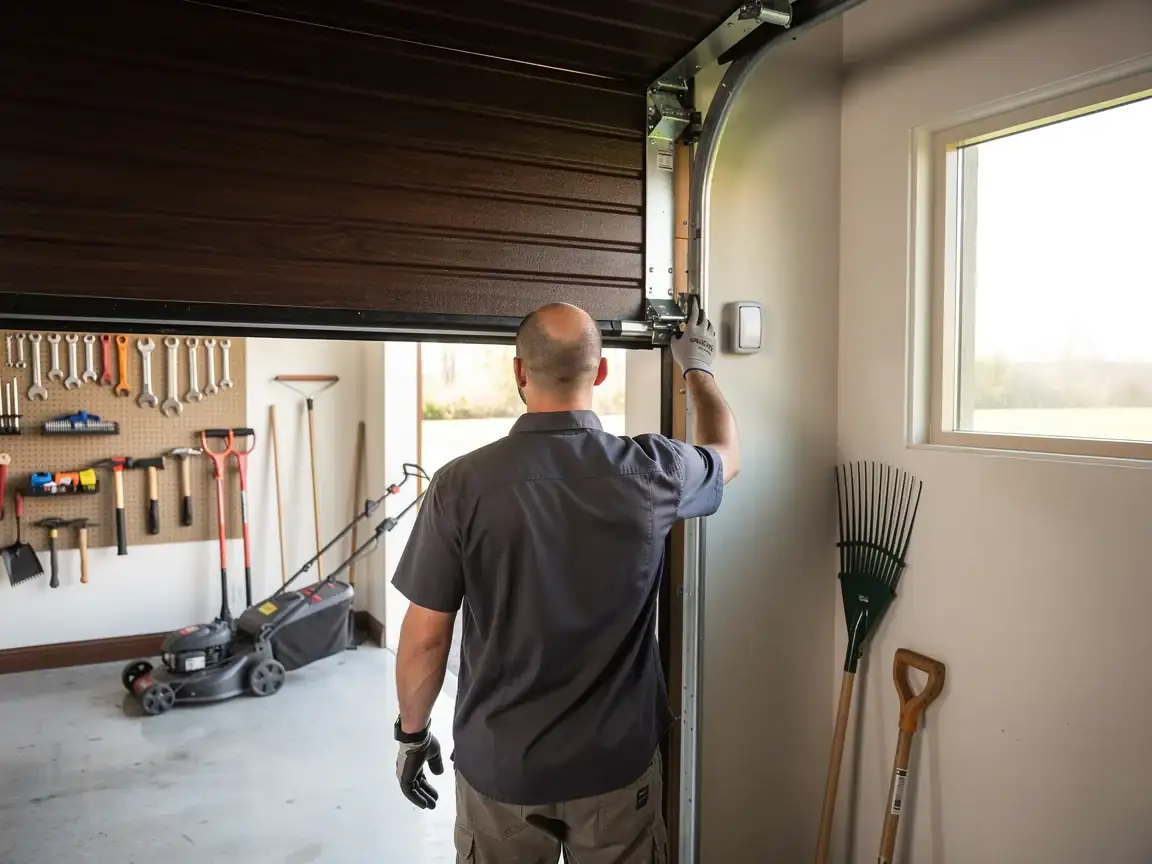
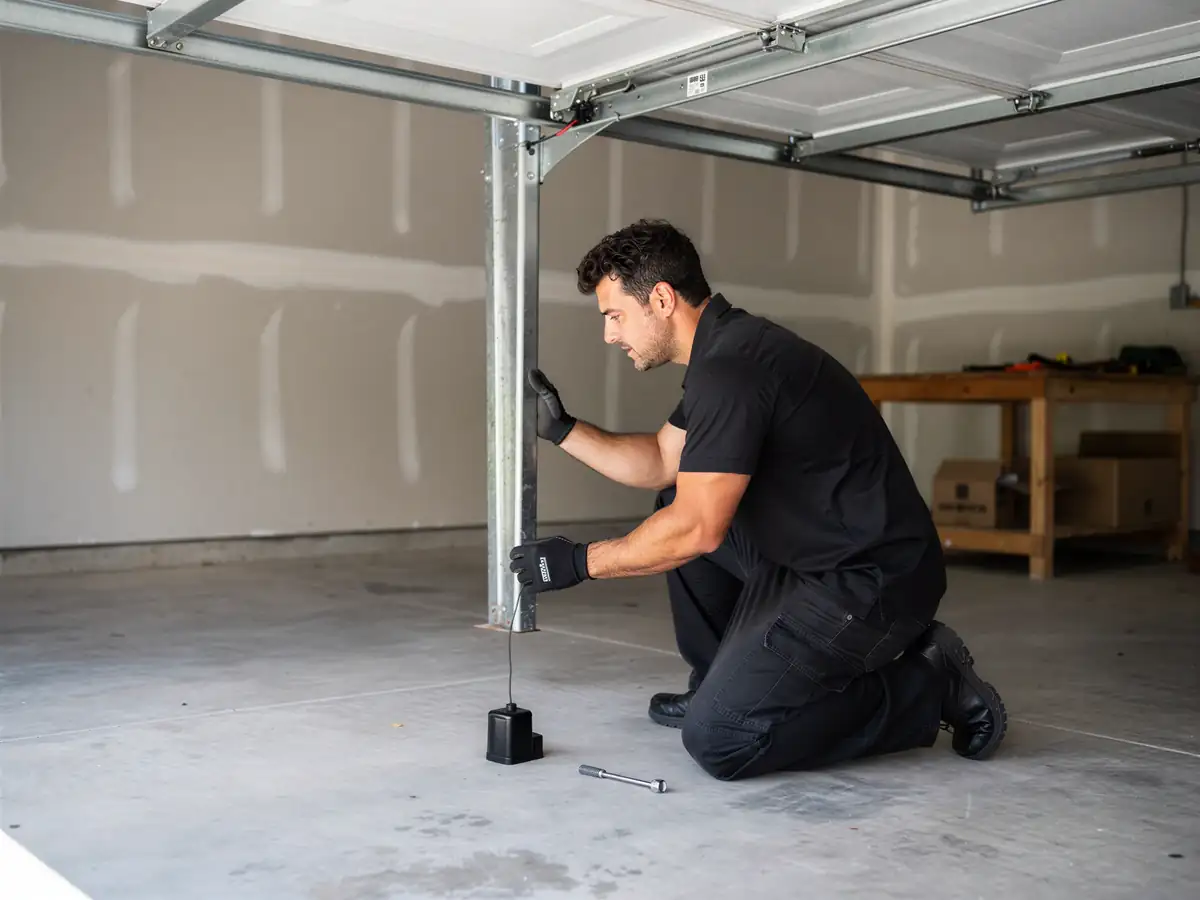
Once we know the cause, we secure the door, release the spring tension on both sides evenly
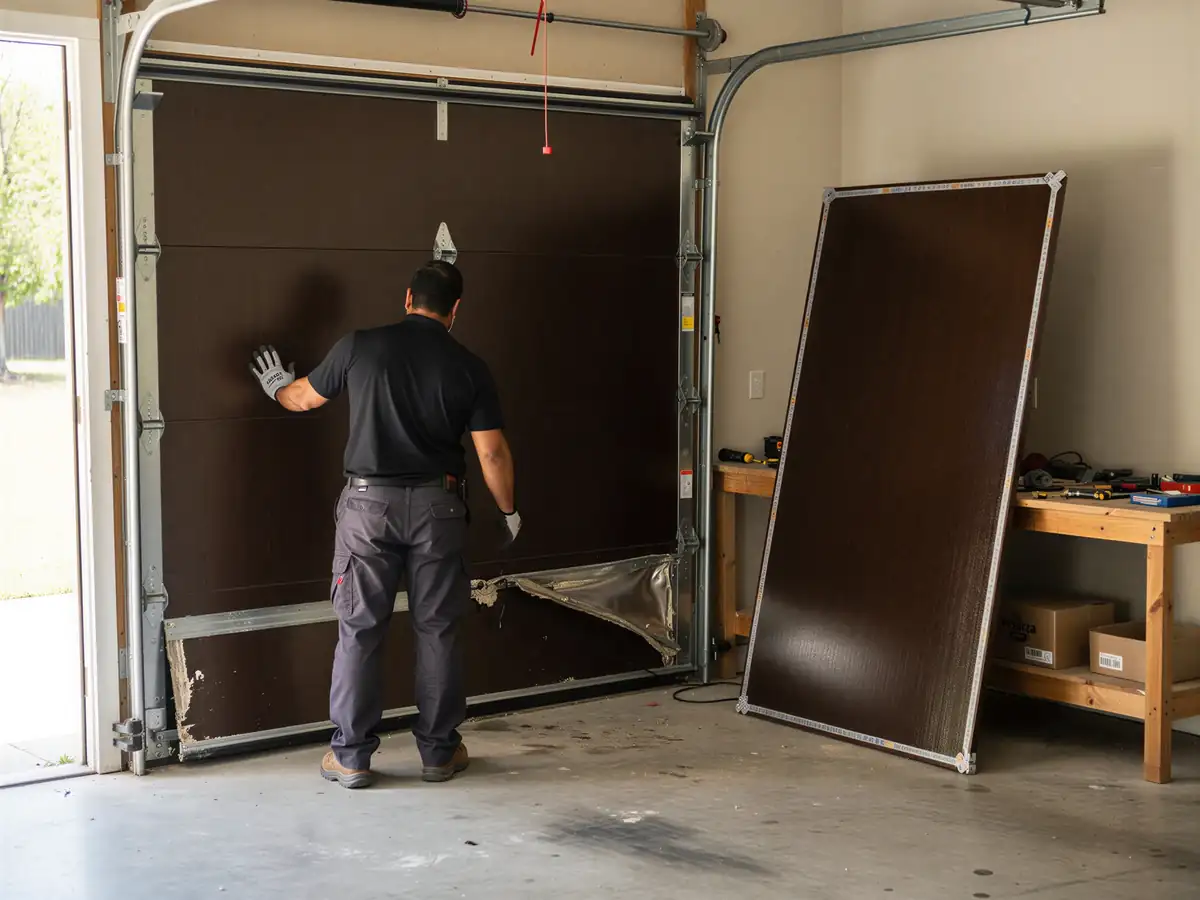
And pull the old cable. We measure for the replacement rather than guess - cable gauge and length vary by door weight and track type, and a cable that's slightly wrong will wear out again fast. The new cable gets seated on the drum, tensioned to match the opposite side, and run through a full open-close cycle before we call it done.
On a double door, we almost always check both cables even if only one has failed
Since they carry the same load and tend to age at the same rate. If the drum itself is scored from the old cable, we replace that too rather than set a new cable on a part that's already damaged it once.
Why It Happens Here
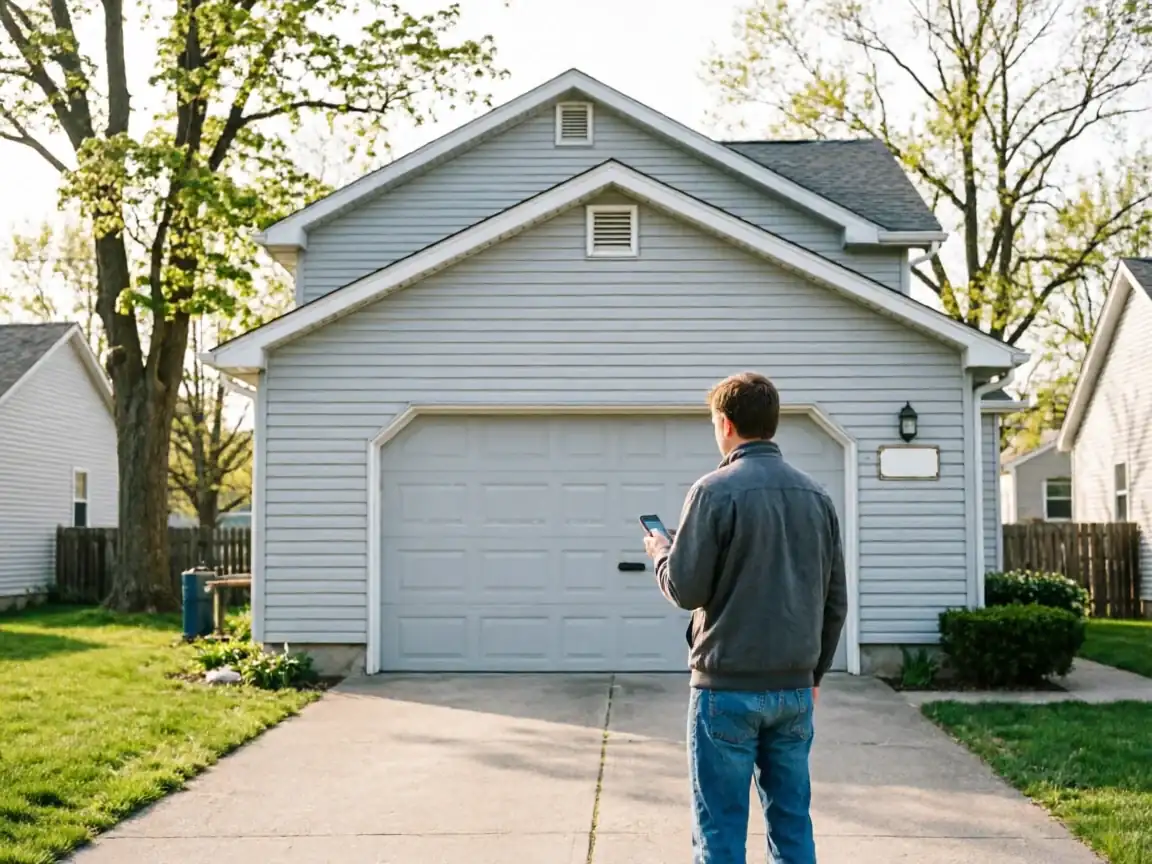
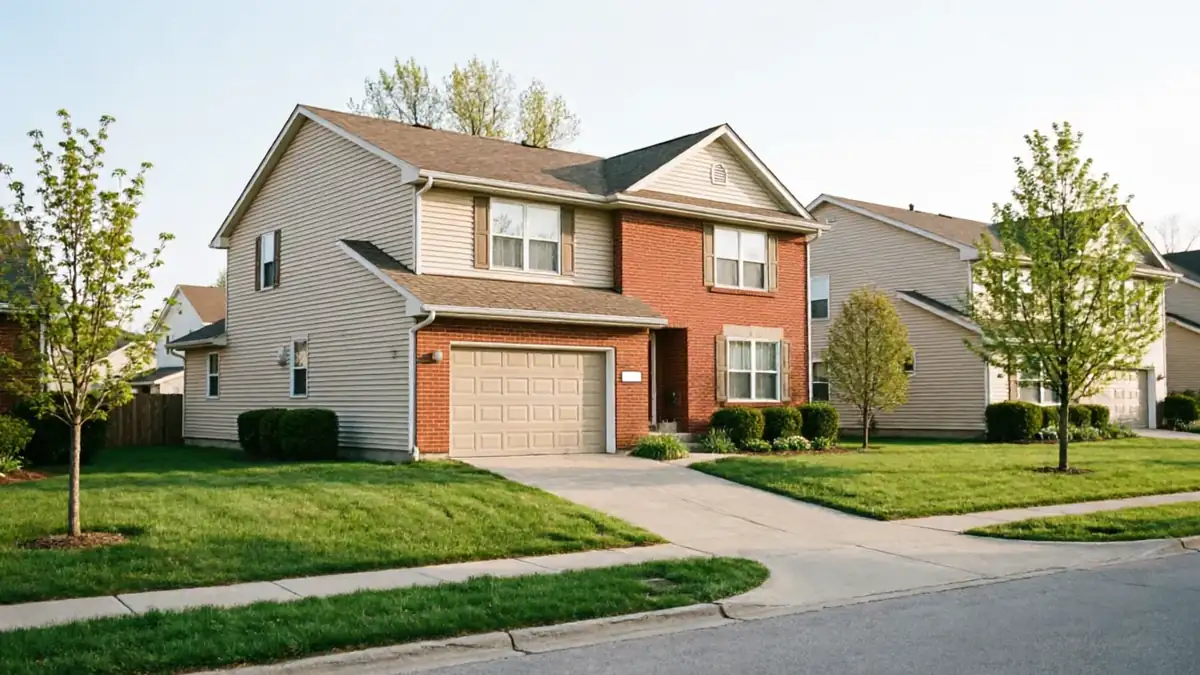
Most houses in and around Brooklyn Park went up between 1957 and 2007, with the bulk of that stock built during the 1980s and 90s. That matters for cables specifically: a cable installed when a house was built in that window is now anywhere from two to six decades old, well past the point where galvanized strands stay flexible.
Brooklyn Park sits in a cold climate zone, and that cold is severe enough to turn galvanized lift cables brittle by their second decade. Cold contracts the metal, and a cable that flexes thousands of times a year through a winter like this one develops stress fractures at the drum and bottom-bracket ends long before it looks worn from the outside. That's a different failure pattern than a door that just gets opened and closed a lot in a mild climate - here, the cold does part of the work.
Osseo sits two miles from Brooklyn Park, and homes there share the same cold-climate cable wear we see here, along with similar housing stock. With a median household income of $110,833 across the area, most owners choose cable replacement over a full door swap when the drum and track check out fine, since a worn cable rarely means the whole door is bad.
How It Shows Up
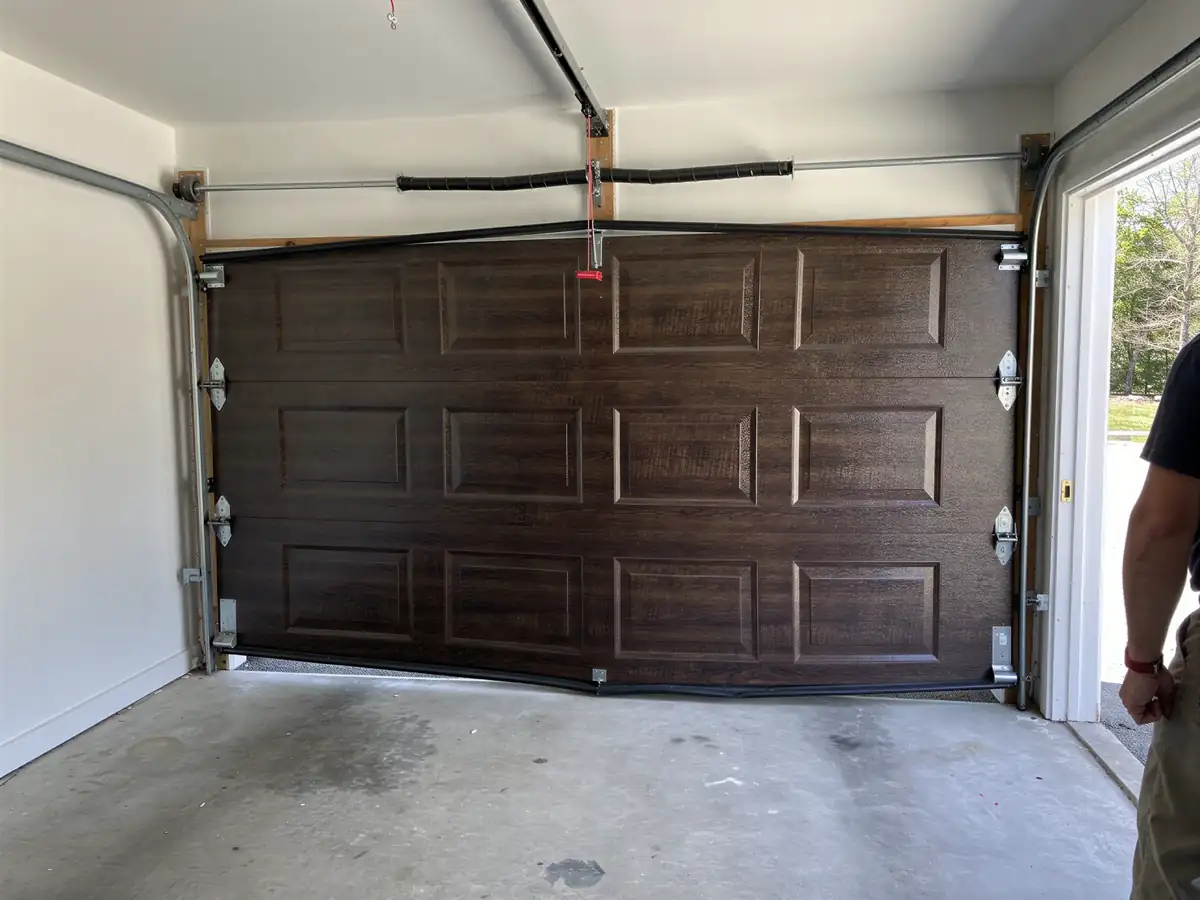
The most obvious sign is a door that hangs crooked - one bottom corner sitting lower than the other because one cable has stretched or started to unravel while the other holds. You'll often hear it before you see it: a popping or snapping sound partway through the cycle as the last strands give out.
Fraying shows up first at the bottom bracket, where the cable bends sharply every time the door moves. Look for small wire ends sticking out like a broom's bristles, or a dull, flattened spot on the cable where it rides the drum. If the door opens partway and stops, or reverses on its own, that's often a cable that's slipped off the drum rather than one that's fully broken.
Across the roughly 296,766 households in this part of the metro, a large share - about 150,847 owner-occupied houses - still run on garage door hardware original to the home, which means a lot of cables nearing the end of their service life at the same time. If your door feels heavier to lift by hand than it used to, or sags noticeably when the opener is disengaged, don't keep running it through full cycles. A cable that's one strand from failing can let go without warning.