What Most People Get Wrong
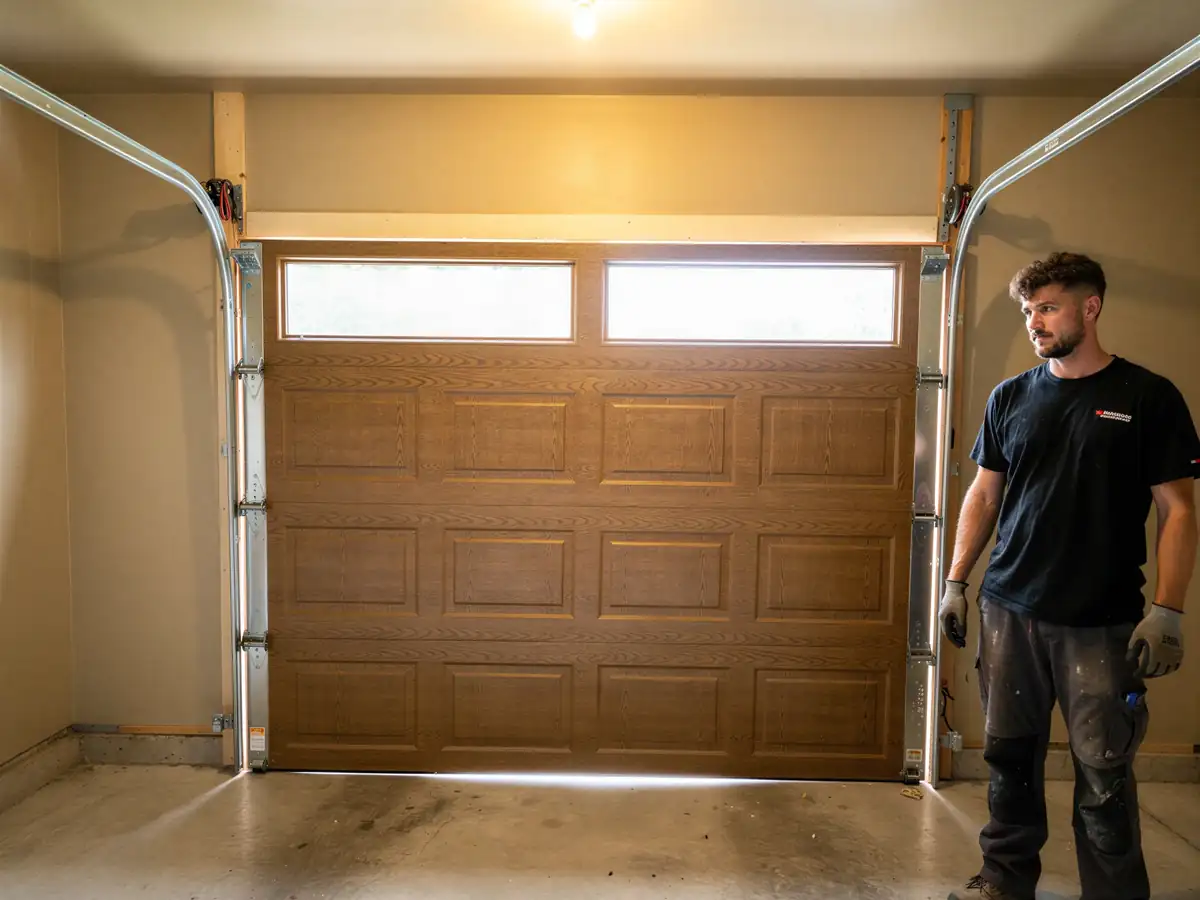
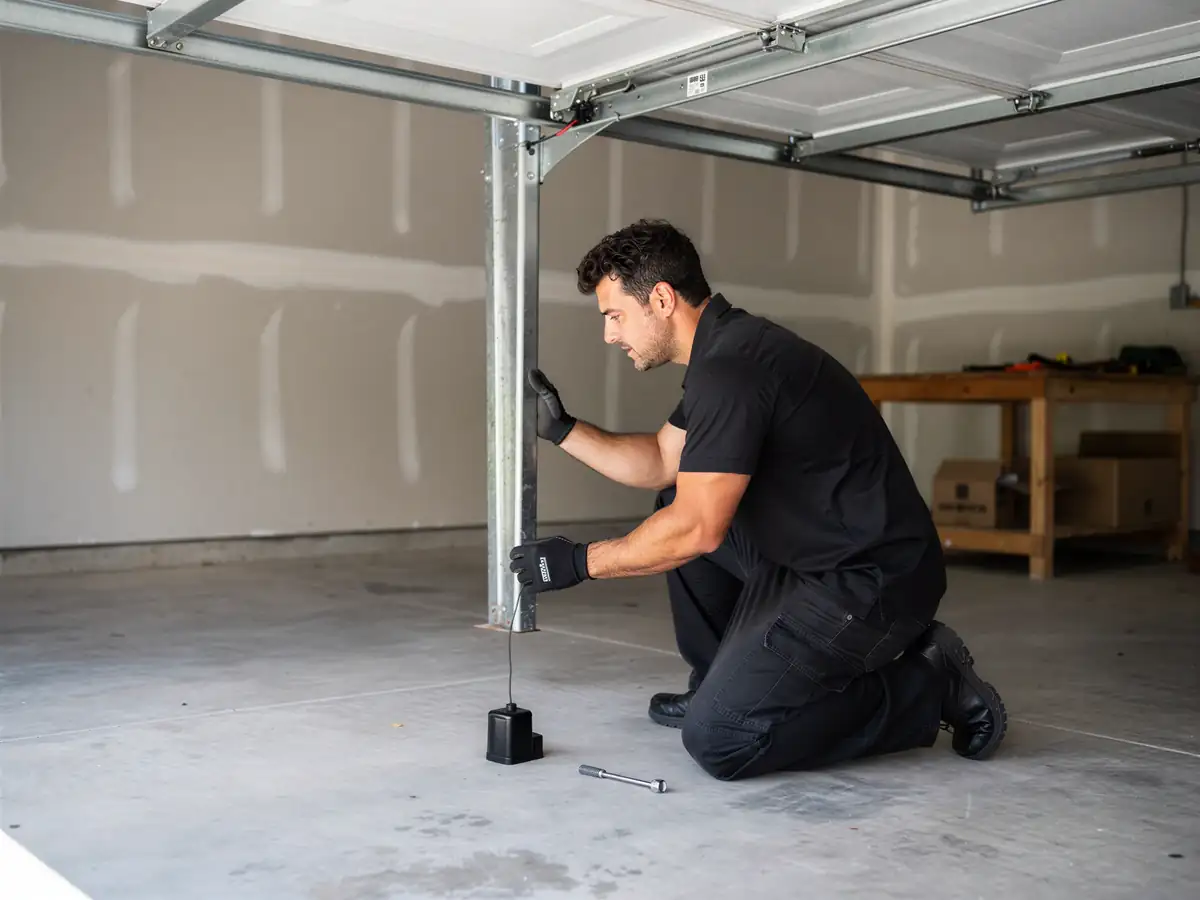
Most calls start with "the opener's dead." Nine times out of ten it isn't the motor. Brooklyn Park's housing stock runs 1957 to 2007, with the median build landing around 1980, and a lot of those doors still carry original track hardware that was never matched to the opener bolted on later. A tech who's only looking at the motor misses the travel limits, the worn idler pulley, or a photo-eye bracket that's shifted out of alignment on a door frame that's settled over four decades.
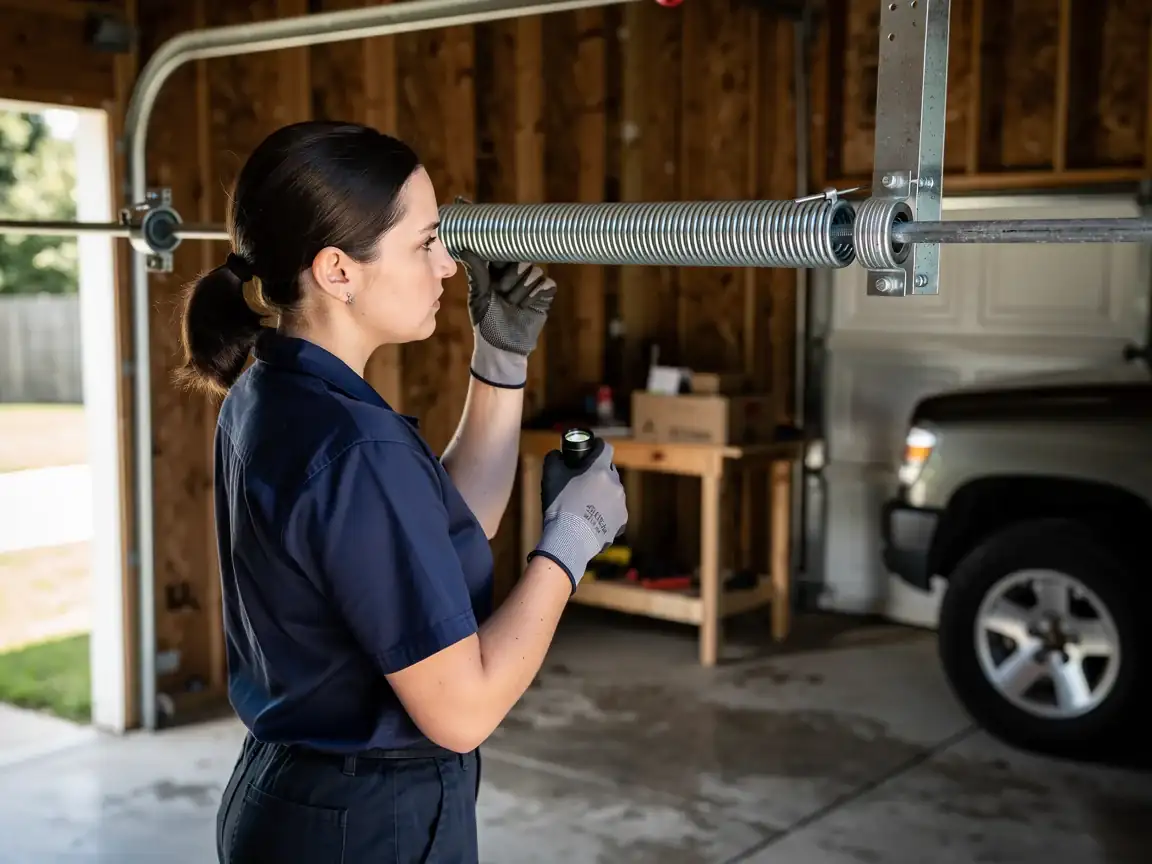
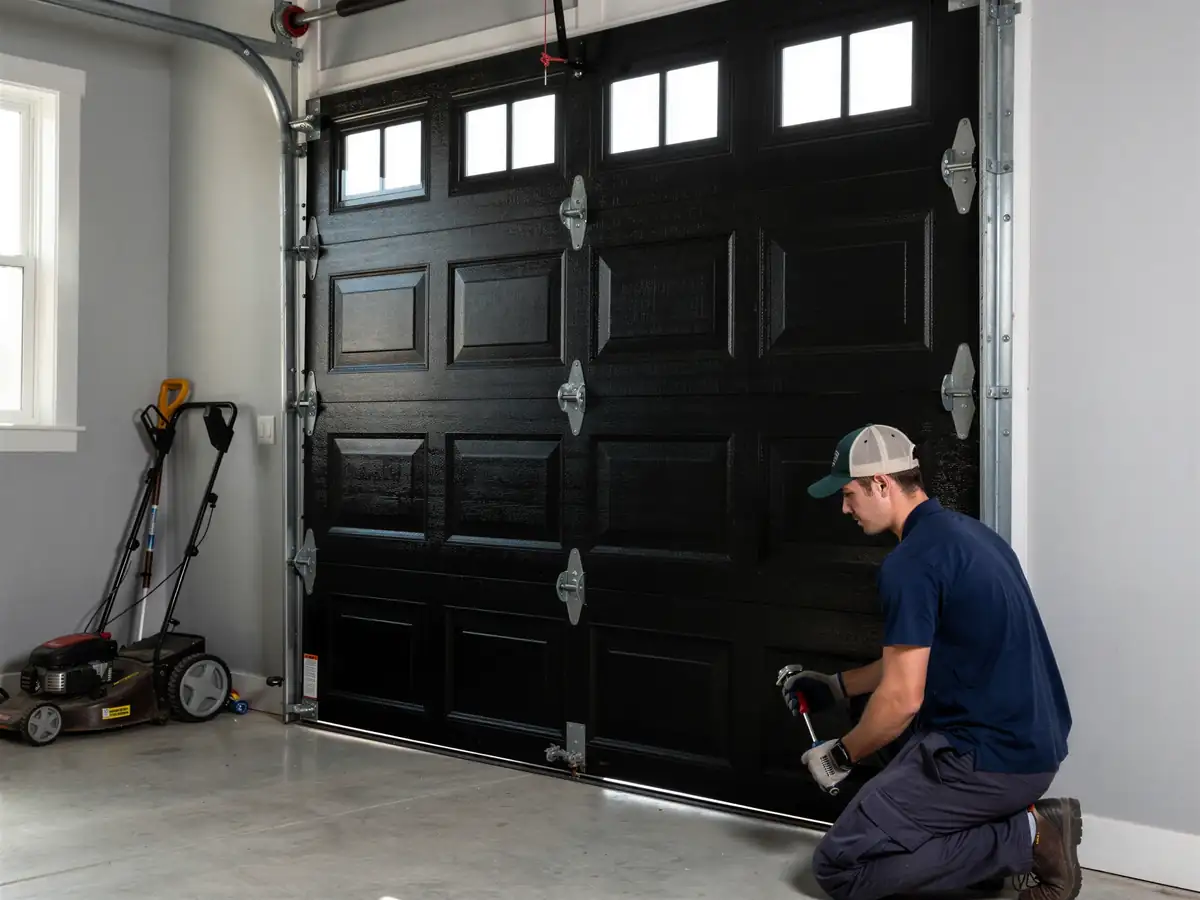
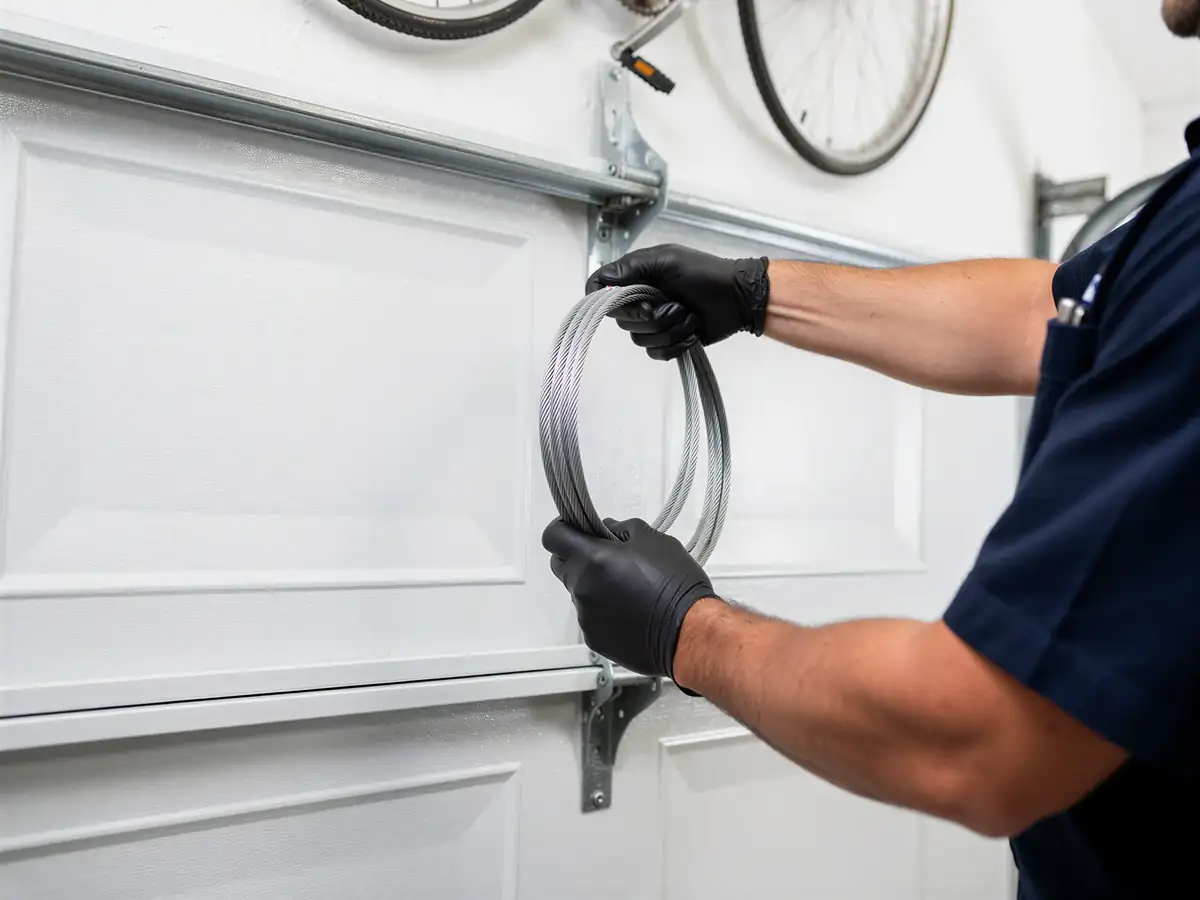
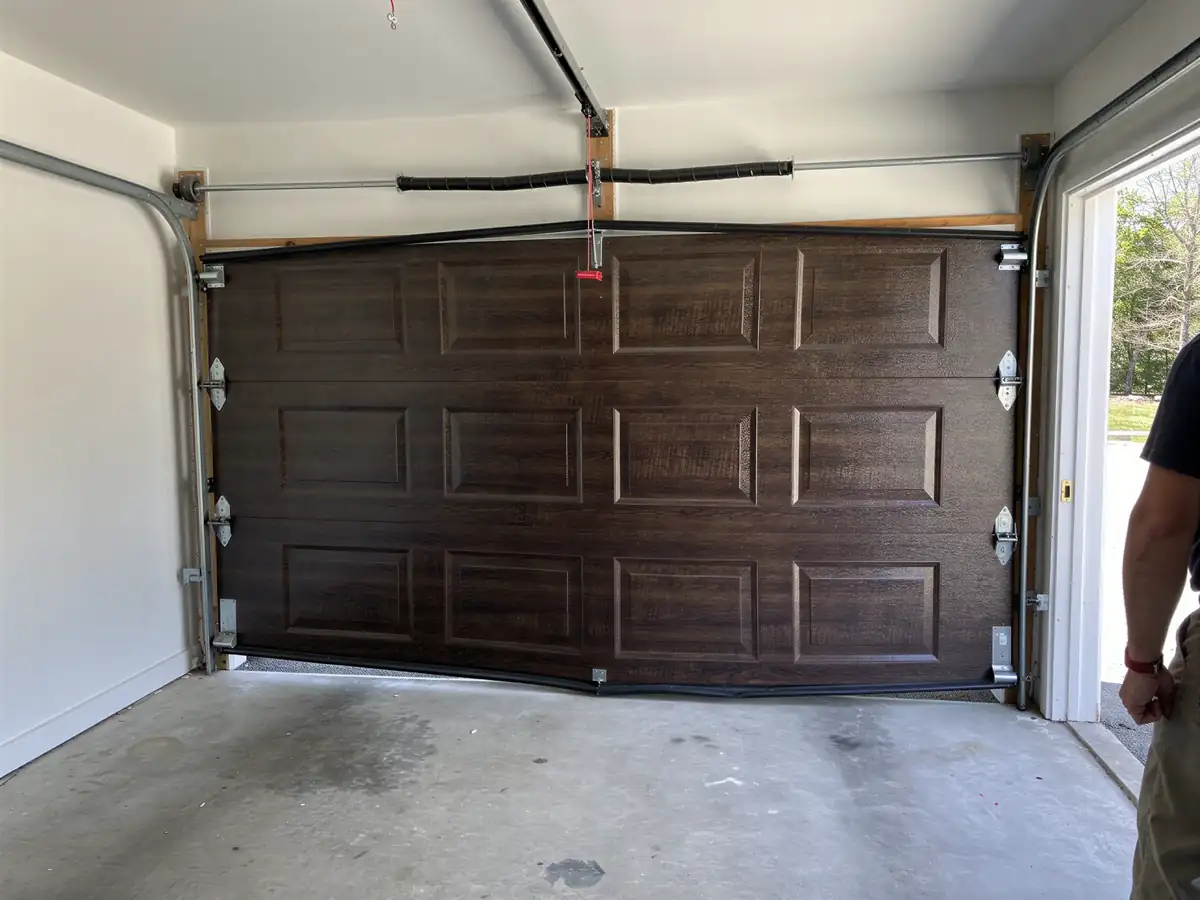
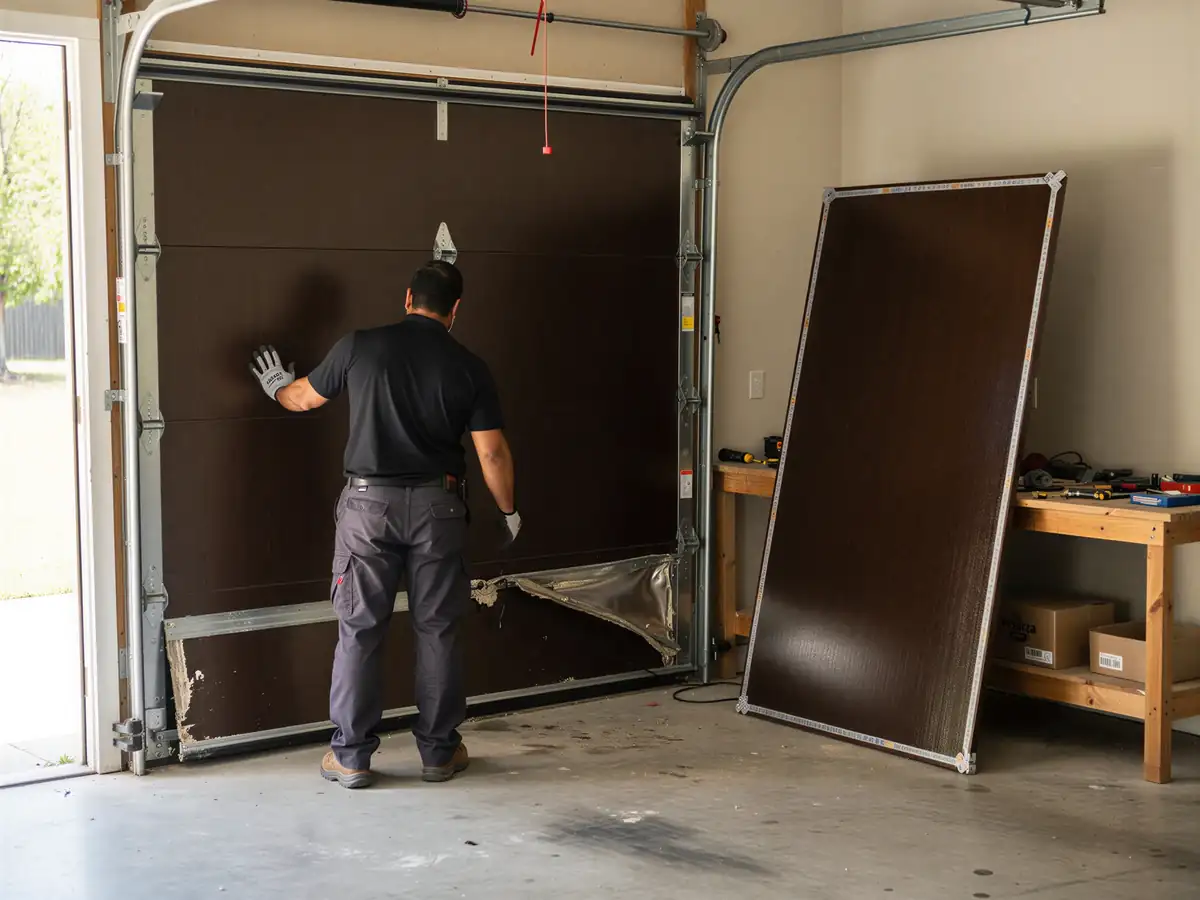
The other thing people get wrong is thinking a service call means replacing the whole unit. It usually doesn't. Most of what we find on a Brooklyn Park job is a spring that's lost tension, a cable starting to fray at the drum, or rollers that have gone oval from age - all things that get fixed in place. We check the full run: springs, cables, drums, rollers, hinges, track alignment, and the opener's force and limit settings, in that order, because a problem in one usually shows up as a symptom somewhere else on the door.
Leaving It Alone
A door that's dragging or a spring that's starting to go doesn't fix itself
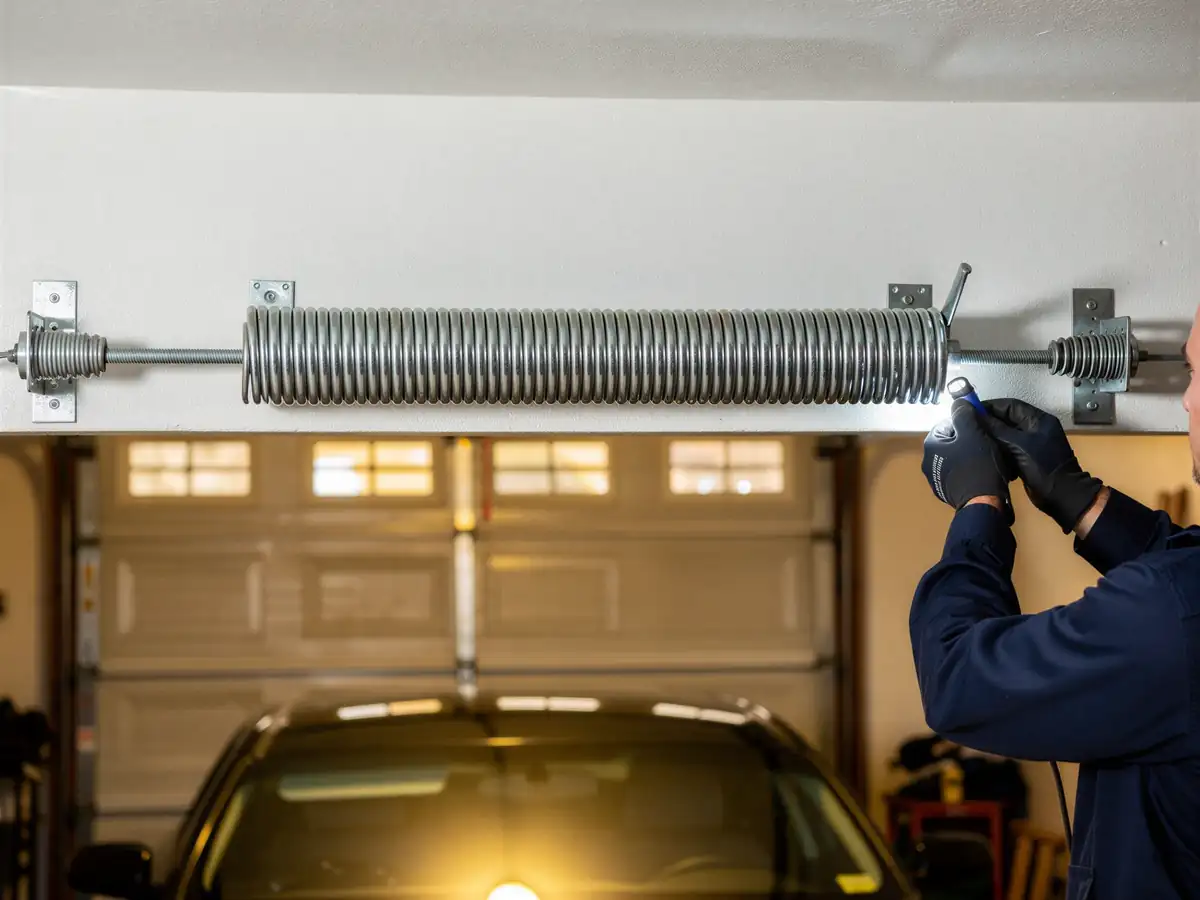
And in a cold-climate area like this one, waiting makes it worse faster than it would somewhere milder. When a torsion spring is under-tensioned, the opener takes on load it wasn't built to carry, and repeated cold-weather cycling adds strain that a motor built for a balanced door was never sized for. We see openers burn out early this way - not because the opener was bad, but because the door it was lifting had already quietly stopped doing its share of the work.
The honest limit here
If a spring has been left to fail for months, we're often looking at cable damage and roller wear on top of it, which turns a thirty-minute spring swap into a longer job with more parts. Catching it early is cheaper and it's the whole reason a service call exists before the door stops working altogether.
The Problem
A large share of Brooklyn Park's housing dates to the 1980s and 90s, which means a lot of sectional steel doors and openers installed in that same window are now reaching the end of their practical life at roughly the same time. Springs rated for a given number of cycles don't care what year it is - they wear out on use and on temperature swings, and homes from that era are hitting both counts.
What this means on a service call: we're not just checking for one bad part, we're checking whether the whole system - spring, cable, roller, hinge - is aging out together. A single new roller on a door with a tired spring and stretched cables is a stopgap, not a fix. Part of the job is telling a homeowner plainly when a repair is worth doing and when the door's hardware has reached the point where patching one piece just shifts the failure to the next piece down the line.
How Local Conditions Play In
This area sits in a cold climate zone with severe winter conditions, and that shows up directly in what fails and when. Steel contracts in the cold, which tightens tolerances on track alignment that was fine in summer. Grease that's fine at 70 degrees turns stiff at 10 below, which is why a door that opened smoothly in September can start grinding by January - not because anything broke, but because the lubrication and the metal are both behaving differently.
We also see slab movement from freeze-thaw cycles pull a track mounting bracket slightly out of plumb over years, which is a slow problem on an old house and a fast one on a door whose spring was already marginal. A service call in this area checks track alignment against the slab, not just against the door, because in a climate this cold the two don't always move together.