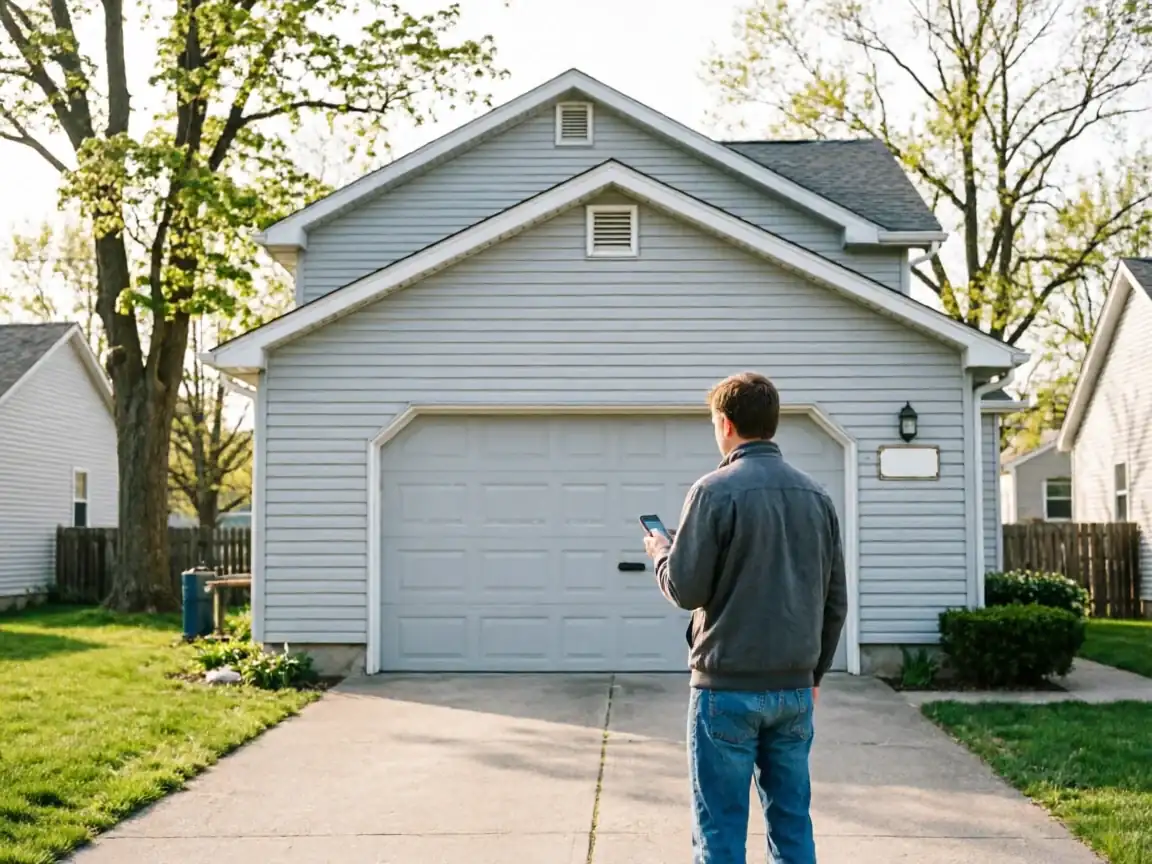
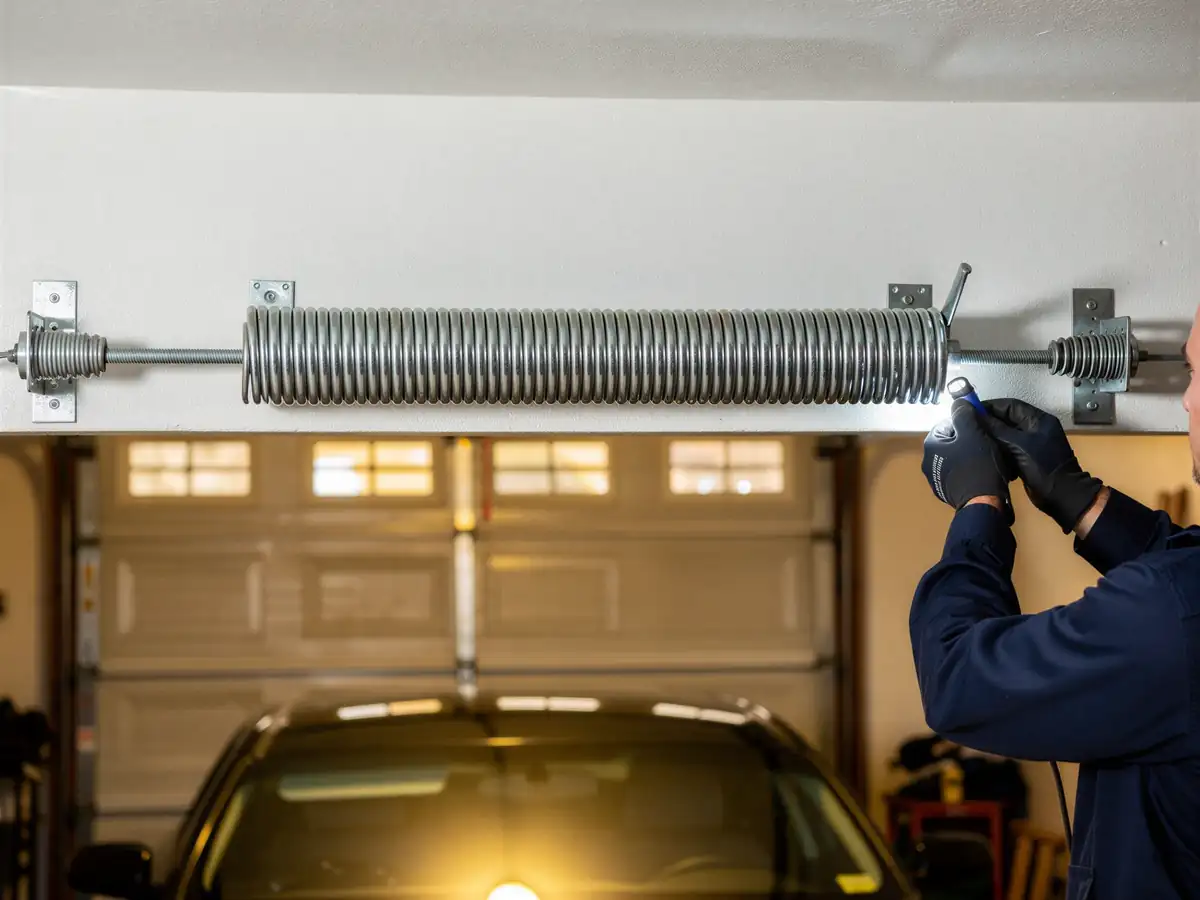
Doing It Yourself
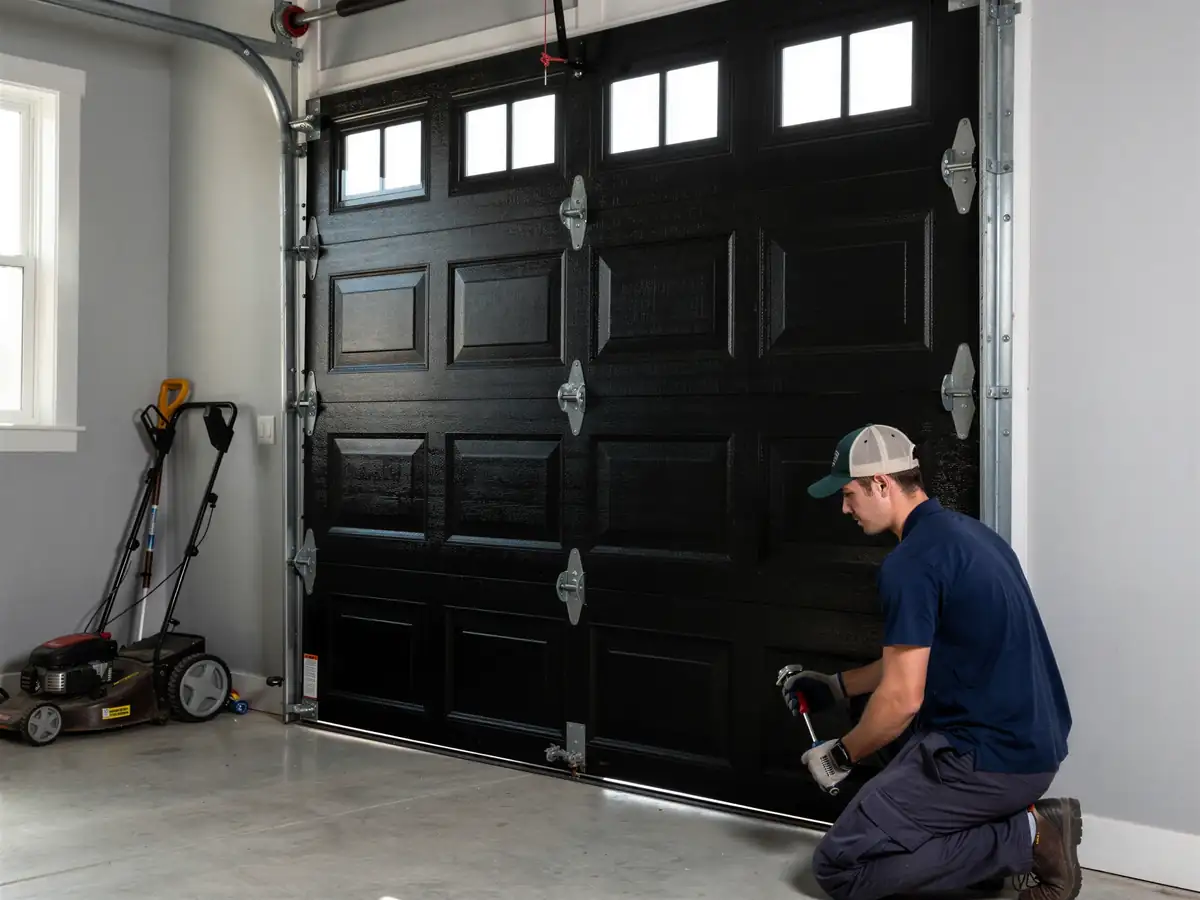
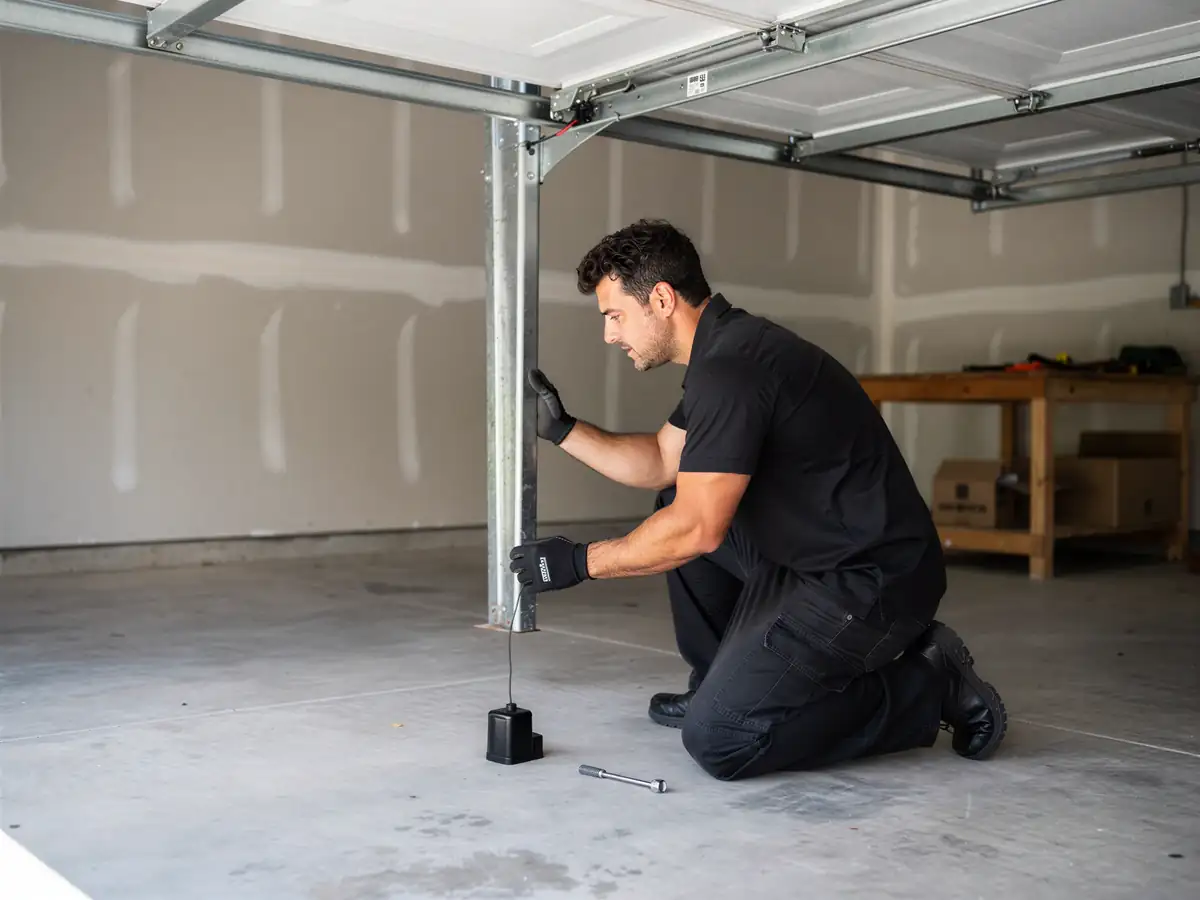
A broken torsion spring is not a weekend project, and we'll say that plainly up front. The spring above your door is wound under enough tension to break a finger or worse if the winding bar slips, and the drop test to check balance means standing under a door held by cables that may already be fatigued. We've seen plenty of homeowners try it with a ladder and a borrowed socket set, and most of them call us partway through once the door won't sit level or the cable jumps the drum.
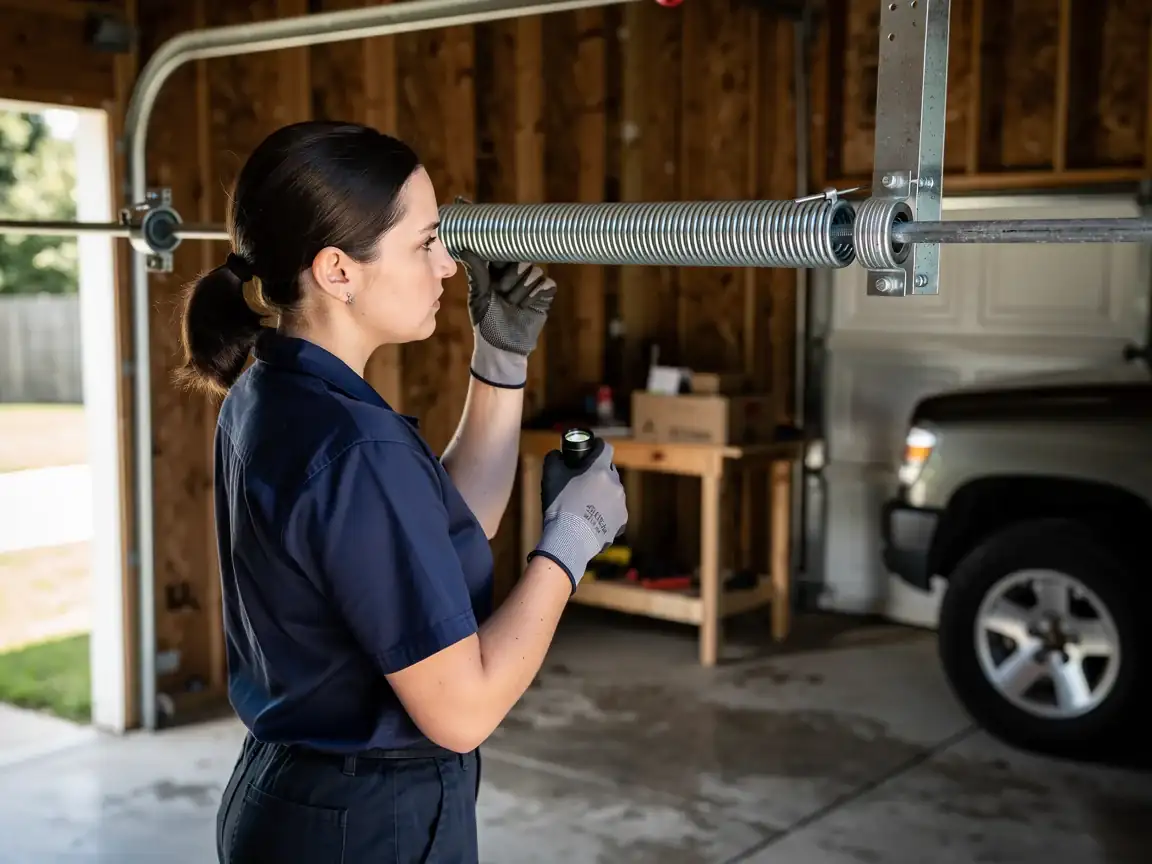
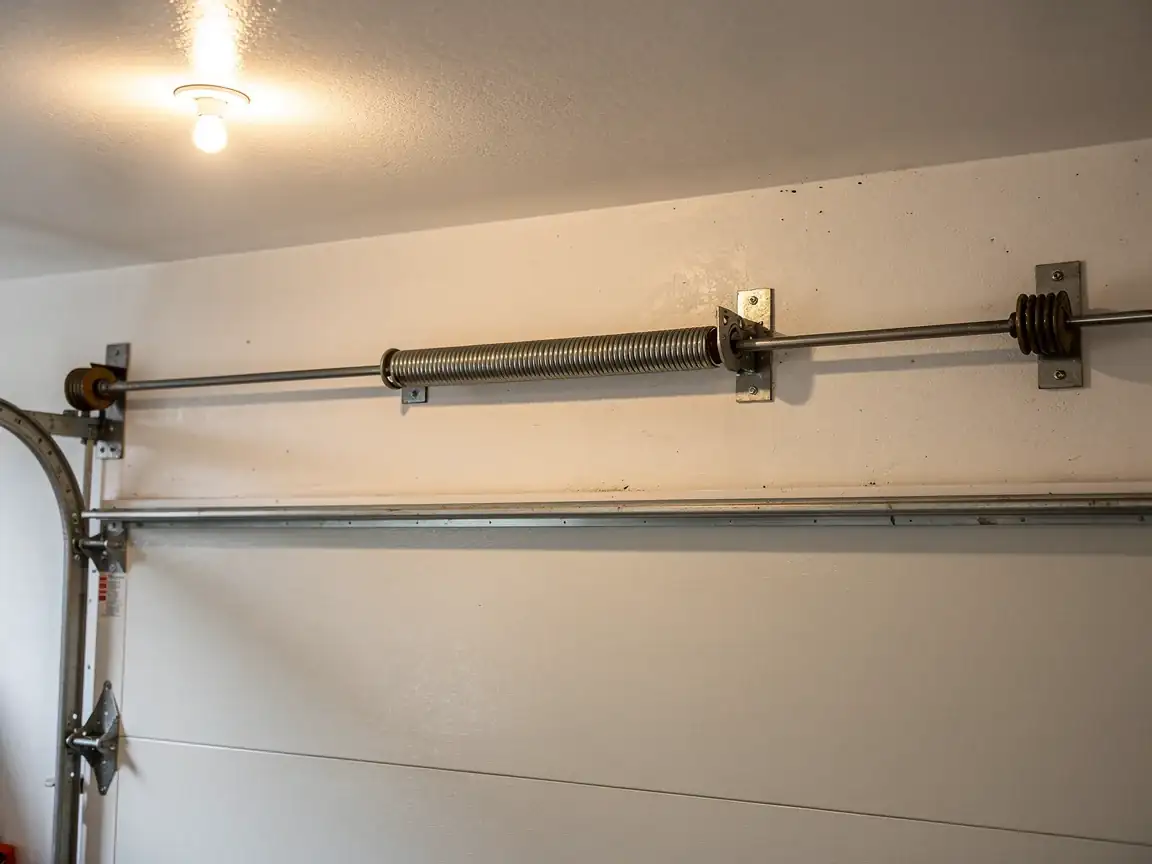
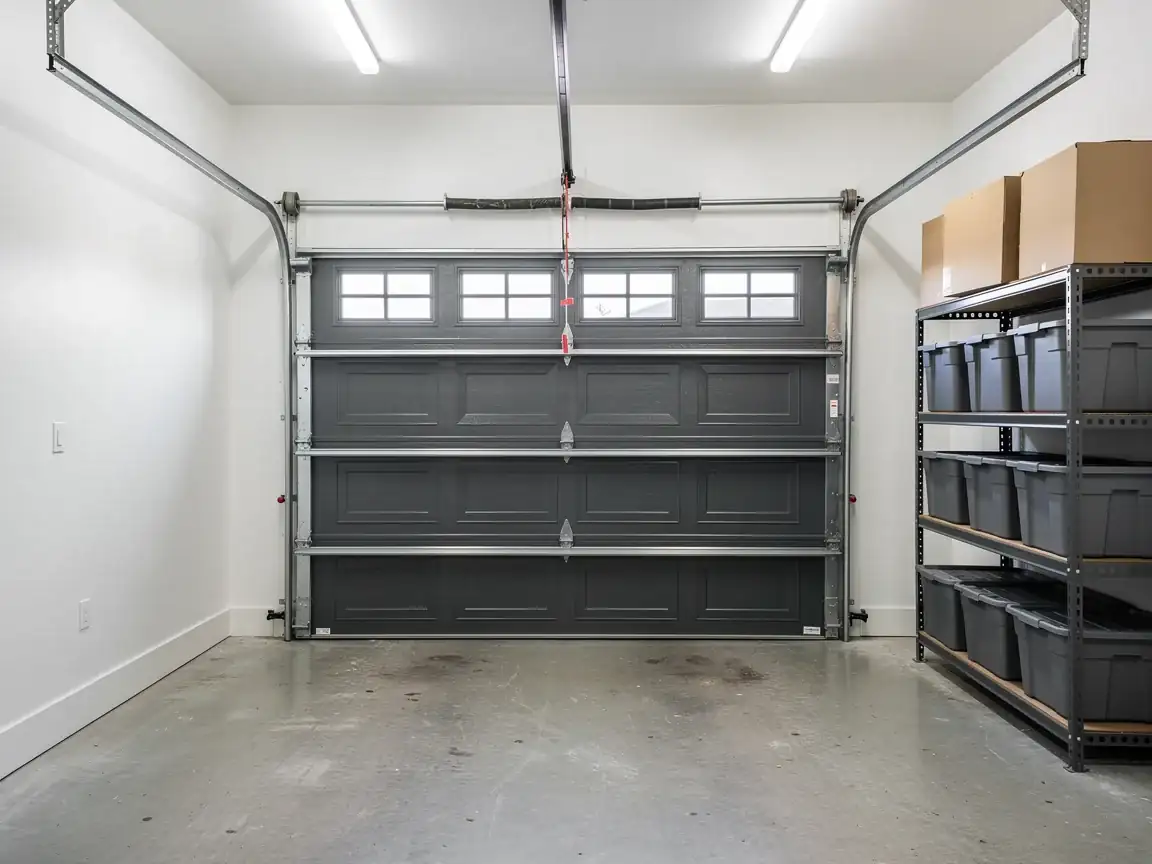
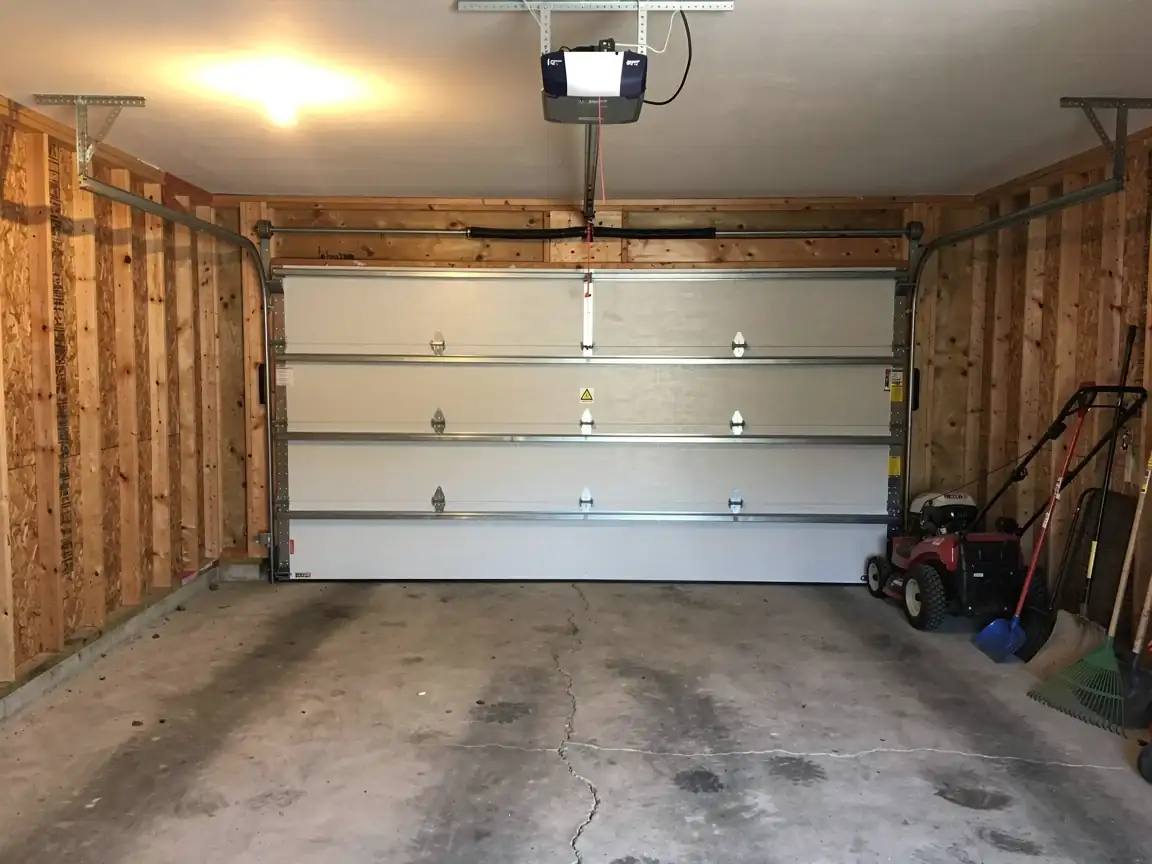
What you can safely do yourself: look at the spring. If it's a torsion spring mounted on a shaft above the door and you see a visible gap in the coil, it's broken - stop opening the door by motor, because the opener will strain against full deadweight and burn out trying. If it's an extension spring running along the horizontal tracks, check whether it's stretched or snapped near an end coil. Either way, that's the point to call rather than push through.
We're not going to pad this section with steps we don't think you should take. Spring work is one of the few garage door jobs where the safe move and the right move are the same move: leave the winding bars in the truck unless you own them and know torque by feel.
What the Fix Involves
Replacing a torsion spring means unwinding the broken one under control, measuring the wire gauge, coil diameter, and length against the door's weight
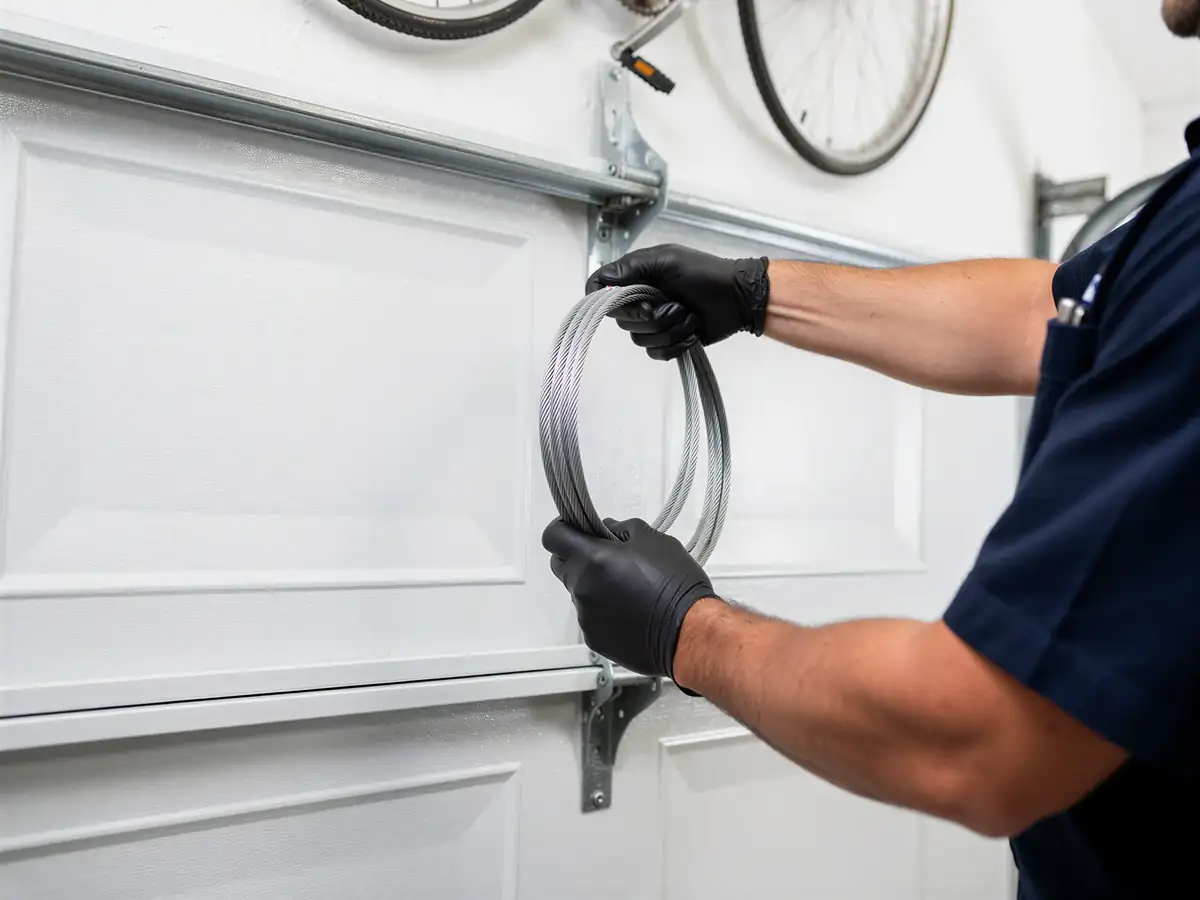
And winding in a matched replacement - or a matched pair, since one spring rarely fails alone on a double door without the other being close behind. We check the drums, cables, and bearing plate at the same time, because a spring usually doesn't fail in isolation; it takes a worn cable or a seized bearing down with it.
For extension springs, the job is simpler in principle
Swap the spring, check the safety cable running through it, confirm pulley condition - but we still rebalance the door afterward so the opener isn't doing the lifting work the spring should be doing.
Across the roughly 150,847 owner-occupied houses in this service area
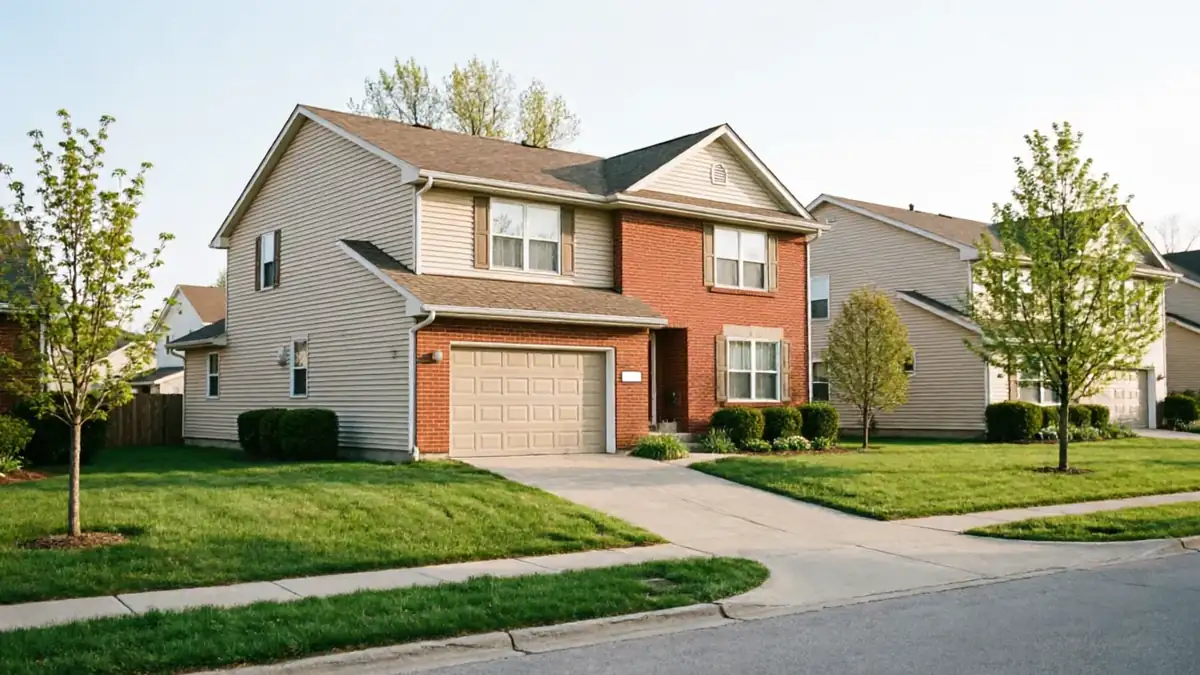
Door weight and spring size vary more than people expect, since housing here spans construction from 1957 through 2007 with most of it dating to the 1980s and 90s. A spring sized for a lightweight 1980s steel door won't balance a heavier insulated replacement door installed later, so matching the spring to the actual door in front of us matters more than matching it to whatever spec sheet came with the house.
- 150,847 owner-occupied
We stock common torsion sizes on the truck
Less common wire gauges from older builds sometimes mean a short order delay.
Why It Happens Here
Torsion and extension springs are rated by cycle count, and cold is what burns through those cycles faster than anything else. This area sits in a severe cold climate band, and steel loses flex as temperature drops - a spring that would wind and unwind smoothly at 60 degrees gets brittle and strained at 10 below, which is a normal January morning here. That's why spring failures cluster hard in the coldest stretches of winter: the metal is already working against itself before the door ever moves.
The second factor is the housing stock itself. With homes here built mostly between 1957 and 2007 and a heavy concentration from the 1980s and 90s, a lot of original springs installed decades ago are well past any reasonable cycle life, regardless of how carefully they were made. Nobody replaces a spring on a schedule - it gets replaced when it breaks - so older homes carry older springs that have absorbed decades of Minnesota winters.
Put those two together and you get the pattern we actually see on calls: a 30-plus-year-old spring, already near the end of its rated cycles, finally giving out on the coldest morning of the stretch. It's not bad luck. It's metal fatigue meeting weather, on schedule.
How It Shows Up
The most obvious sign is a door that won't move at all - the opener motor runs, but the door doesn't budge or only creeps up a few inches before stalling, because the spring is no longer carrying its share of the weight. Open the door manually (carefully) and if it feels like dead weight instead of lifting with a counterbalance, the spring has let go.
A loud bang from the garage, often early in the morning when temperatures have dropped overnight, is usually the spring itself failing under tension. Homeowners sometimes think it's a car backfiring outside or something falling in the garage.
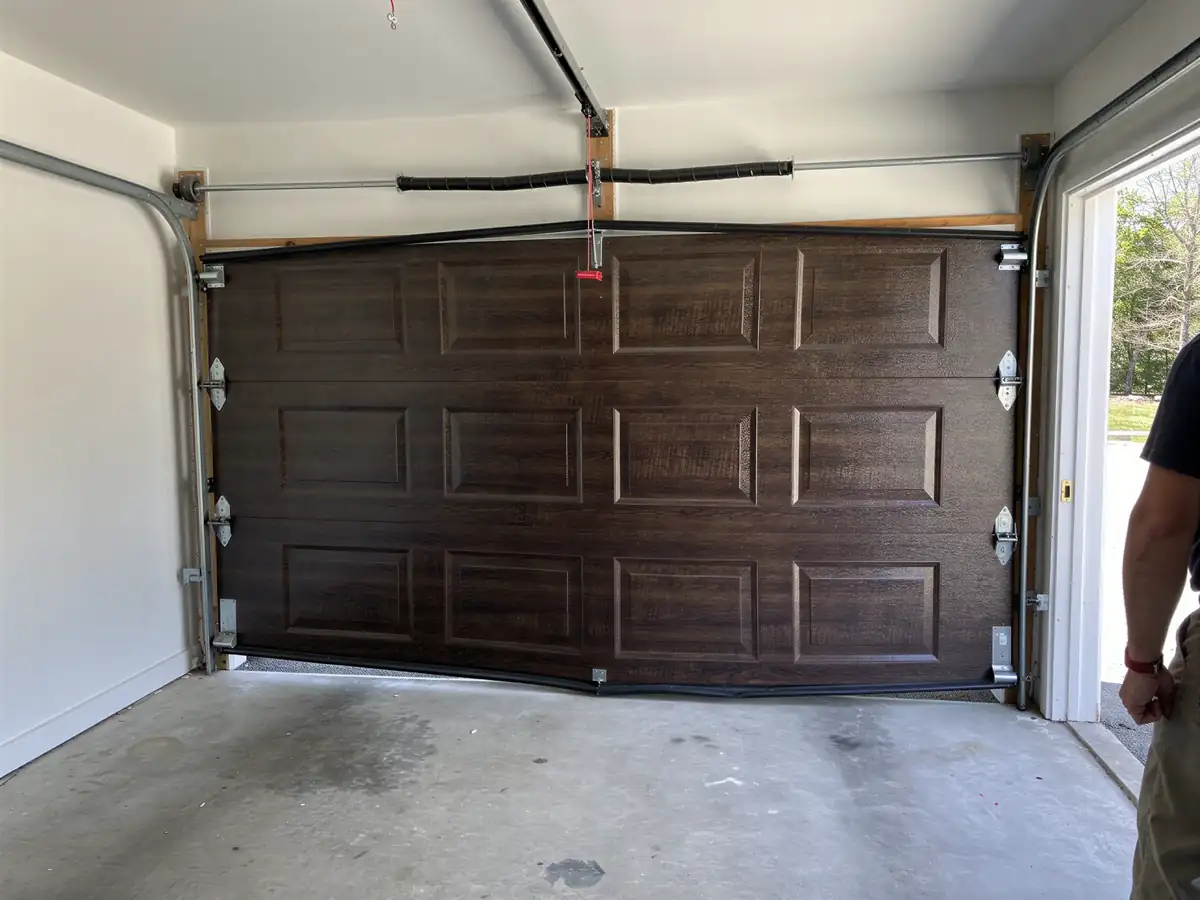
Less dramatic signs come first, if you catch them: the door starting to sag unevenly on one side, cables looking loose at the bottom bracket, or the opener straining audibly on a door that used to lift quietly. Those are worth a call before the spring goes entirely, since a controlled replacement is a simpler job than one done after a cable's jumped the drum or a bracket's bent from an uneven break.