What Most People Get Wrong
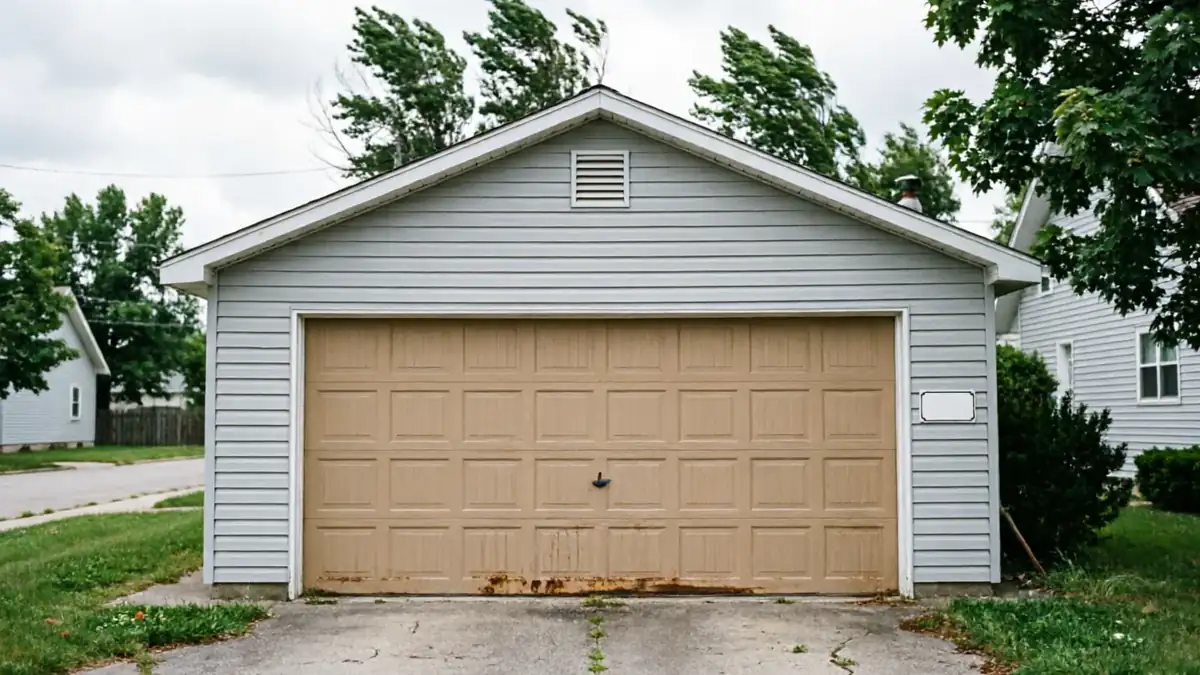
Most people think a garage door fails from age alone. In a lot of Brooklyn Park, it fails from span. Homes here were built between 1957 and 2007, with the bulk of the stock going up in the 1980s and 90s, and that era is when the two-car garage with one wide door across it became the standard build. A single 16-foot door has a lot more surface for wind to push against than a 9-foot single door, and the hardware carrying that load - track, rollers, the horizontal struts on the back of the panel - has to work harder every time a gust hits it broadside.
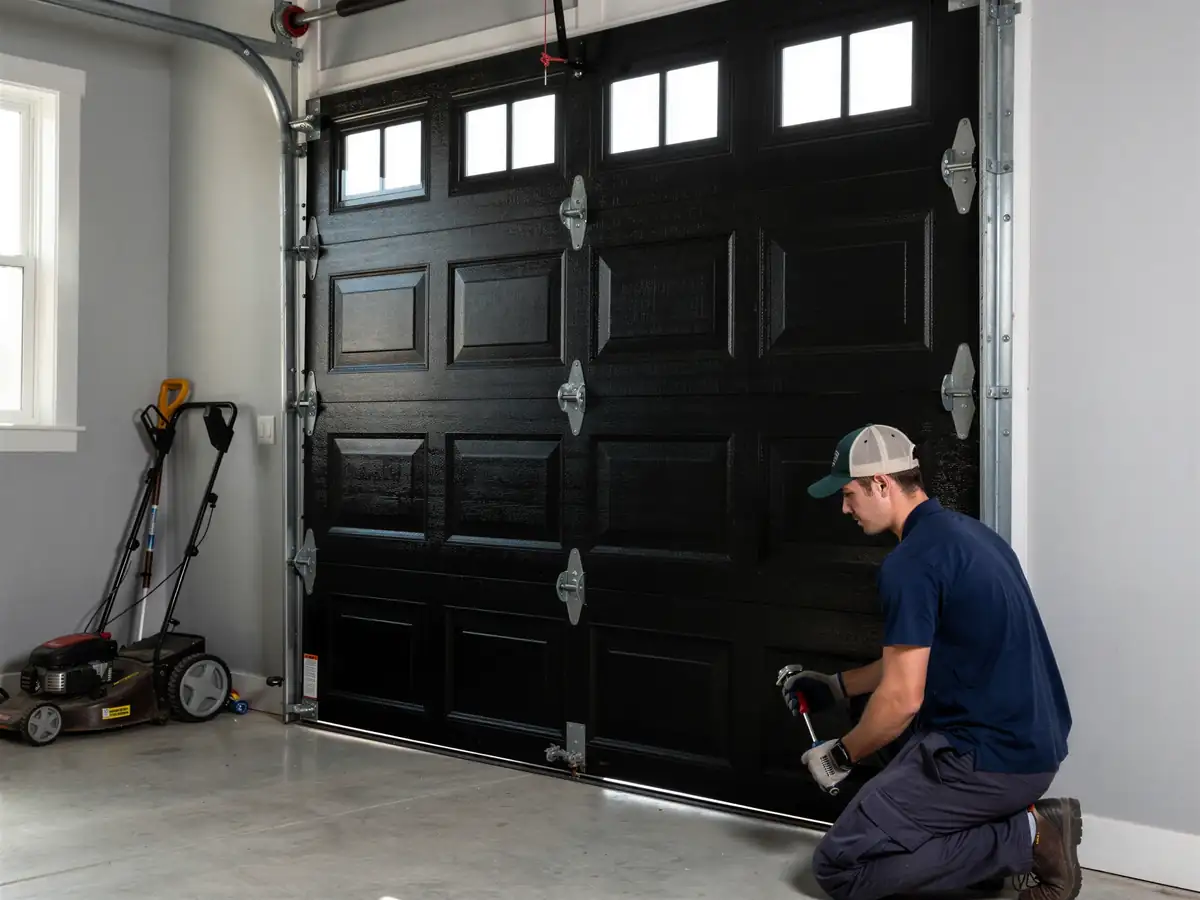
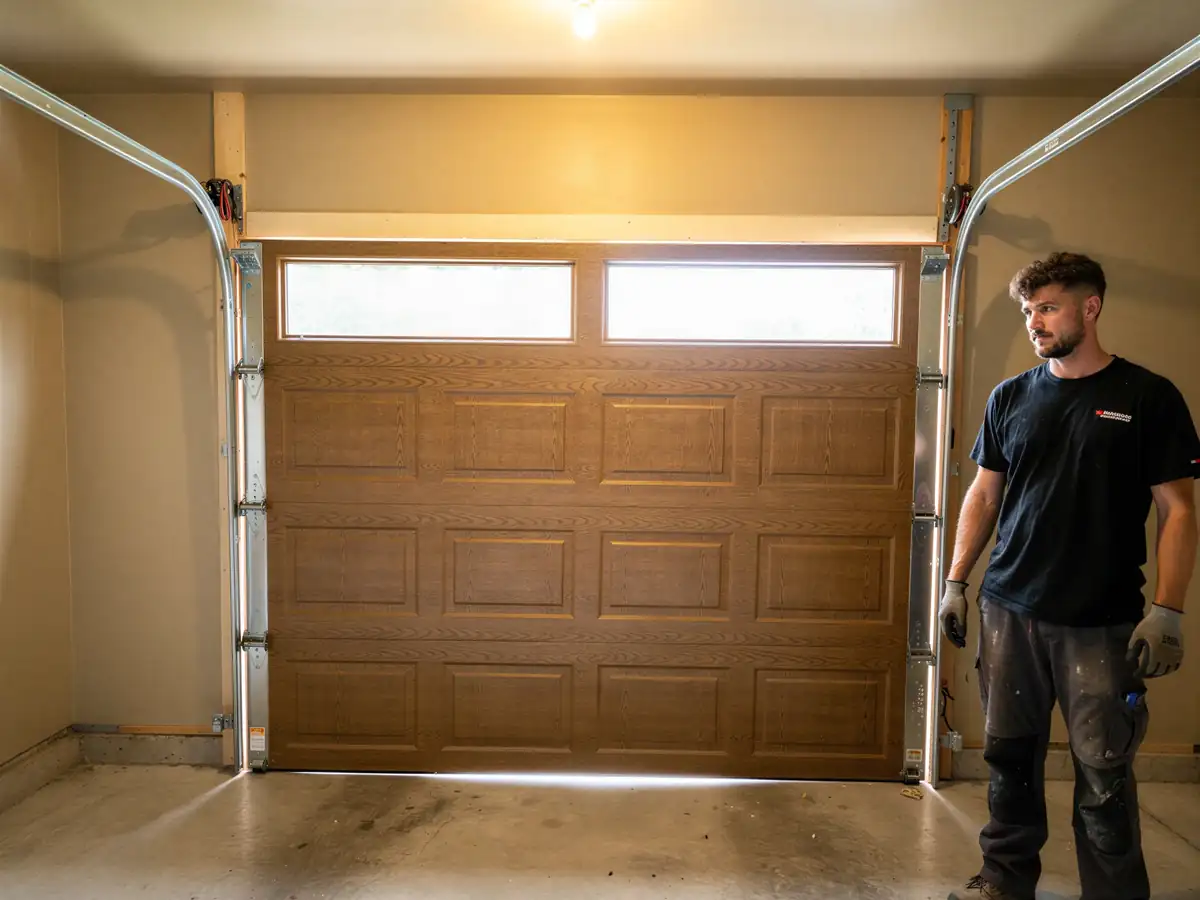
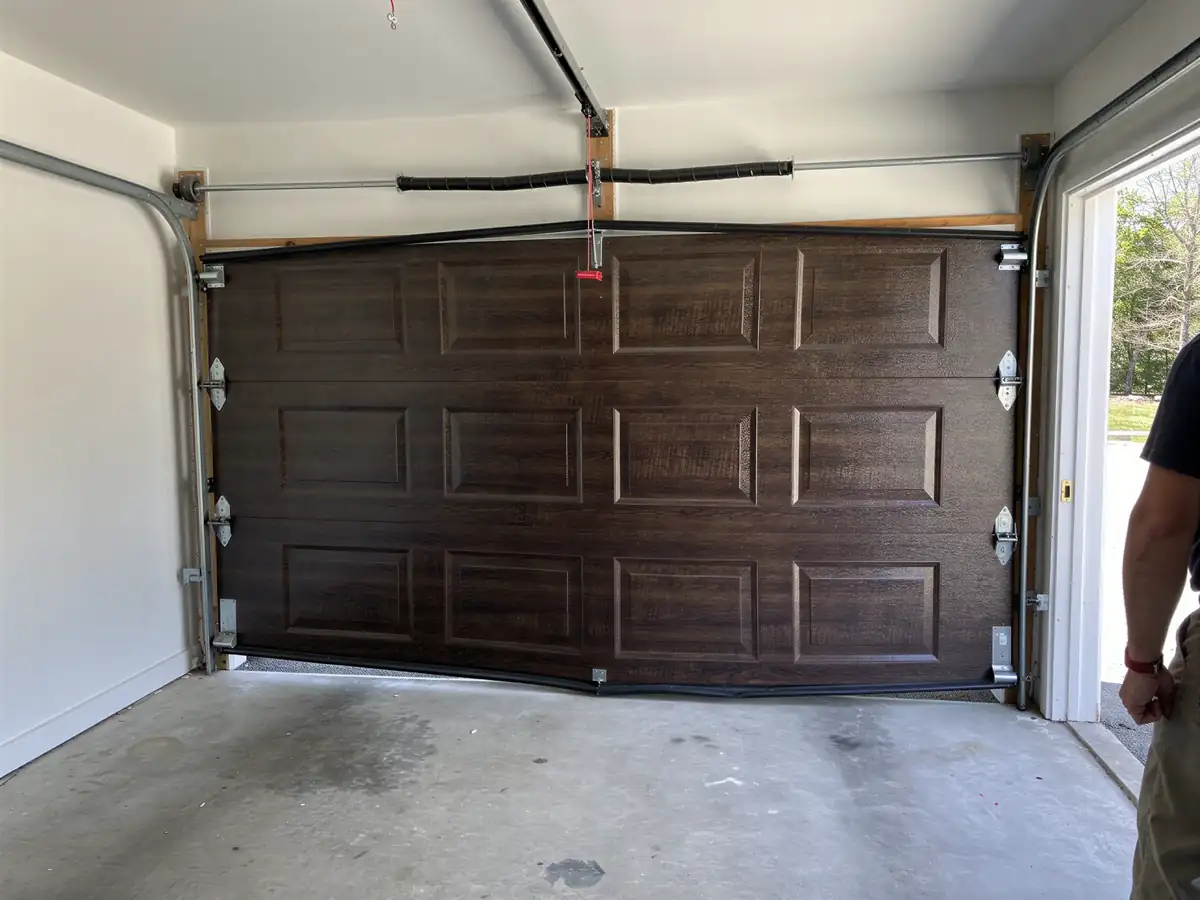
Owners tend to treat a door that's "bowing" in a storm as cosmetic, something that'll pop back. It usually does pop back, until the track pulls loose from the jamb or a strut bends enough that it doesn't straighten. By the time you notice daylight at the edges of a wide door during wind, the fix is rarely a tightening job. It's a track realignment or a strut replacement, and sometimes both.
Leaving It Alone
Leaving a wide door alone after a windy day is the most common mistake we see
If the door looked fine once the wind died down, it's easy to assume nothing happened. But a double-wide door built into a garage from the 1960s through the 1990s often has reinforcement that was adequate for the era it was installed, not for repeated flexing decade after decade in a cold, severe climate that puts it through freeze-thaw cycles on top of wind load.
Each gust that flexes the panel works the same bolts and brackets a little looser
One storm won't do it. A winter of them will. The honest limitation here: we can't tell you from a phone call whether your door has reached that point. A strut that's slightly bowed can look fine from the driveway and still be a few more gusts from letting go. That's a hands-on inspection, not a guess, and we won't quote a repair over the phone for something this specific to how your door was built and how it's aged.
The Problem
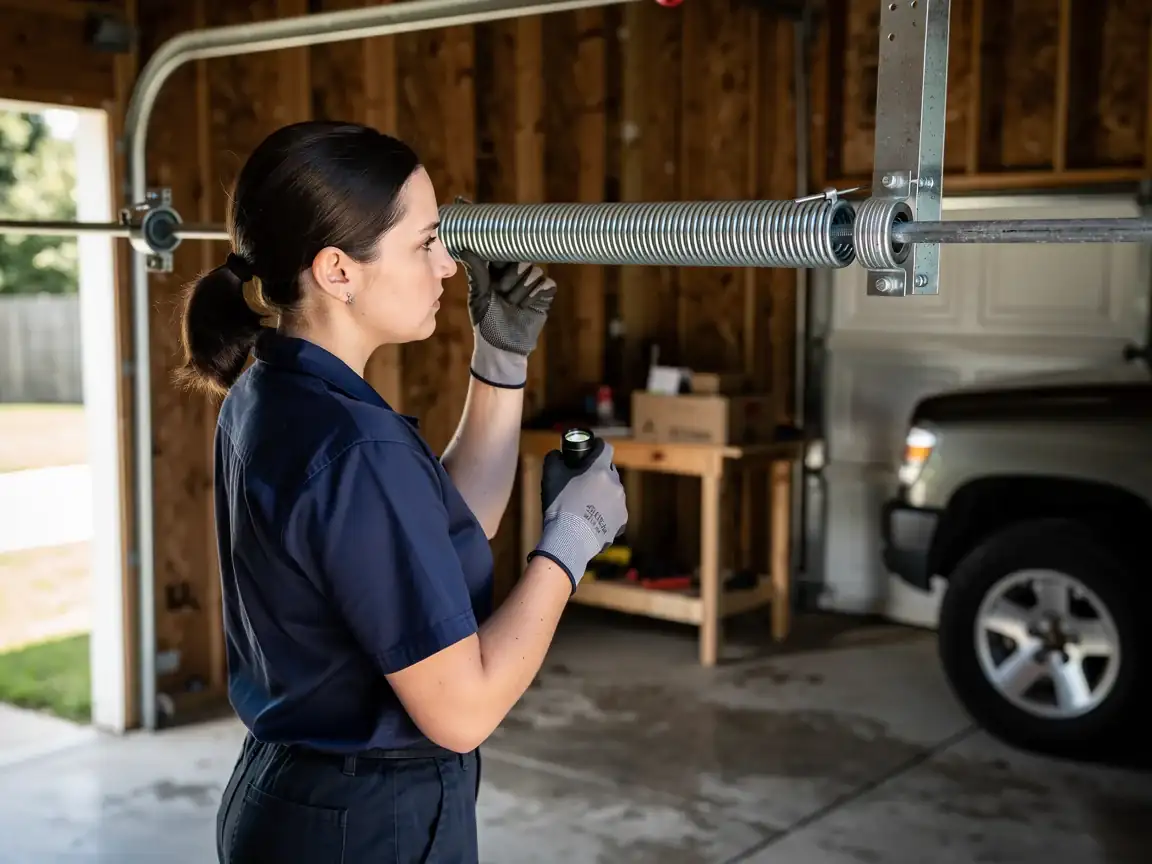
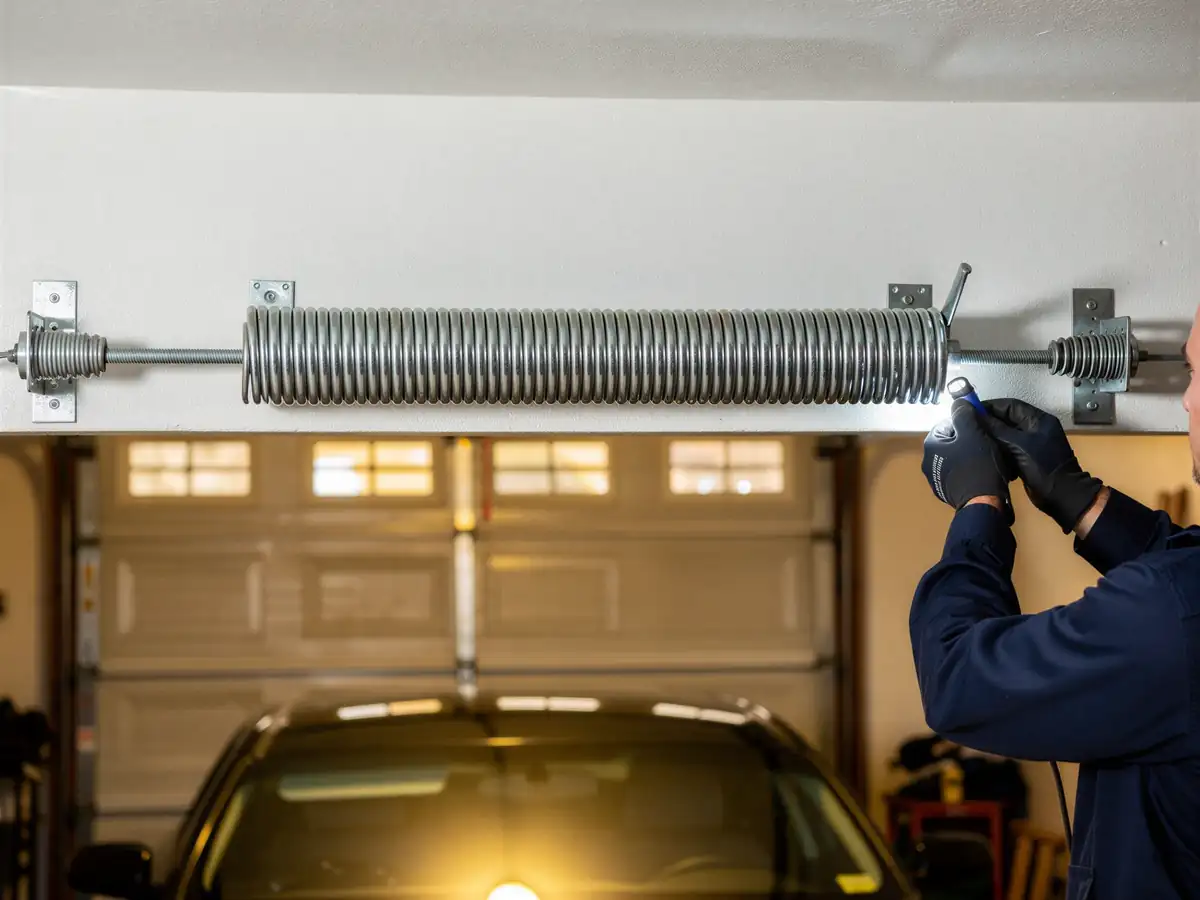
The problem is simple physics applied to an old-enough door. A wide panel has more area, which means more force transferred to the same number of hinges, the same two tracks, and the same springs that were sized for the door when it was new. Houses in this area built in the 1980s and 90s, which is most of the stock, are now old enough that the original springs and track hardware are past or near the end of their rated cycles, even before you factor in wind load.
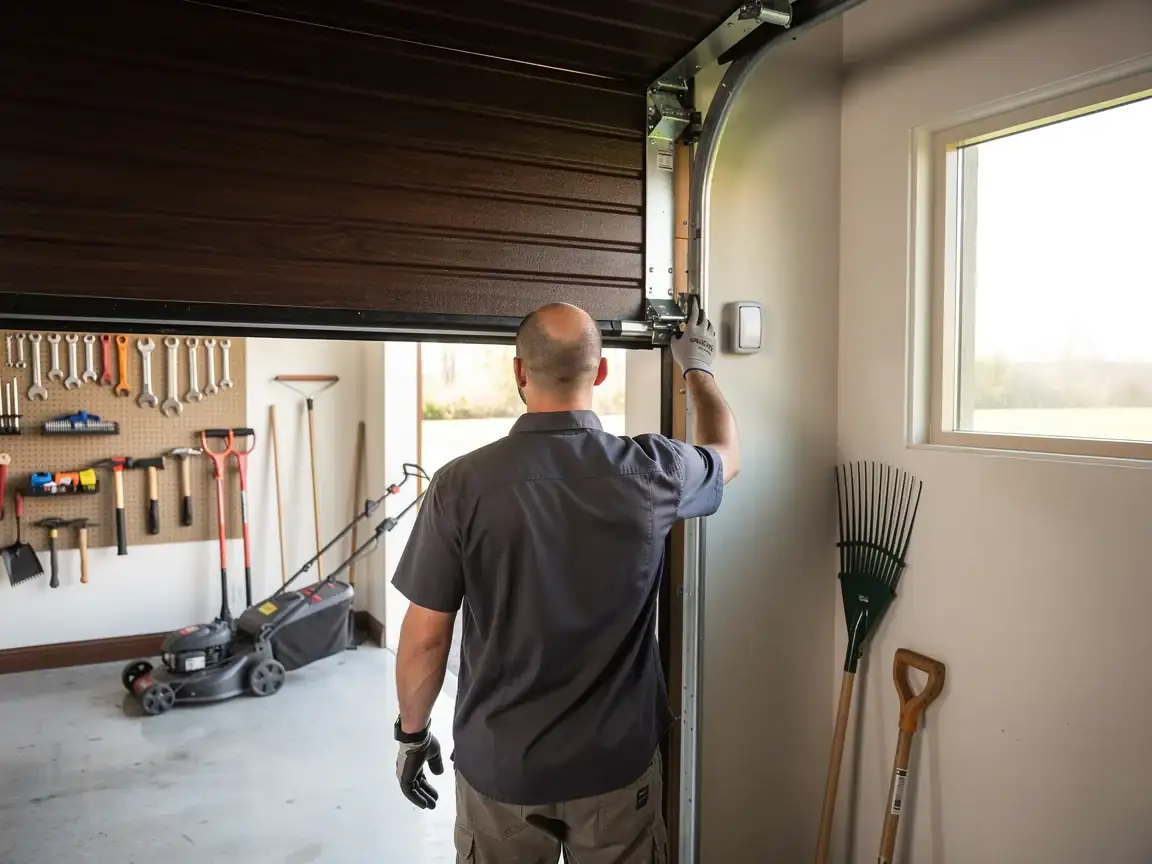
When a gust catches a wide door square, the load doesn't spread evenly - it concentrates at the center where the door has the least support, and at the top rollers where the track takes the sideways push. That's where owners actually see trouble: a roller jumping the track, a strut cracking at the point it's drilled for the center bracket. None of this is dramatic until the day it is, and on a wide double door the failure point is usually bigger and more expensive to fix than on a single-car door of the same age.
How Local Conditions Play In
Brooklyn Park sits in a climate band classed as cold and severe, which means the hardware on your door is already working through a wider temperature swing than it was engineered for on the mild end. Cold makes steel springs stiffer and more prone to snapping under sudden load rather than flexing with it - and a gust of wind against a wide door is exactly that kind of sudden load.
The age of the housing stock compounds it. A door installed when a house was built in 1985 has gone through close to forty winters of that swing. Combine an aging double-wide door, original hardware, and a cold-severe climate, and wind isn't an occasional stress - it's a recurring one, year after year, on a door that was never going to last forever anyway. We'd rather tell a homeowner their door is near the end of its service life than keep patching struts on something that's one more gust from a bigger problem.