Serving Brooklyn Park, MN & nearby
(763) 280-3881
Brooklyn Park, MN

When a Repair Isn't Worth It Anymore

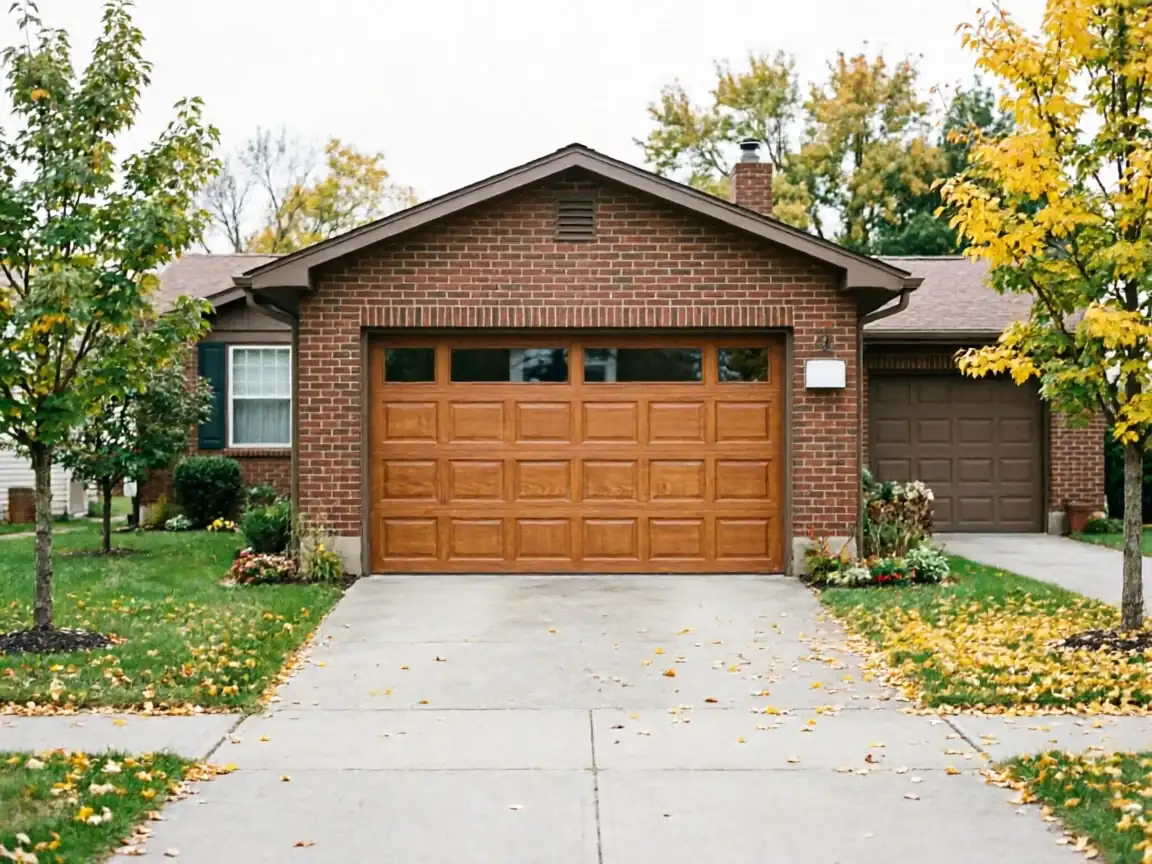
Brooklyn Park homes mostly date to the 1980s. Here's how that housing stock and our cold winters decide when a repair stops making sense and replacement wins.

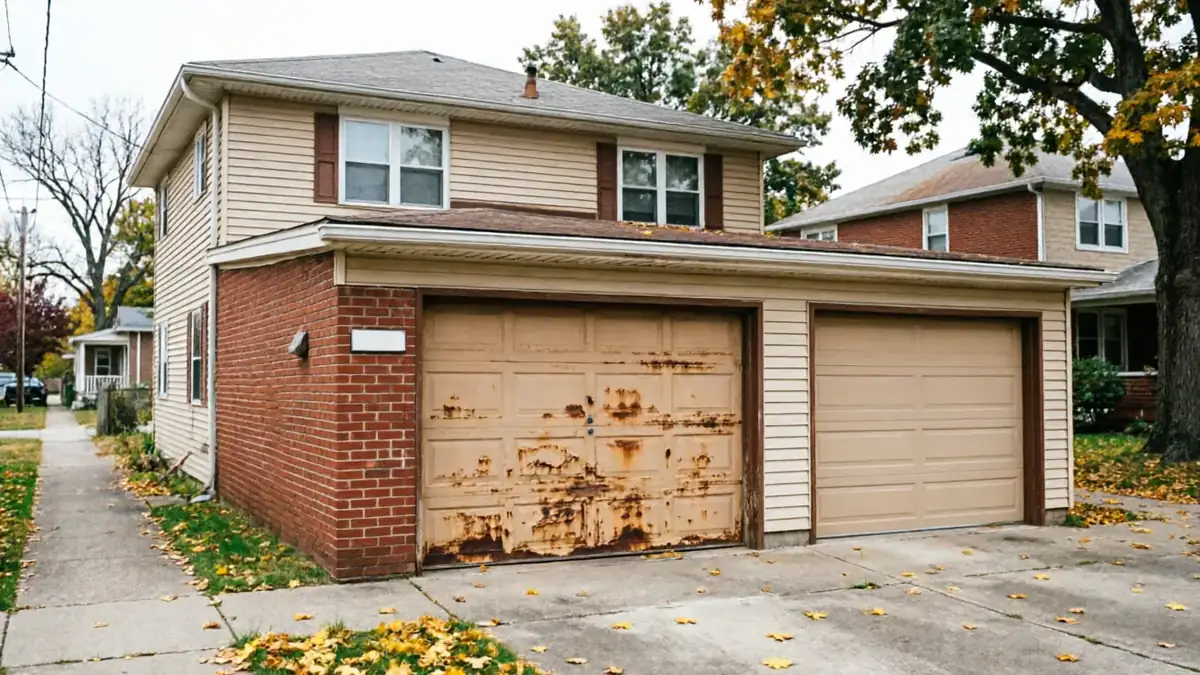
A house with a severely rusted garage door next to a new garage door.

What Most People Get Wrong

Most homeowners here think of a garage door as one unit that either works or doesn't. It isn't. It's a spring, a set of rollers, a track, hinges, cables, and an opener, all aging on different schedules. In a neighborhood where the median house went up around 1980, with construction spanning 1957 to 2007, you'll often find a door where the opener's been swapped twice but the original track and hinges are still the ones that shipped with the house. People call about a noisy door and assume the whole unit is shot, when it's really one worn roller. Just as often, someone calls about "just a spring" on a door whose track is bent from decades of a car bumper tapping it in a snowy driveway, and the spring was never the real issue. The mistake isn't being wrong about what broke. It's not knowing which parts on a door this old are original and which have already been replaced, so you can't tell if you're looking at a five-minute fix or the start of a teardown. On a door built in the 1980s or 90s, that distinction changes the whole conversation.

Leaving It Alone

Doors in this part of town don't fail quietly. A door from the 1980s-90s stock that's been limping along usually gives you a string of small warnings first: a cable that's started to fray, a track bracket that's loosened from the wall, an opener that strains on cold mornings before it finally won't lift at all. Ignore those and the failure mode in a cold-severe climate isn't gradual, it's sudden. Metal contracts in the cold, grease stiffens, and a marginal spring or cable that was holding on in October snaps in January without much warning. That's not a scare tactic, it's just how cold-climate hardware behaves when it's past its working life. The honest limitation here: we don't recommend replacing parts preventively just because a door is old. If the hardware is sound and moving the way it should, there's no reason to touch it. But once you're into repeat service calls on the same door, every call is telling you something the first one didn't.

The Problem

The real problem in Brooklyn Park is parts availability lining up with age. A door built when most of this housing went in, through the 1980s and into the 90s, often used spring sizes, track widths, or opener drive systems that newer doors don't carry anymore. We can usually still get a matching torsion spring. We often can't get an exact replacement opener carriage or a matching panel for a door that's been through 30-plus Minnesota winters, because the manufacturer or the specific model has moved on. So the question isn't just "can this be fixed" - it almost always can, for a price. It's whether what you're fixing is worth matching mismatched parts on a door whose wood or steel panels are already working harder than they should against cold-season expansion and contraction. When a second major component needs replacing within a year or two of the first, that's usually your answer.

How Local Conditions Play In

Cold-severe winters are hard on garage doors in a specific, predictable way: metal springs lose tension faster in sustained cold, nylon rollers crack instead of wearing smoothly, and opener motors draw more strain lifting a door whose seals have stiffened. None of that is unique to any one house, but it compounds faster on a door that's already 25 to 40 years old, which describes a large share of homes built when this area went up. If your door is from that original 1980s-90s construction wave and you're now facing a repair that touches the spring, the opener, and the track in the same visit, replacement usually costs less over the next five winters than three separate repair calls. We'll tell you straight when a repair makes sense versus when you're pouring money into a door that's fighting the season it's in. Get a straight answer about your door.
How it works

From “it’s stuck” to “it’s fixed”

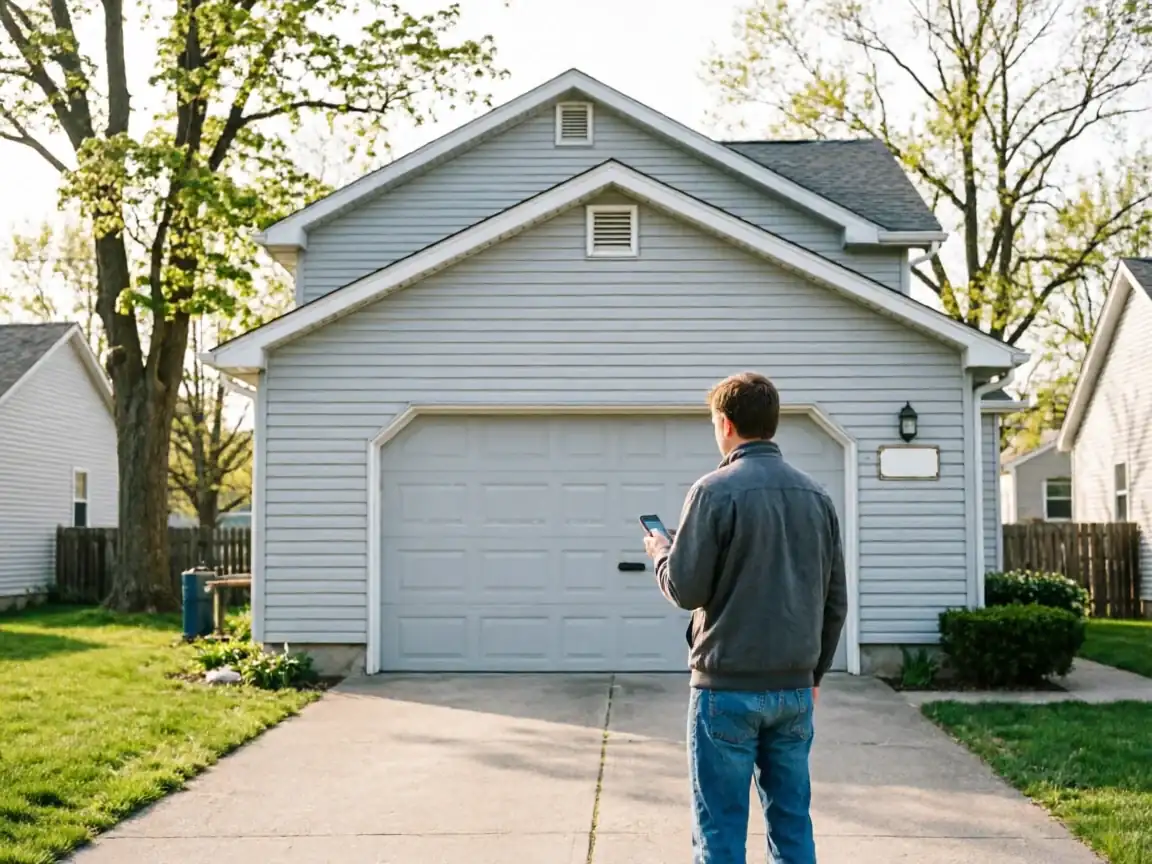
A man stands in a driveway looking at his phone in front of a house.

Tell us what’s wrong

Describe the symptom - won’t open, loud bang, opener runs but the door won’t move.

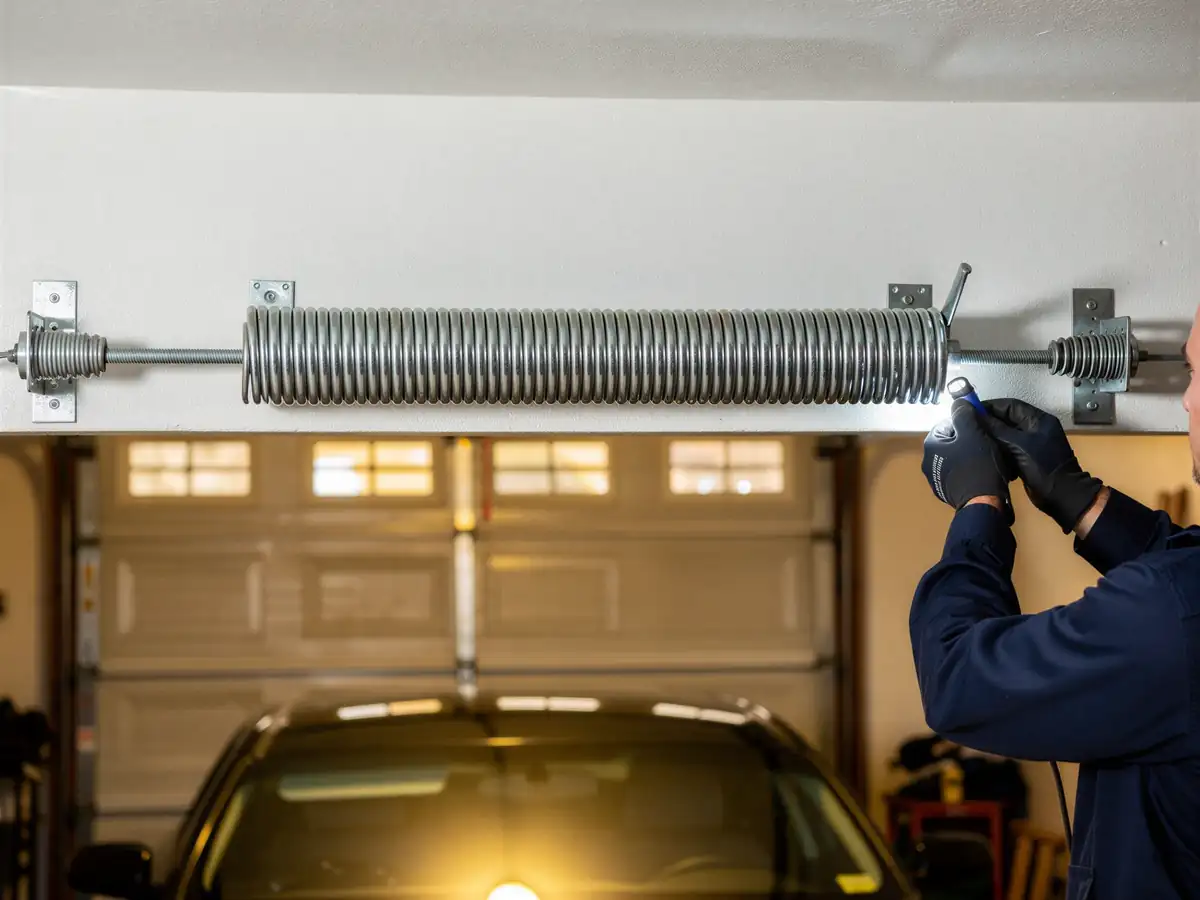
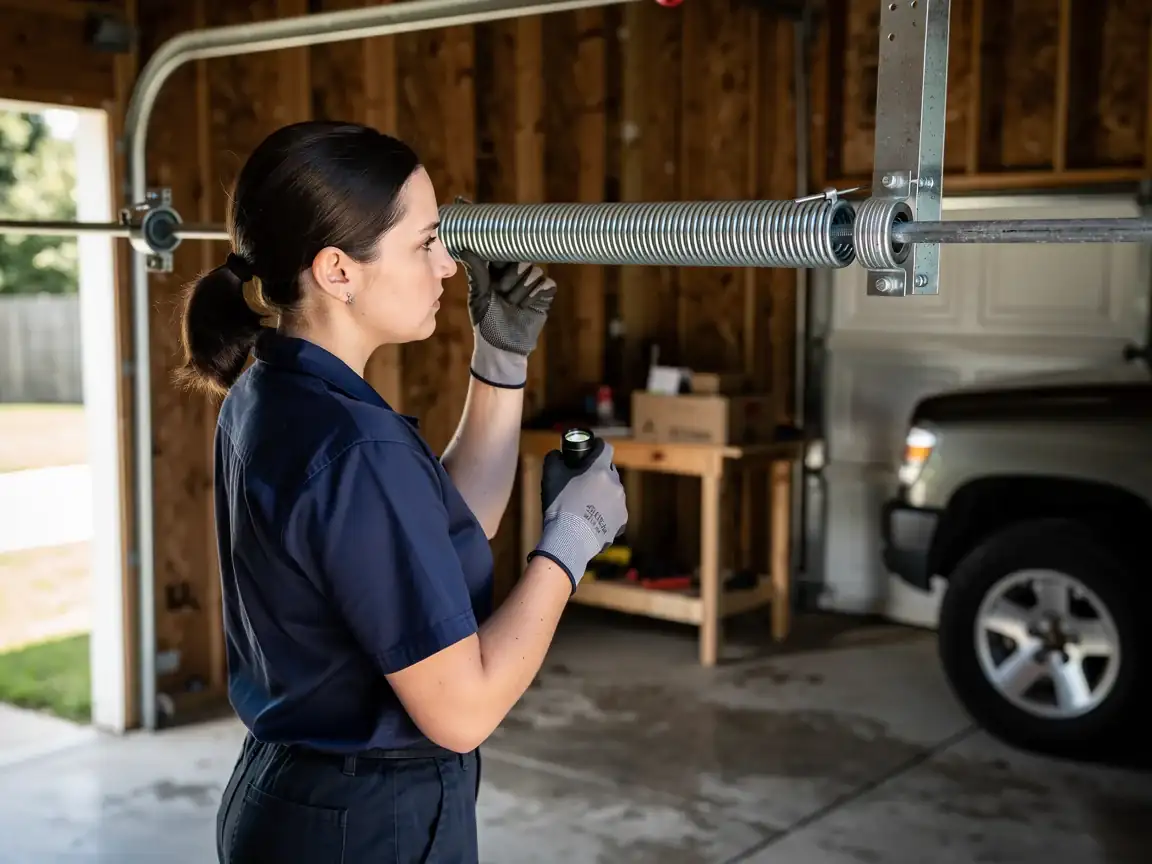
A technician inspects a garage door torsion spring with a flashlight.

On-site diagnosis

A technician tests the door under power and by hand and finds what actually failed.

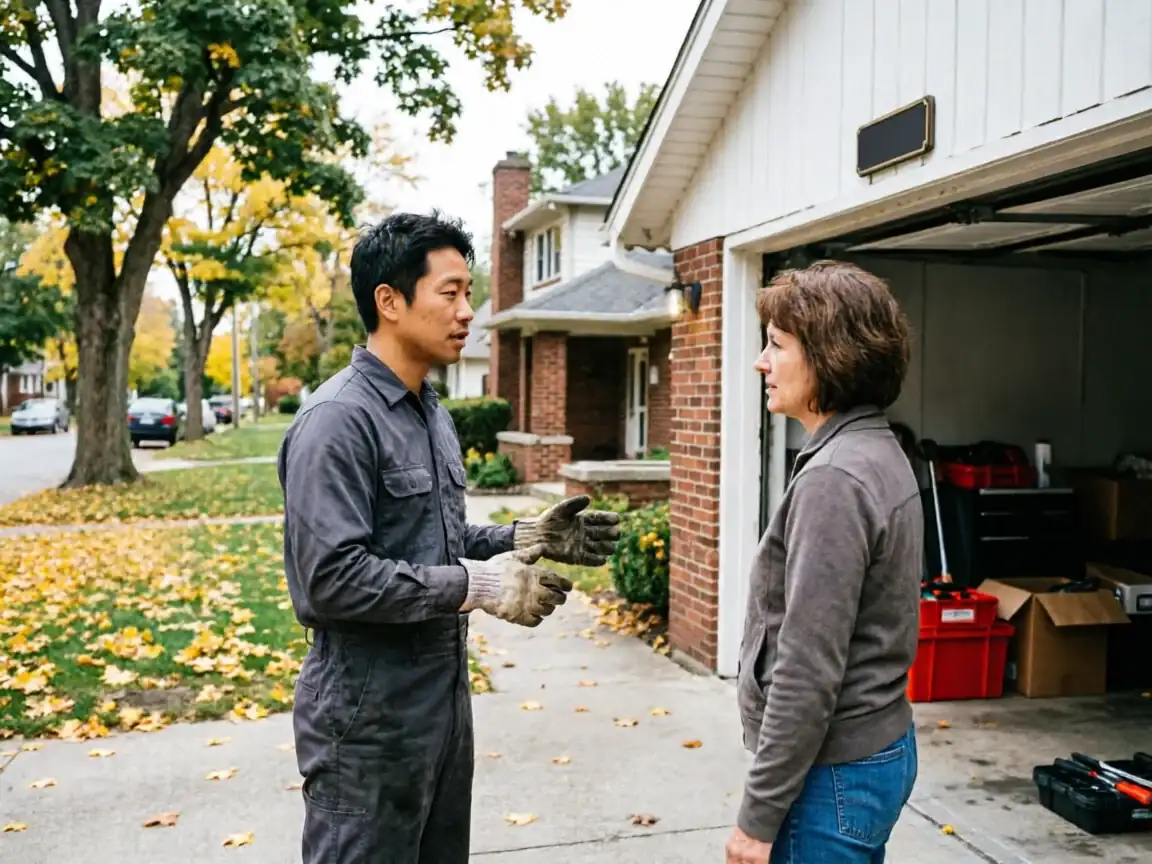
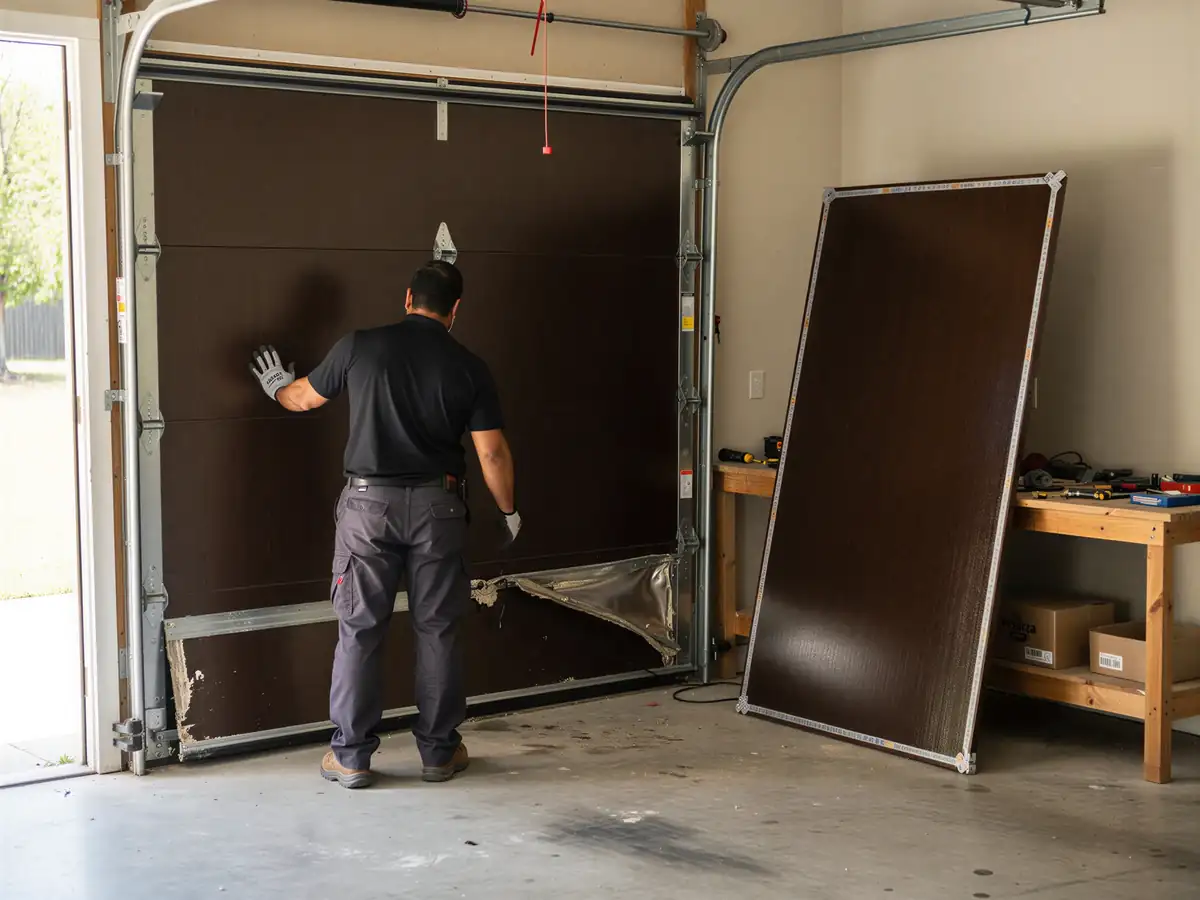
A technician in a gray jumpsuit talks to a woman in front of a garage.

Clear, up-front plan

You get the fix that’s needed and what drives the cost - before any work starts.

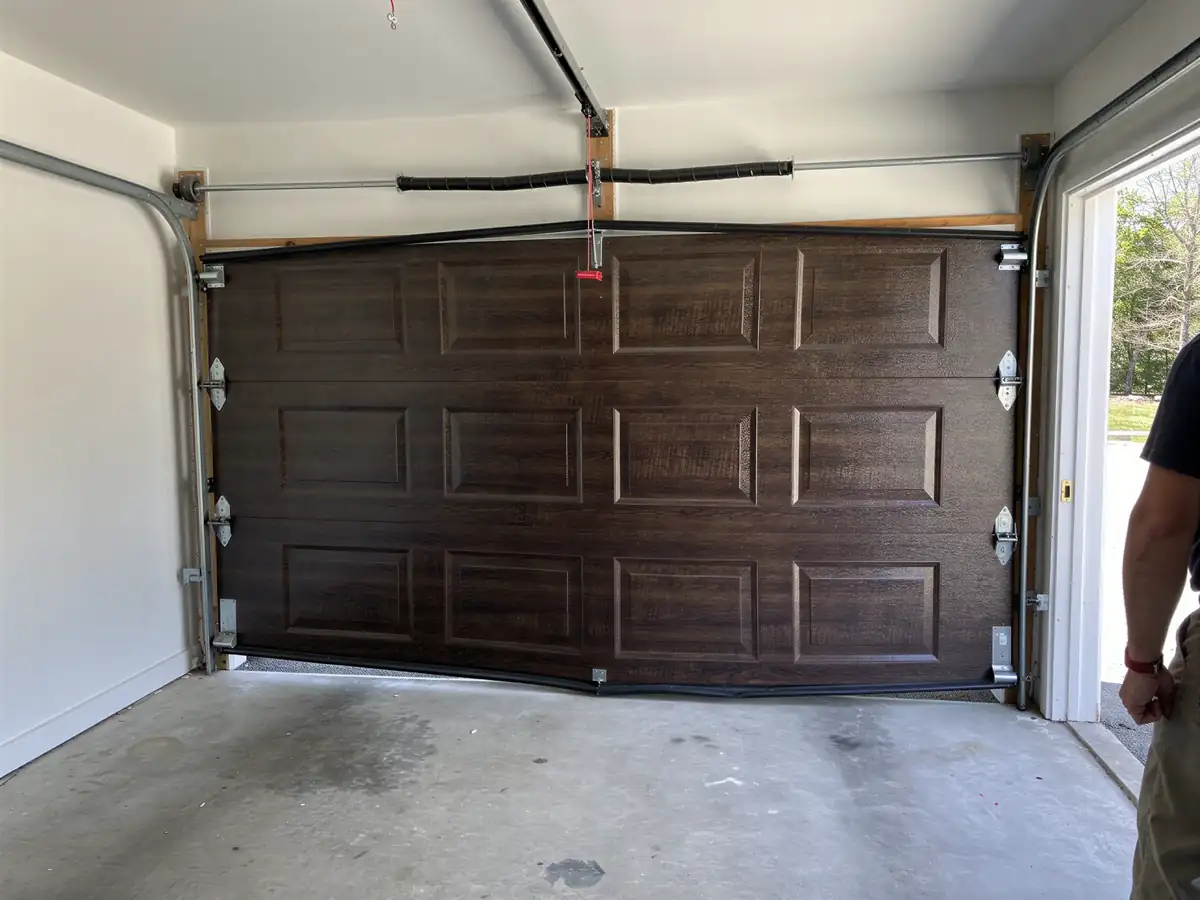
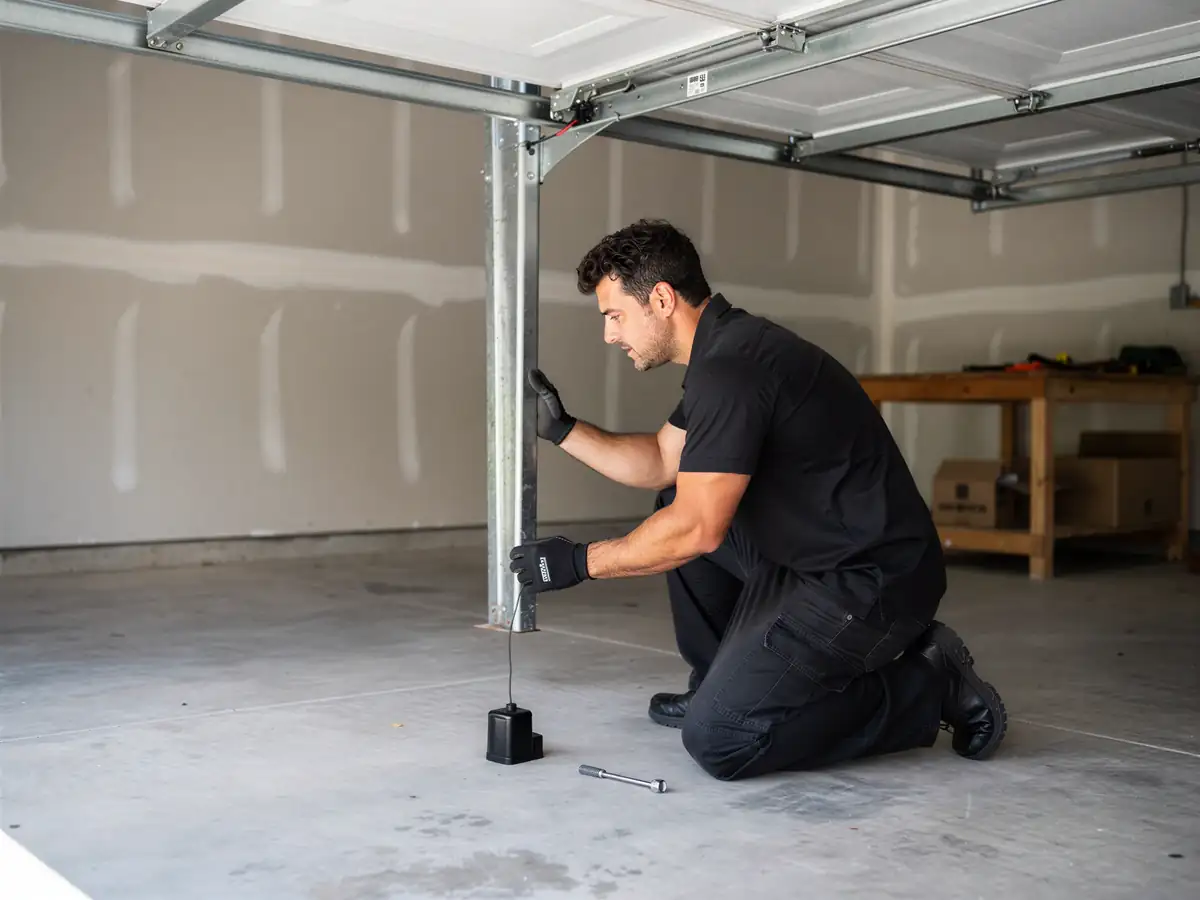
A technician adjusts the brown garage door track inside a garage.

Repaired & tested

The repair is done, the door is set true and tested, and the work area left clean.

Not sure which repair your door needs in Brooklyn Park, MN? Describe what it’s doing - every job starts with a diagnosis.

How we work

What to expect

Diagnosis firstEvery visit starts by finding what actually failed - not a pre-written parts list.
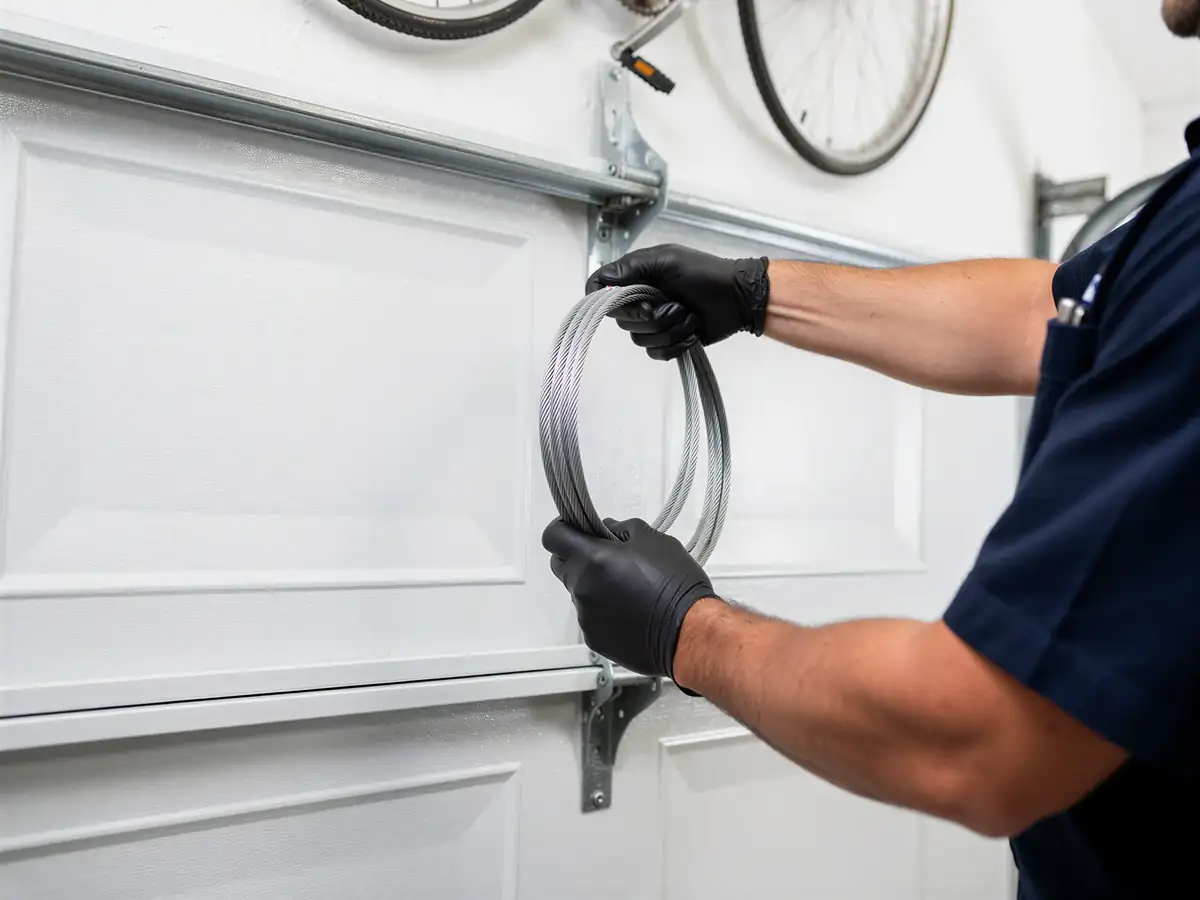
The right part for the doorSprings and openers matched to the door’s weight and age, so the fix holds up.
Straight answersWhen a repair makes more sense than a replacement - or the reverse - you hear it plainly.
Clean, careful workTension released safely, hardware set true, the door tested under power before we leave.
What we do

Garage Door Services

Repair and installation work for Brooklyn Park homes and businesses.

Questions

Frequently asked

Straight answers about garage door repair in Brooklyn Park. Still unsure? Ask us directly.

How do I know if my garage door is too old to keep repairing in Brooklyn Park?

If your house was built during the area's main construction wave, roughly the 1980s or 90s, and you're now looking at a second major repair (spring, opener, or track) within a couple years, that's the signal. One repair on an old door is normal. A pattern of them means the hardware is reaching the end of what cold winters leave it.

Why can't you just match the original parts on an older door?

Spring sizes we can usually match. Opener carriages, specific panel styles, and some older track hardware from doors built decades ago are a different story - manufacturers move on, and exact matches aren't always available. We'll tell you up front if a part isn't gettable rather than jury-rig something that won't hold.

Does cold weather actually cause garage doors to fail, or is that just a sales pitch?

It's mechanical, not a pitch. Cold-severe winters stiffen lubricant, shrink metal slightly, and make nylon rollers brittle. A spring or cable that's marginal in fall often lets go in deep winter because the cold removes whatever slack was keeping it working. Older hardware feels this first.

Ready to get your garage door sorted?

Tell us what it’s doing and where you are in Brooklyn Park - we’ll take it from there.

Request a QuoteCall