What Most People Get Wrong
Most homeowners treat a snapped spring like bad luck. It isn't, not around here. Housing in this service area went up mostly between 1957 and 2007, with the median build landing around 1980, and that 1980s-to-90s wave is the backbone of the local housing stock across the 58 named areas this company tracks. A torsion spring rated for roughly 10,000 cycles doesn't care what decade it is, but it does care how old it is, and a door installed when a house was built in 1980 is now carrying metal that's well past its working life. The mistake isn't ignorance of springs breaking. It's assuming the break is random rather than scheduled. If your house falls in that 1980-2007 band, the spring on it is old enough to be a question of when, not if. People get surprised by the timing, not the event, and that surprise is what turns a fifteen-minute fix into a Saturday morning spent locked out of the garage with the car inside or outside, whichever is worse that day.
The Problem
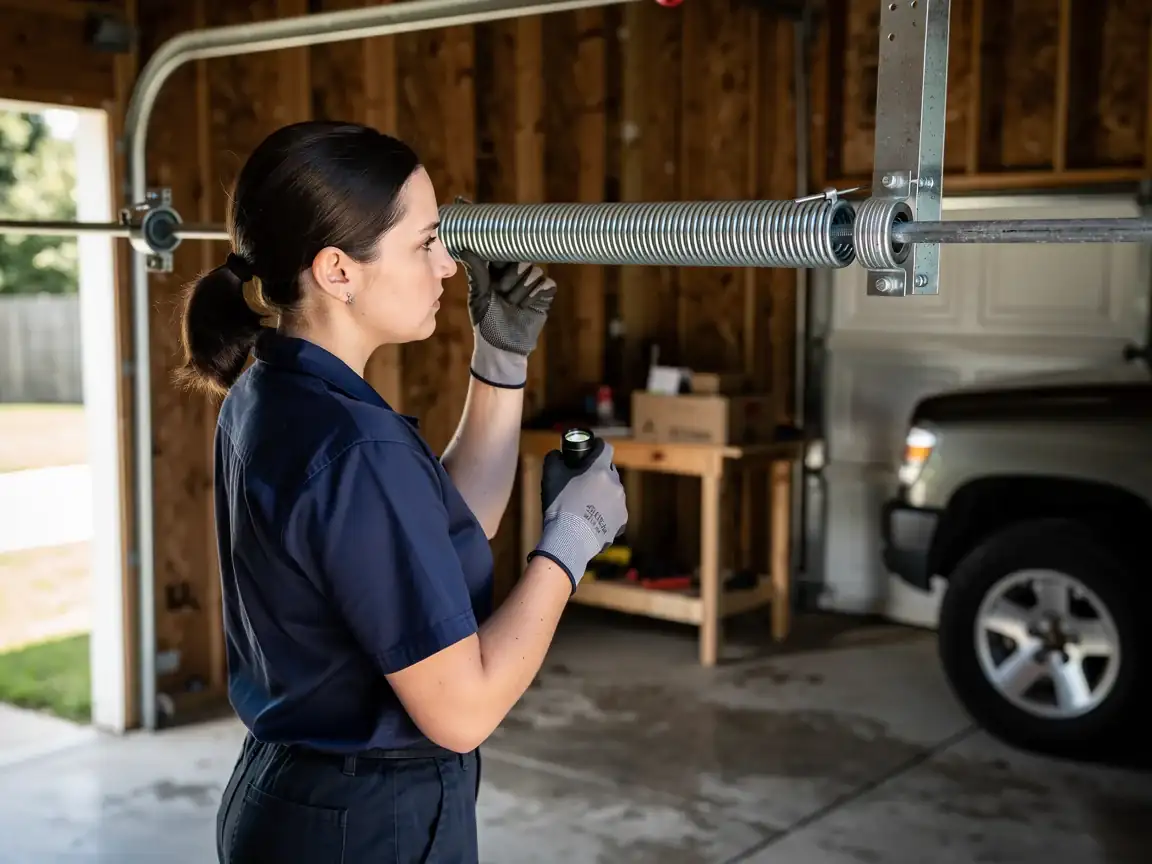
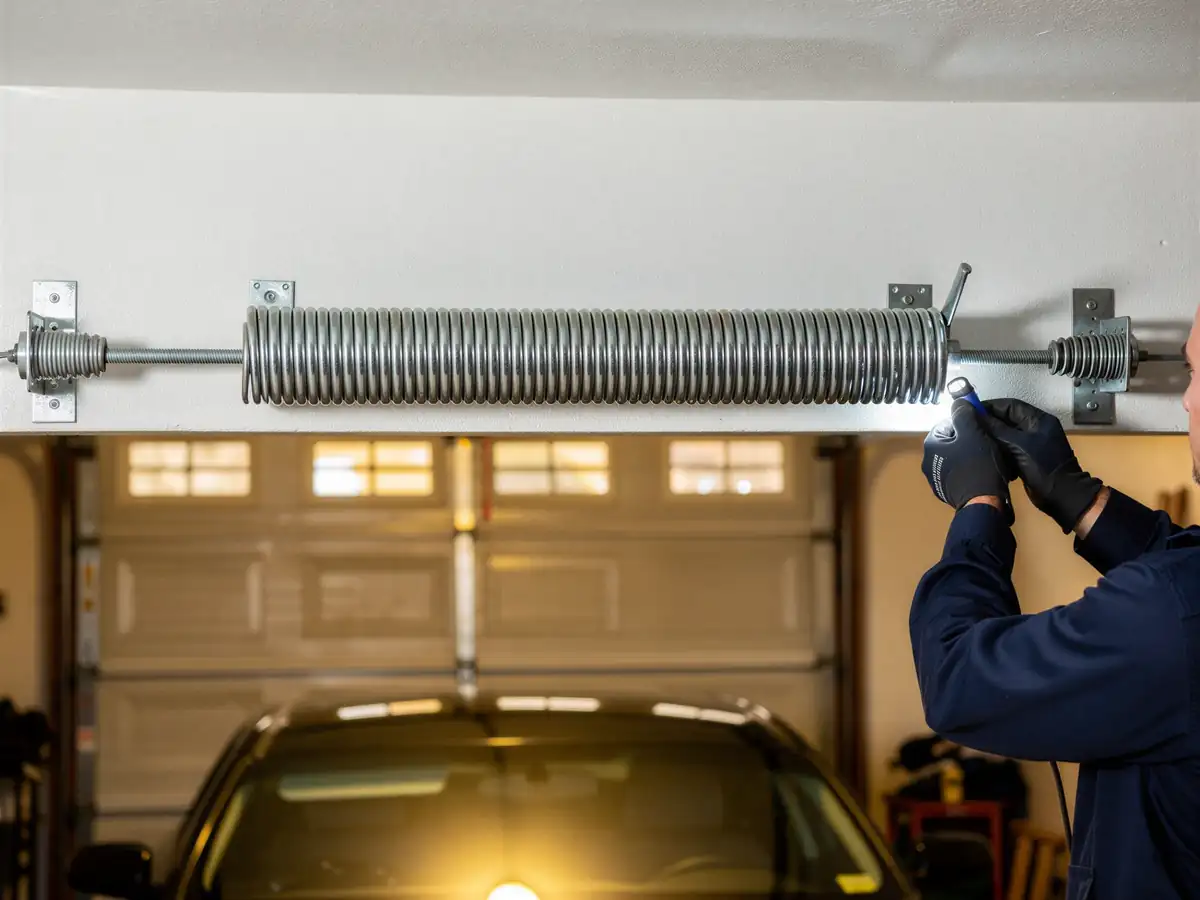
Cold makes steel brittle, and a torsion spring near the end of its cycle life doesn't flex the way it did when it was new. It's lost temper from thousands of wind-and-release cycles, and in a cold-severe climate the metal contracts and loses what little give is left. That's why spring failures cluster on the coldest mornings of the year rather than spreading evenly across the calendar. With roughly 150,847 owner-occupied houses across this service area, and a large share built in that same 1957-2007 window, a hard cold snap doesn't fail one spring at a time, it fails a batch of them in the same week, all owned by people who thought their door was fine the day before. That's the honest limitation here: once a spring shows wear, a cold morning can take it from working to snapped in one lift, and there's no way to predict the exact day. Replacement before the cold sets in is the only real hedge, not a guarantee.
How Local Conditions Play In
Distance to the next town over doesn't change what cold does to steel. Osseo sits two miles from Brooklyn Park, Brooklyn Center three, Champlin and Fridley five, and the houses in all of them share the same 1980-median build era and the same cold-severe winters. What changes house to house is age and maintenance, not zip code. A door on a house built in 1980 has had roughly double the winters to fatigue its spring compared with one built in 2007, even though both sit in the same climate band and both get hit by the same cold front on the same night. If your house falls on the older end of that 1957-2007 range, that's the number that matters more than anything else on this page, and it's worth checking the build year against the spring's condition before the next cold stretch, not after.