How Long You Are Without the Door
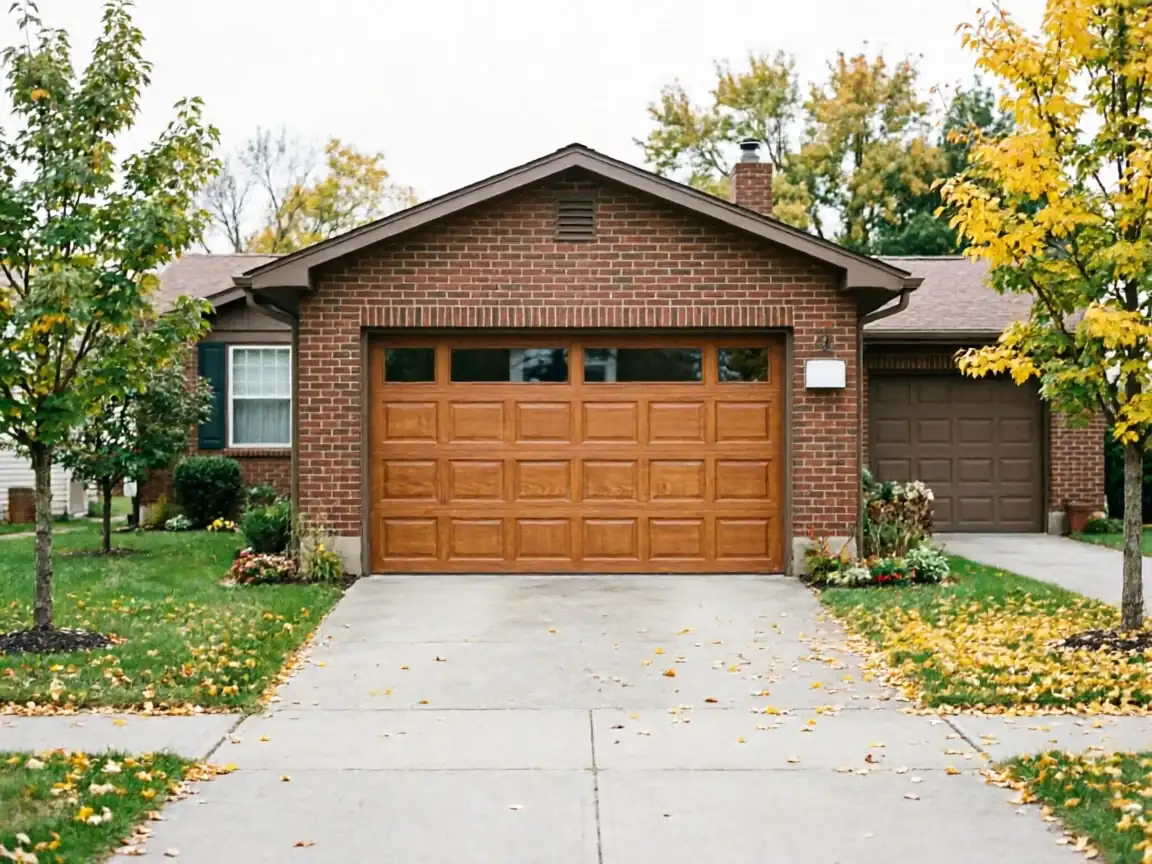
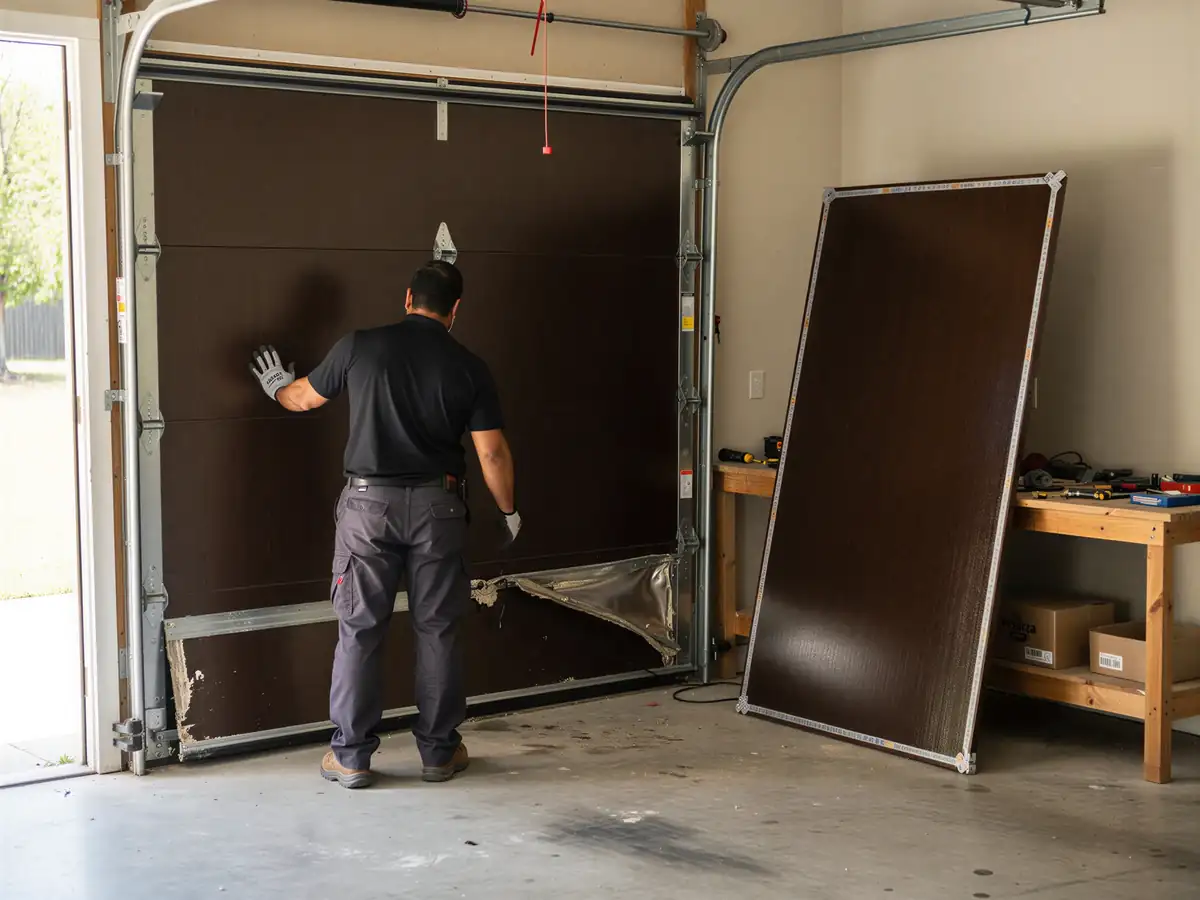
Most houses in Osseo went up around 1965, which puts the bay, the jamb, and often the track hardware about fifteen years ahead of this area's overall median build year of 1980. A lot of that original framing has never been touched. That matters for timing: pulling an old door off a 1965 opening sometimes turns up a jamb that's shifted or trim that was never squared to begin with, and that adds time the quote didn't account for. On a straightforward swap - same size opening, no header rebuild - the door itself goes on in a few hours once the crew is on site. If the opening needs squaring or the header's been patched before, plan on more of the day going to carpentry than to the door. We won't know which one this is until the old door's off the hinges, so we tell people up front: the install window is honest, the demo-and-inspect window is the variable. We don't carry a same-day promise for Osseo specifically - the crew comes from Brooklyn Park, two miles off, and the job gets scheduled like any other call in the territory, not treated as a rush drop-in.
Getting It Booked In
The crew runs out of Brooklyn Park, two miles from Osseo, so there's no separate branch or local dispatch to wait on - it's the same scheduling queue as the rest of the territory. Because Osseo is one of the smaller markets we cover, with around 1,152 households total, we don't run a standing route through it the way we might through a bigger suburb; a job here gets slotted in alongside the rest of the day's calls rather than batched with other Osseo stops. That's worth knowing if you're trying to coordinate around other work - painters, a concrete pour, whatever else is happening on the house - because the install date is set to the crew's route that day, not to a fixed Osseo schedule. Booking ahead by a few days usually lines things up fine. If the door's already down and the opening's exposed, say so when you call - that moves the priority.
What Is on the Truck
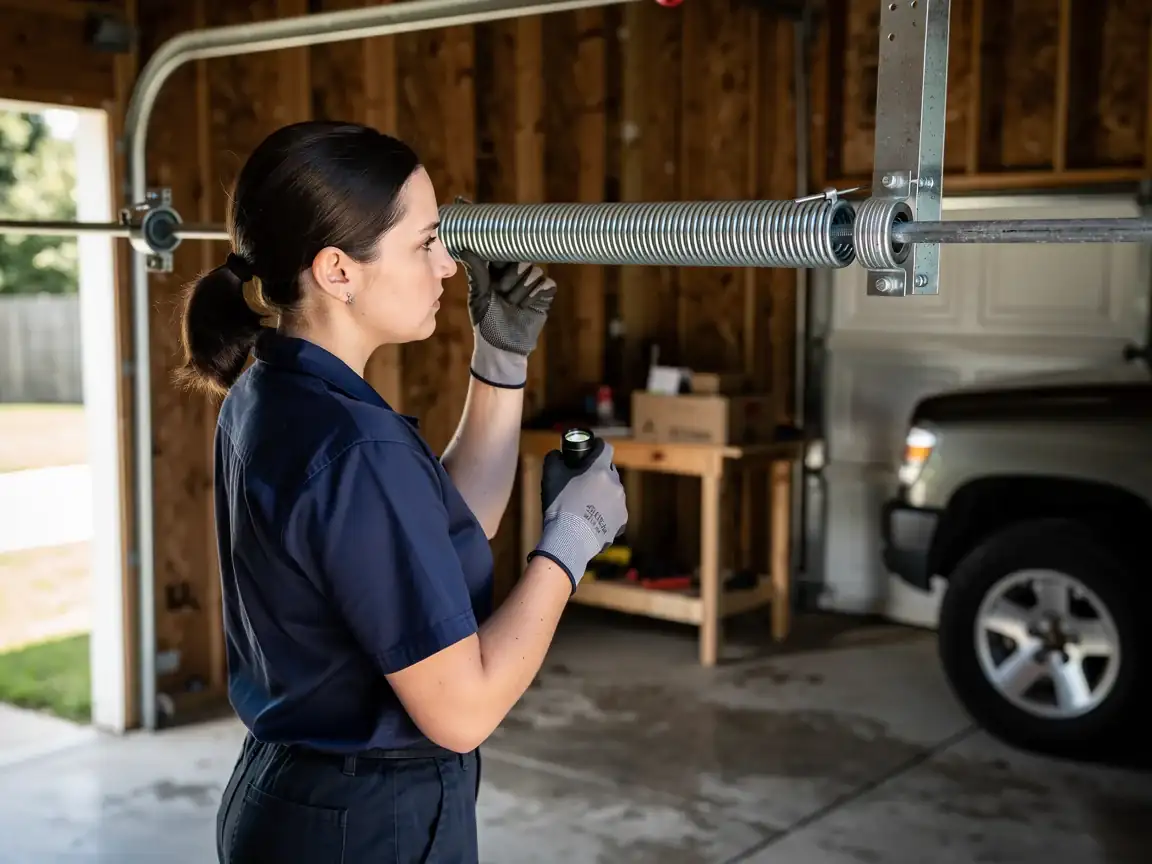
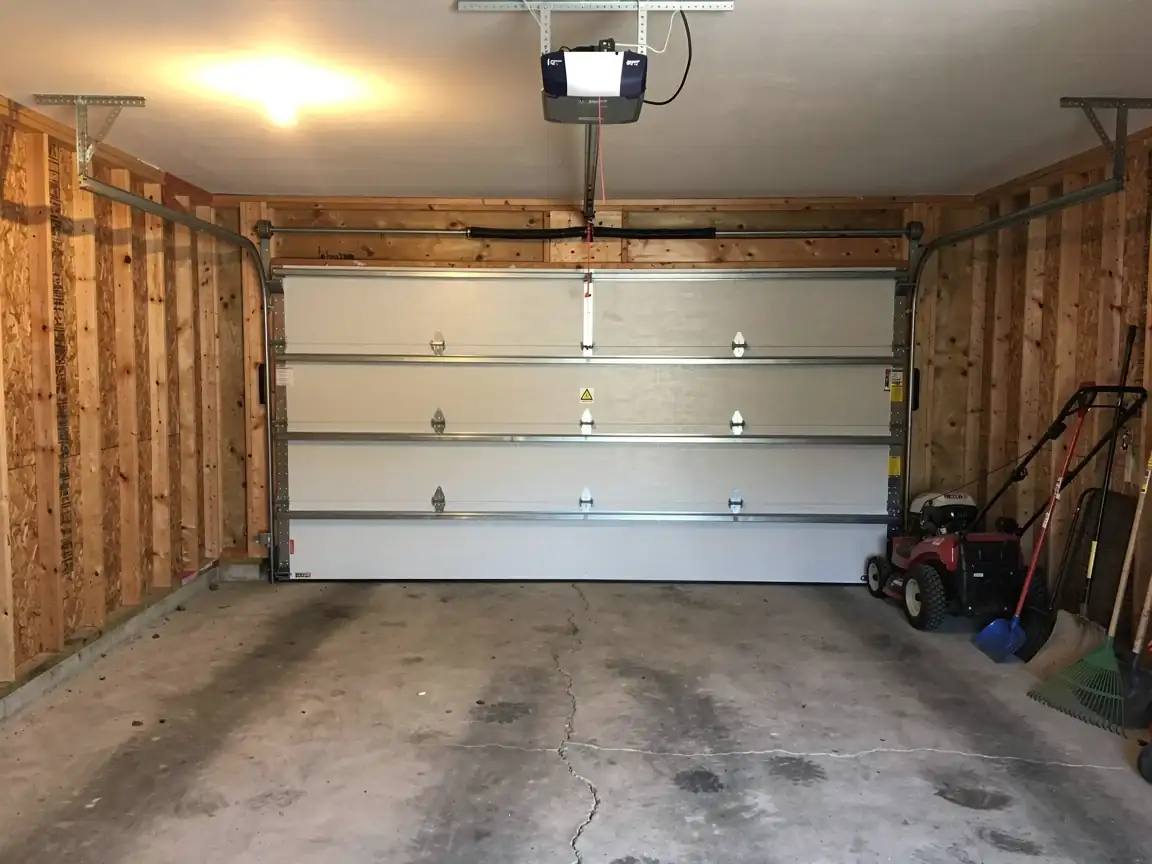
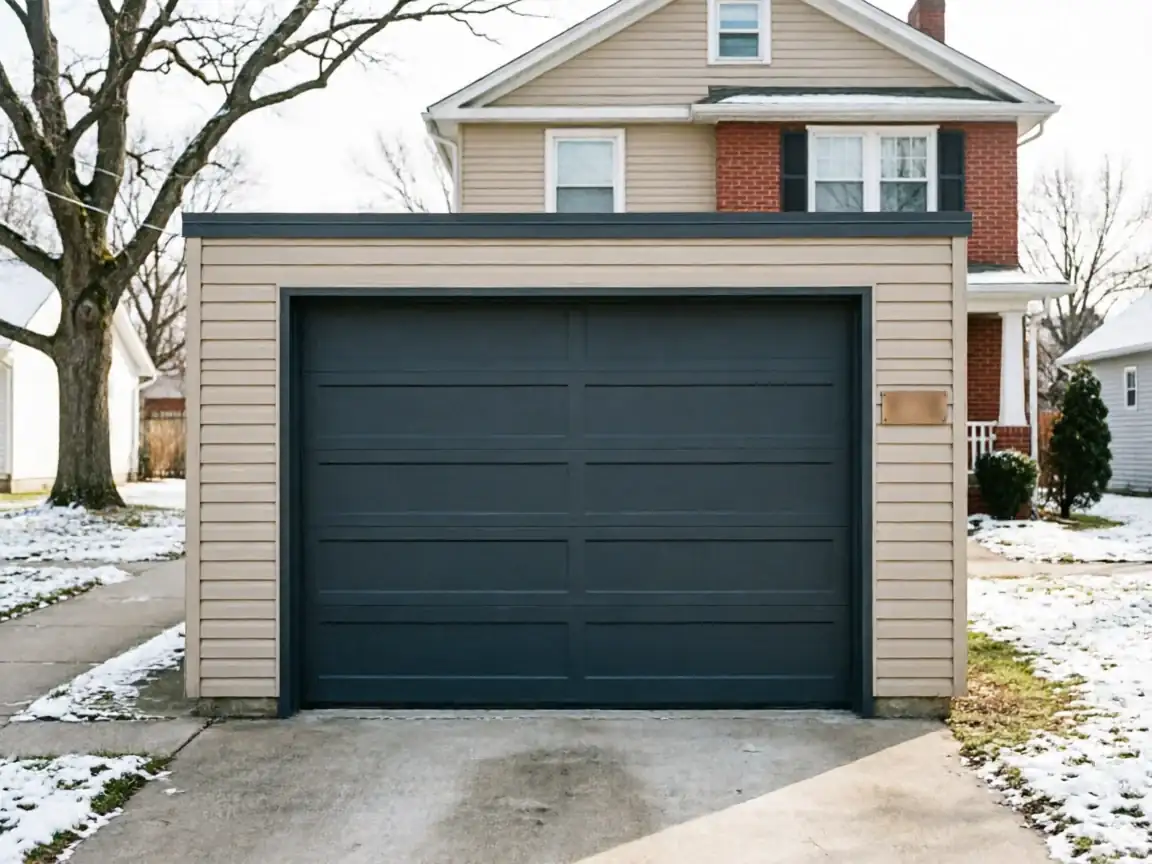
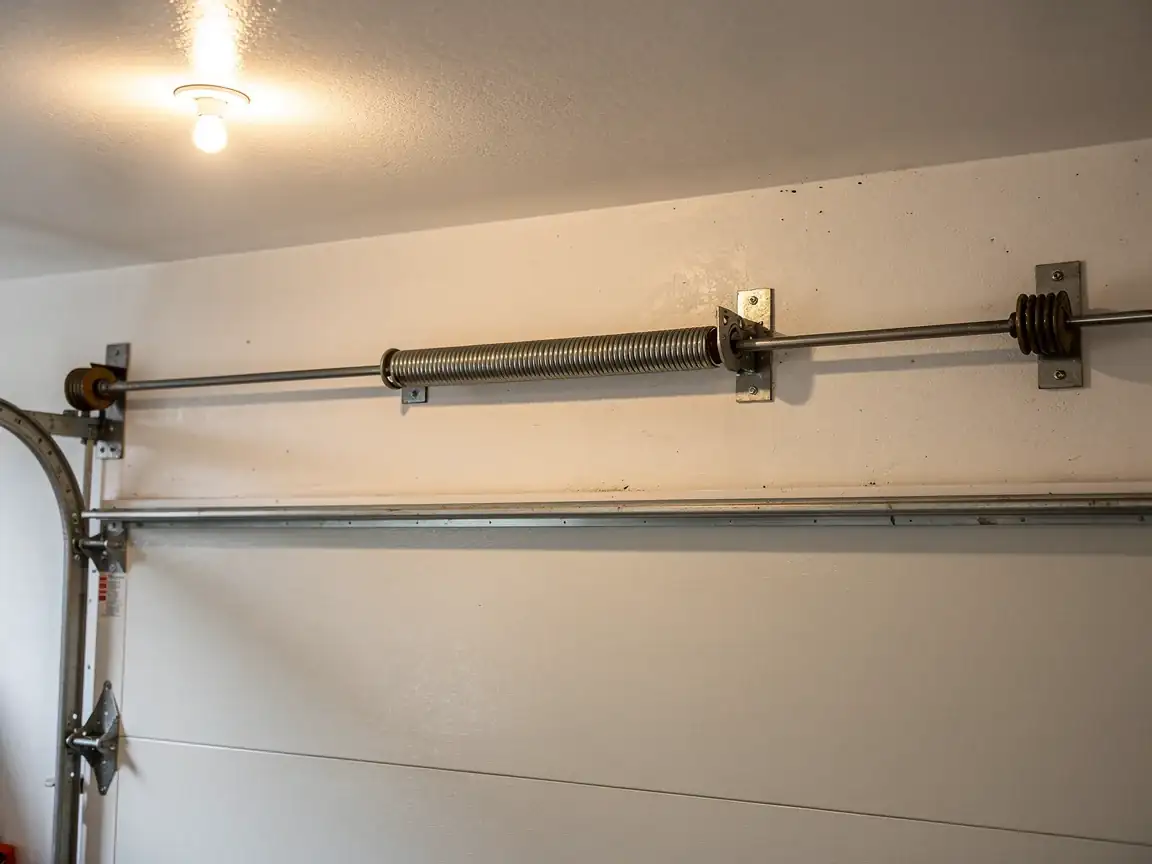
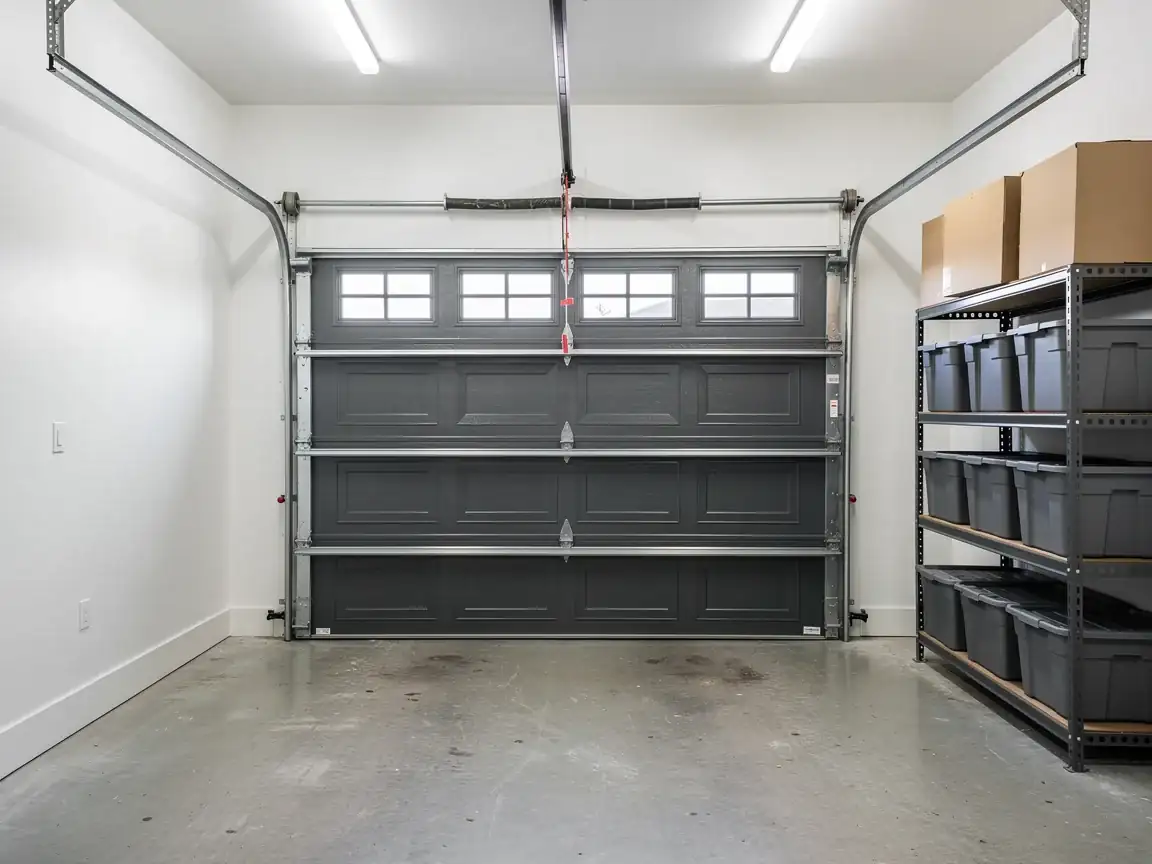
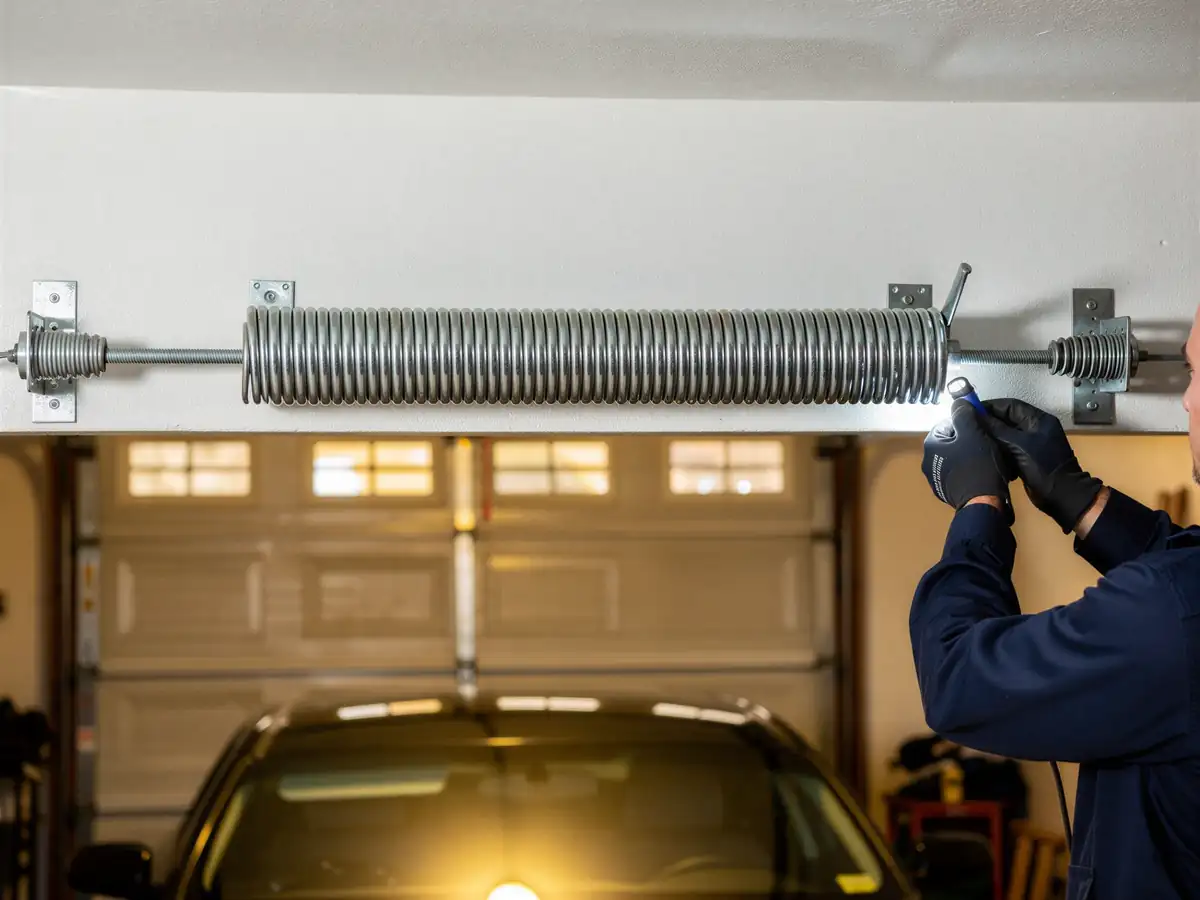
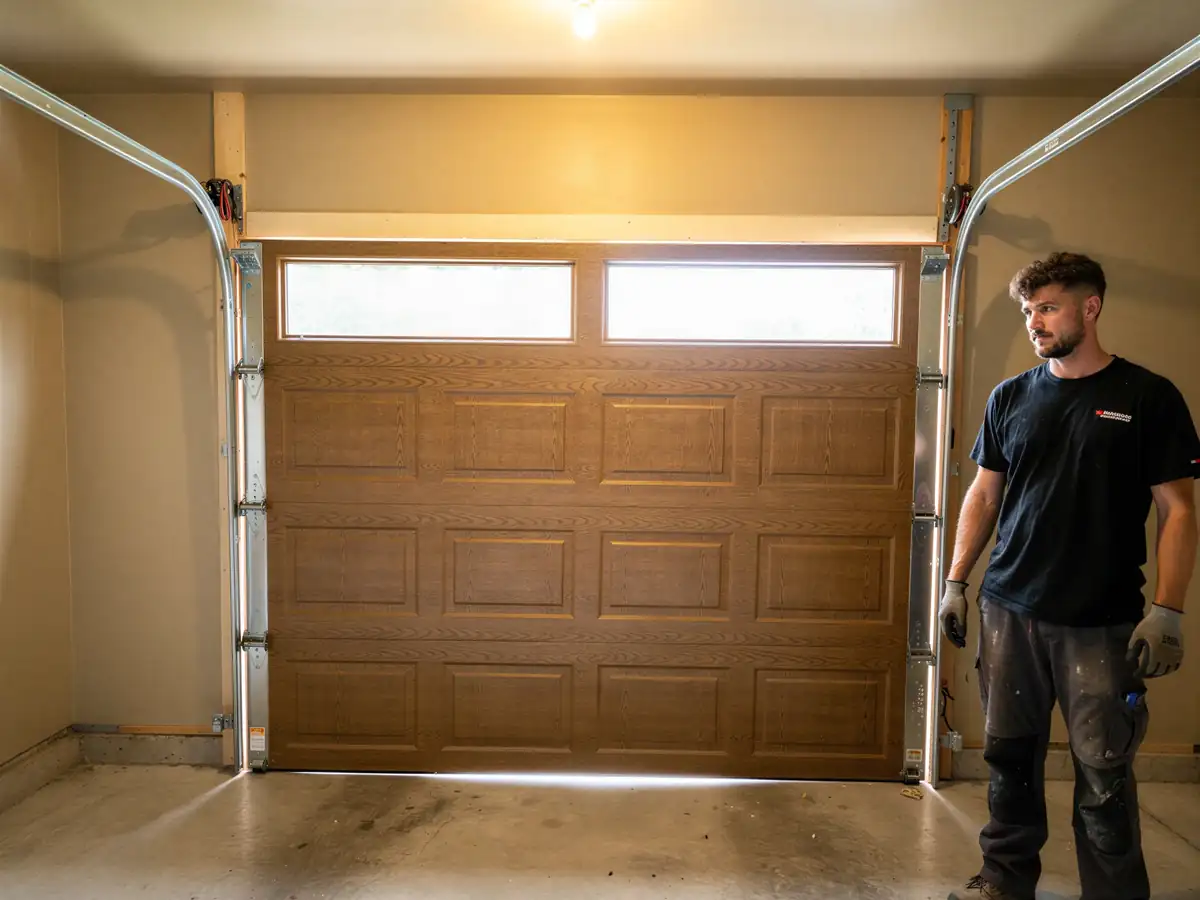
For a house built around 1965, the door coming off is usually a single-layer panel on an overhead track with hardware that predates auto-reverse safety sensors - those became standard well after this house was framed. The truck carries current steel and insulated options sized to fit a standard-era opening without a custom order, plus the sensor brackets and bottom-bracket hardware that older frames were never drilled for. Minnesota's cold-severe climate band means insulation is worth discussing even on a garage that's never been heated - a poorly sealed door in a block that cold still pulls heat out of an attached house through that shared wall. We stock a working range of torsion springs sized for common door weights, but if the new door's a nonstandard weight or an odd width turns up once the old one's off, that spring may need to be ordered rather than pulled off the truck, and that's a real delay we won't pretend away.
What the Fix Involves
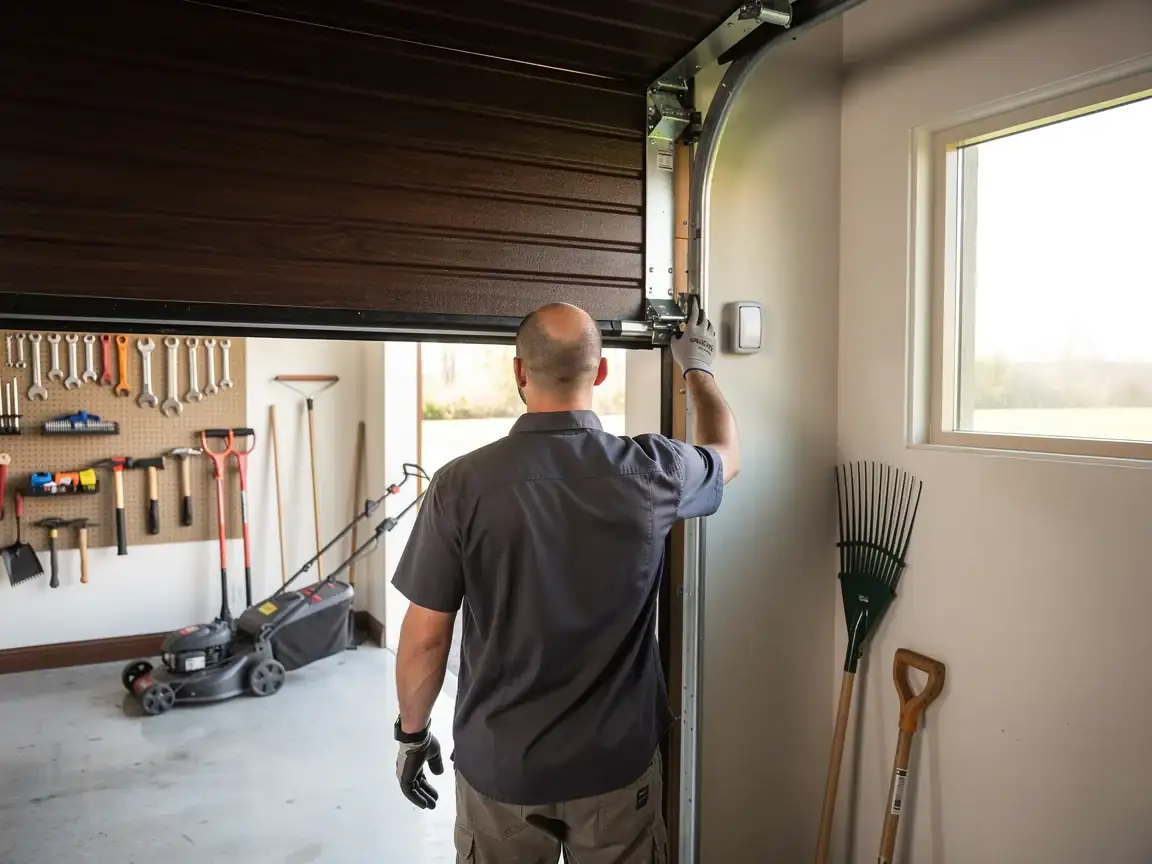
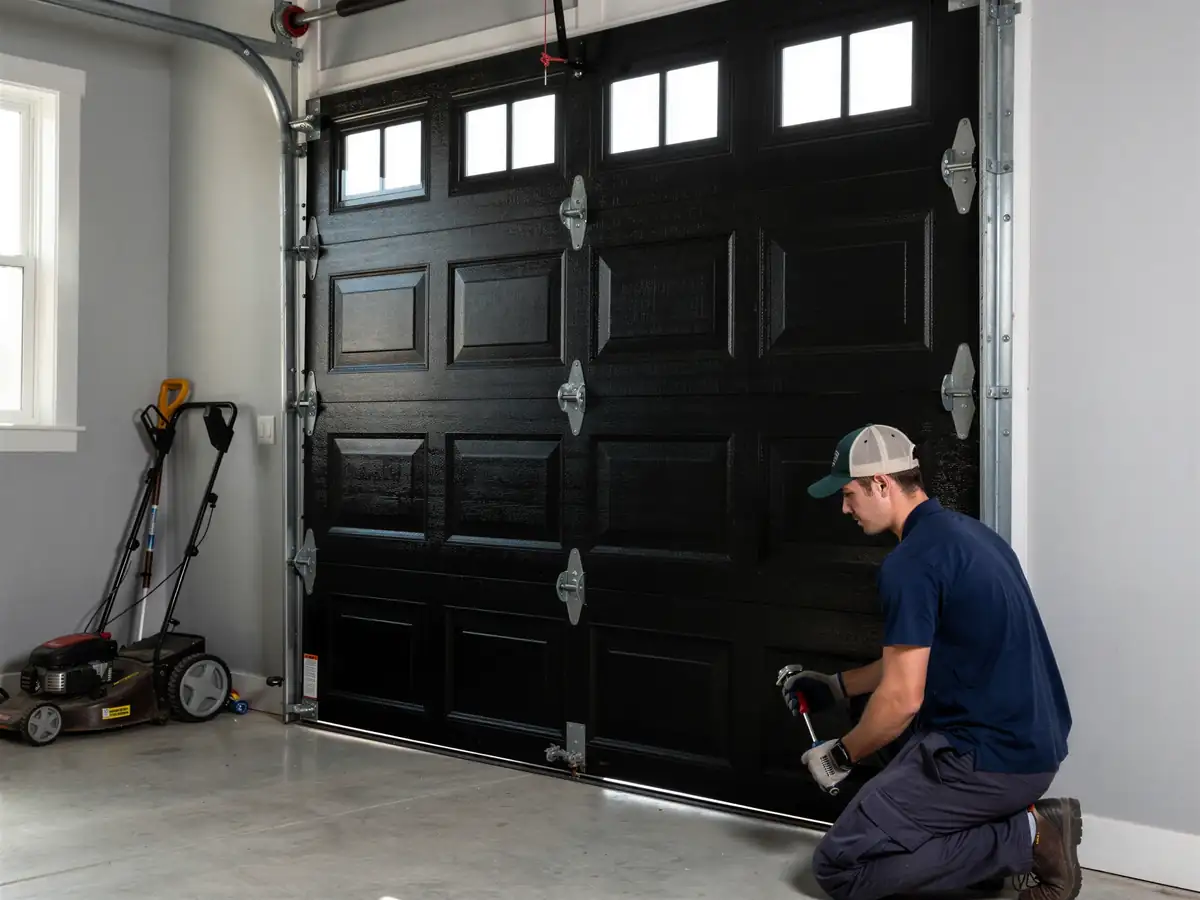
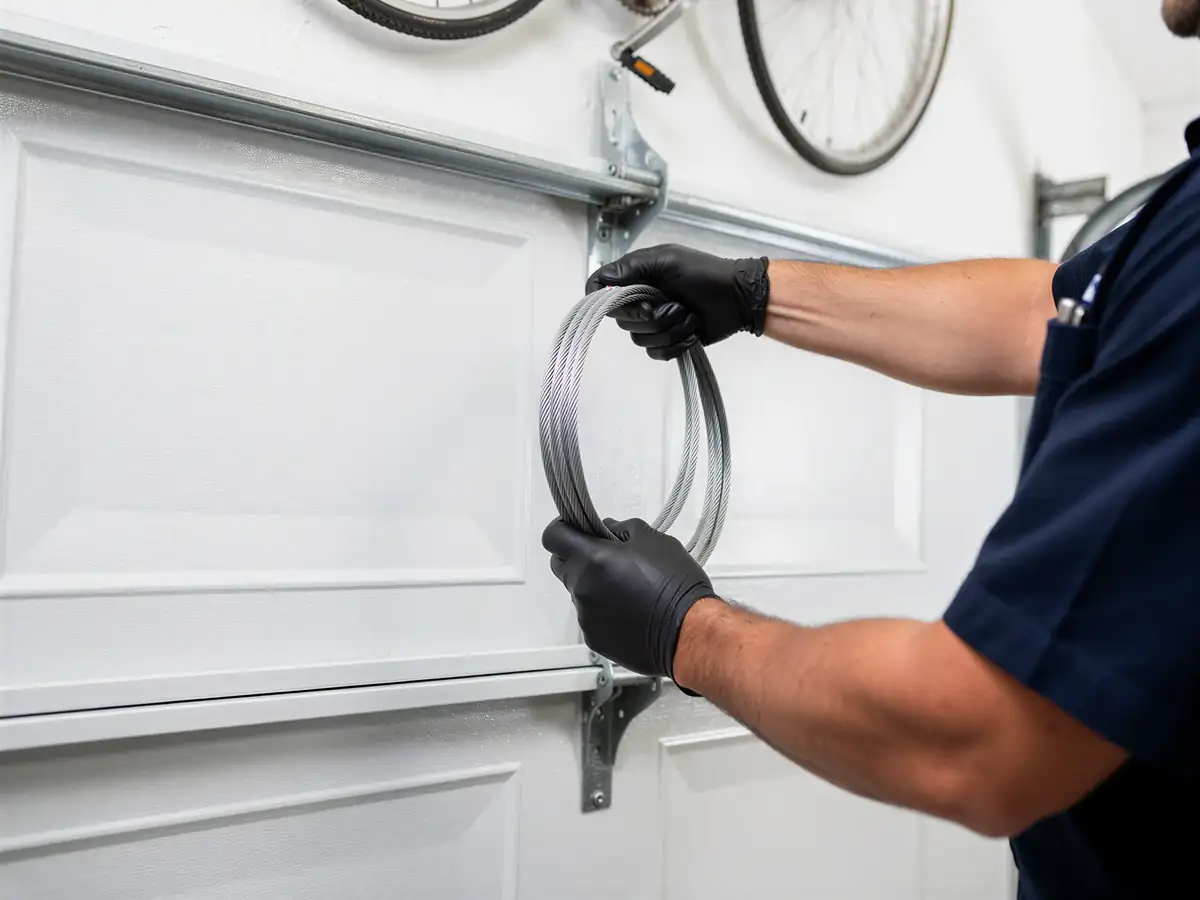
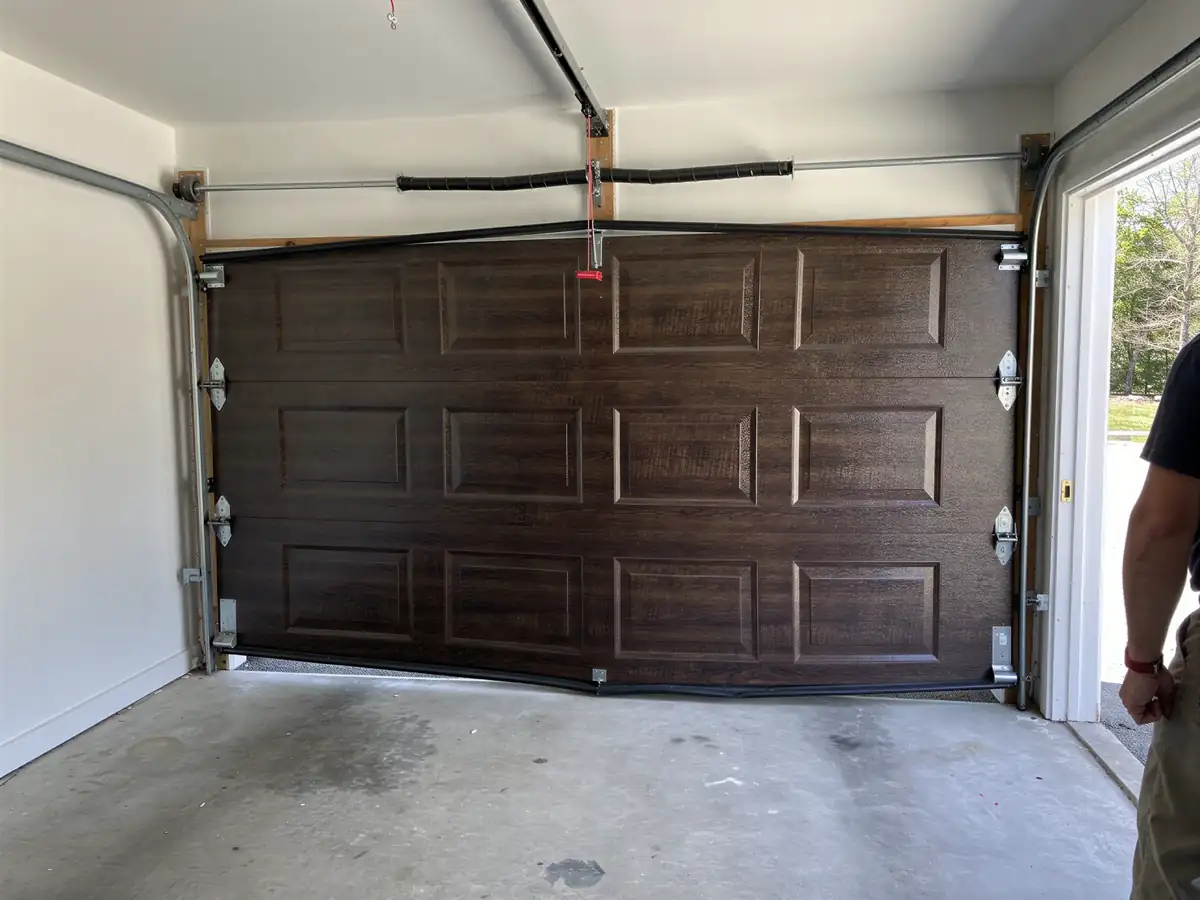
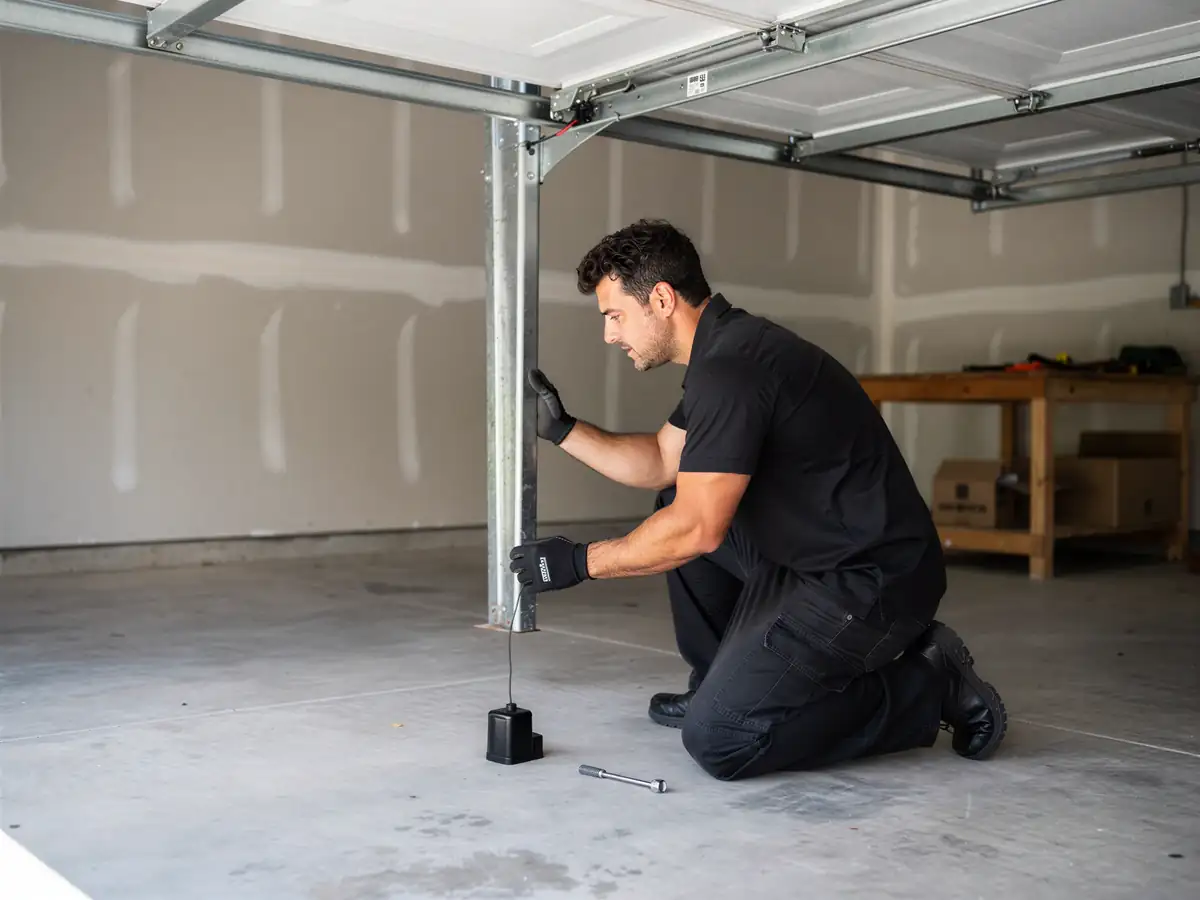
On a house from 1965, the install is rarely just the door. The track brackets are often original and were sized for a lighter door than what's sold today, so those usually get replaced rather than reused. The jamb gets checked for square - framing from this era settles unevenly over sixty years, and a door hung slightly out of plumb will bind within a year. If the opener predates auto-reverse sensors, which is common on houses this old since the door and opener were rarely installed at the same time, we add the sensor pair as part of the job rather than leaving a non-compliant setup in place. None of this is exotic work. It's the same handful of things that show up on most houses from this build year, and knowing that going in is what keeps the quote close to the final bill.