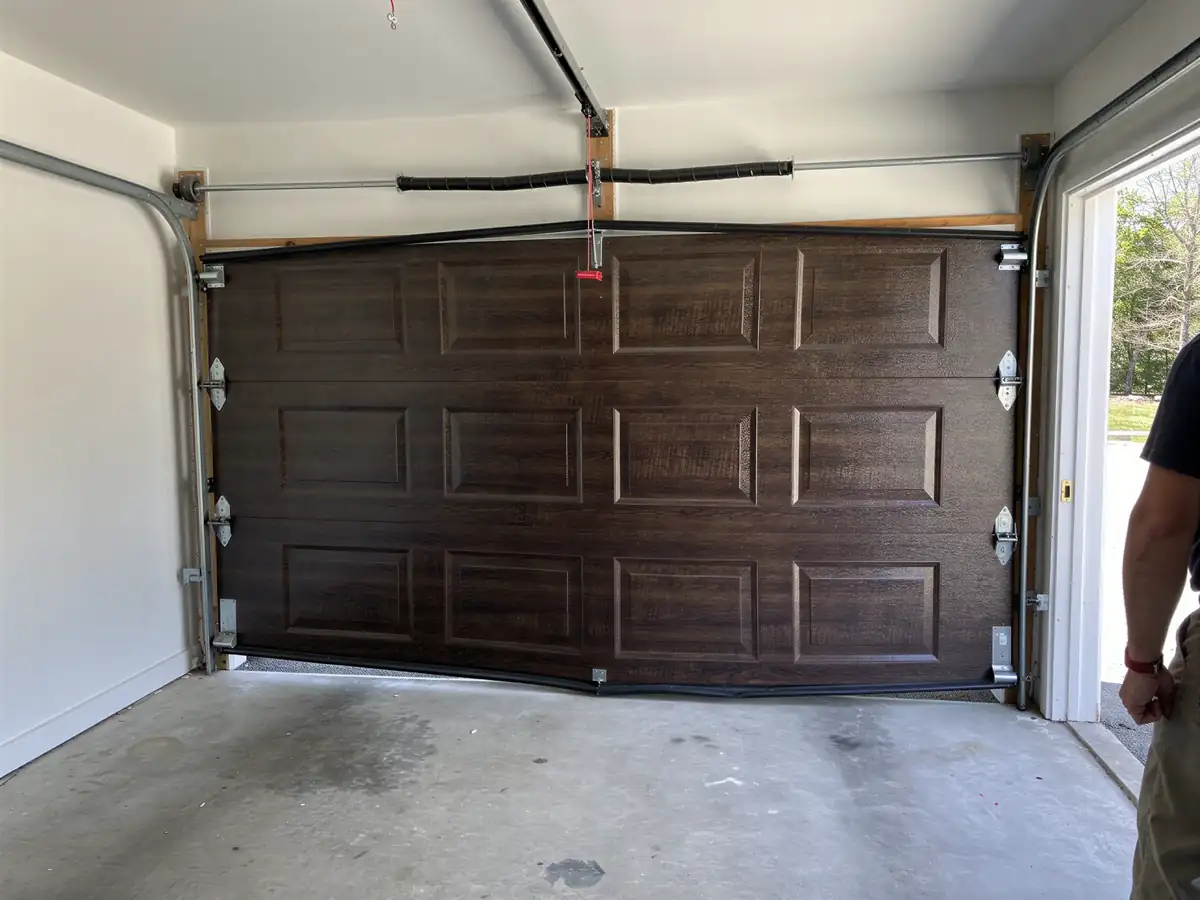
What the Fix Involves
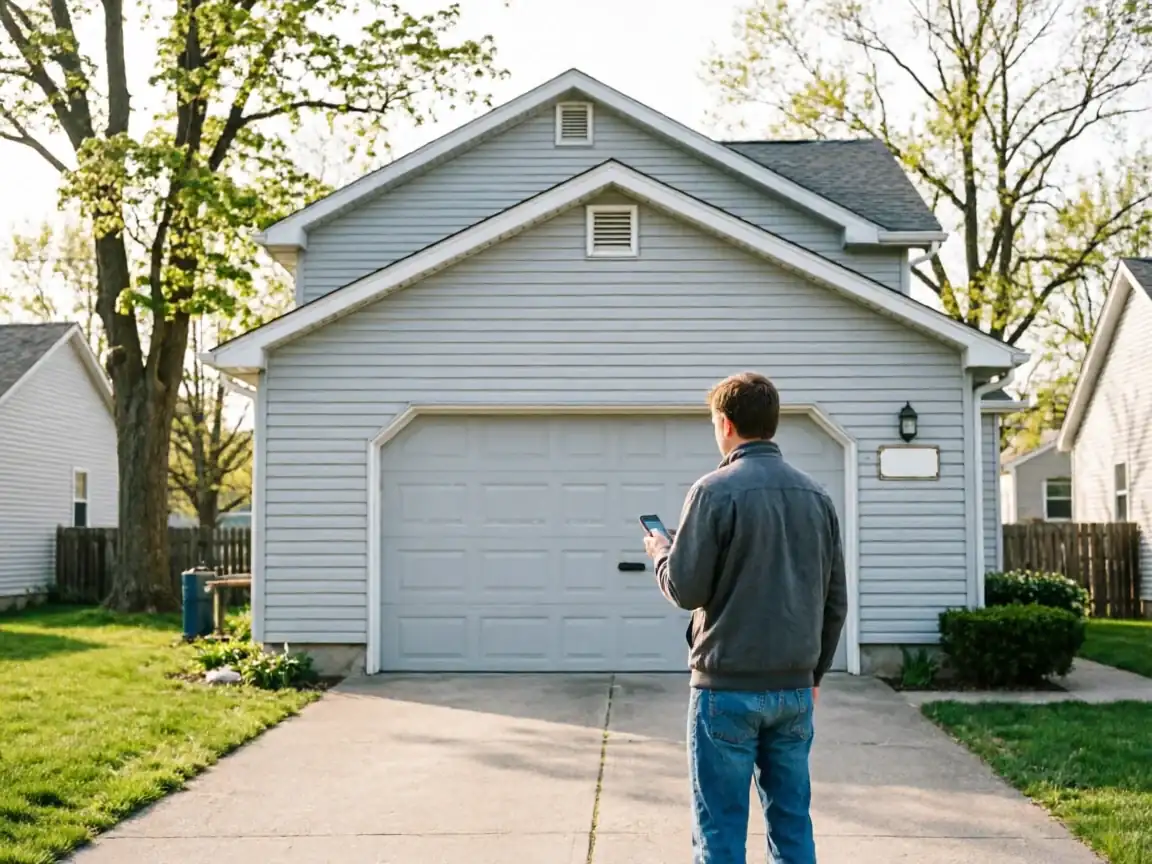
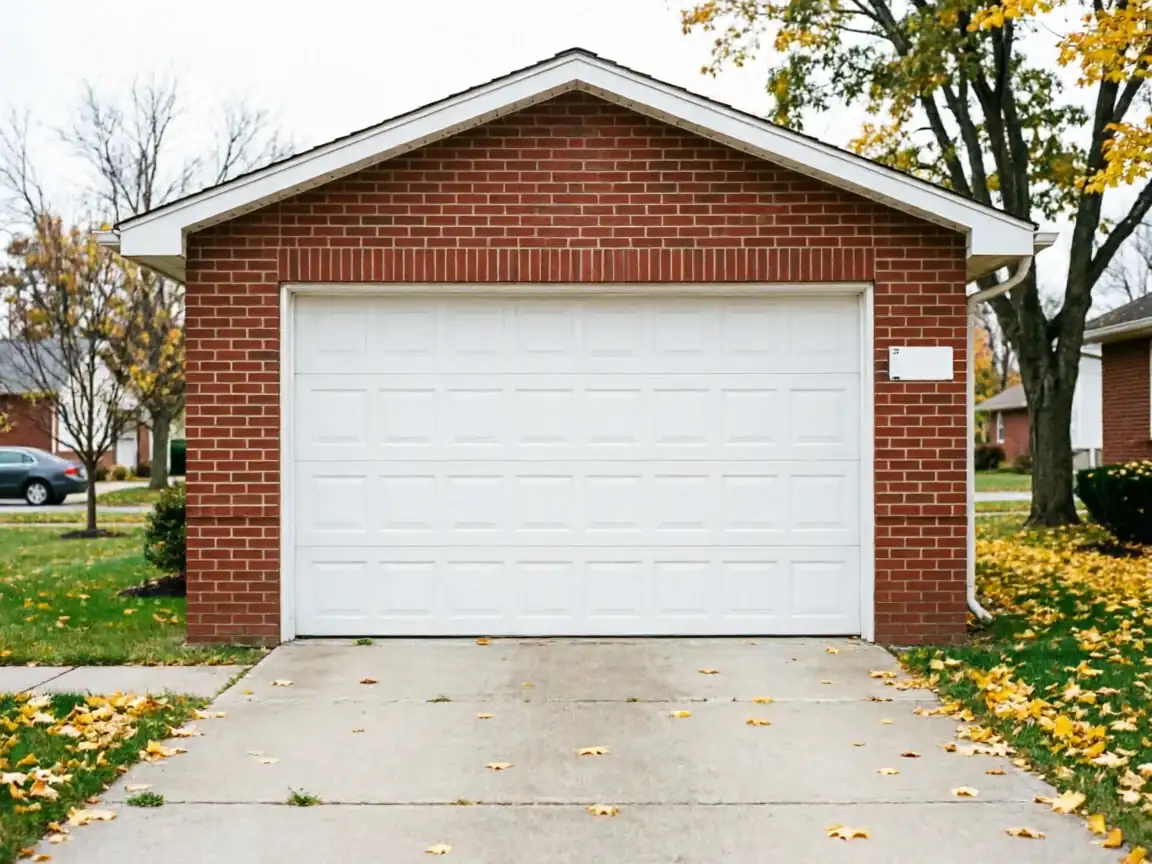
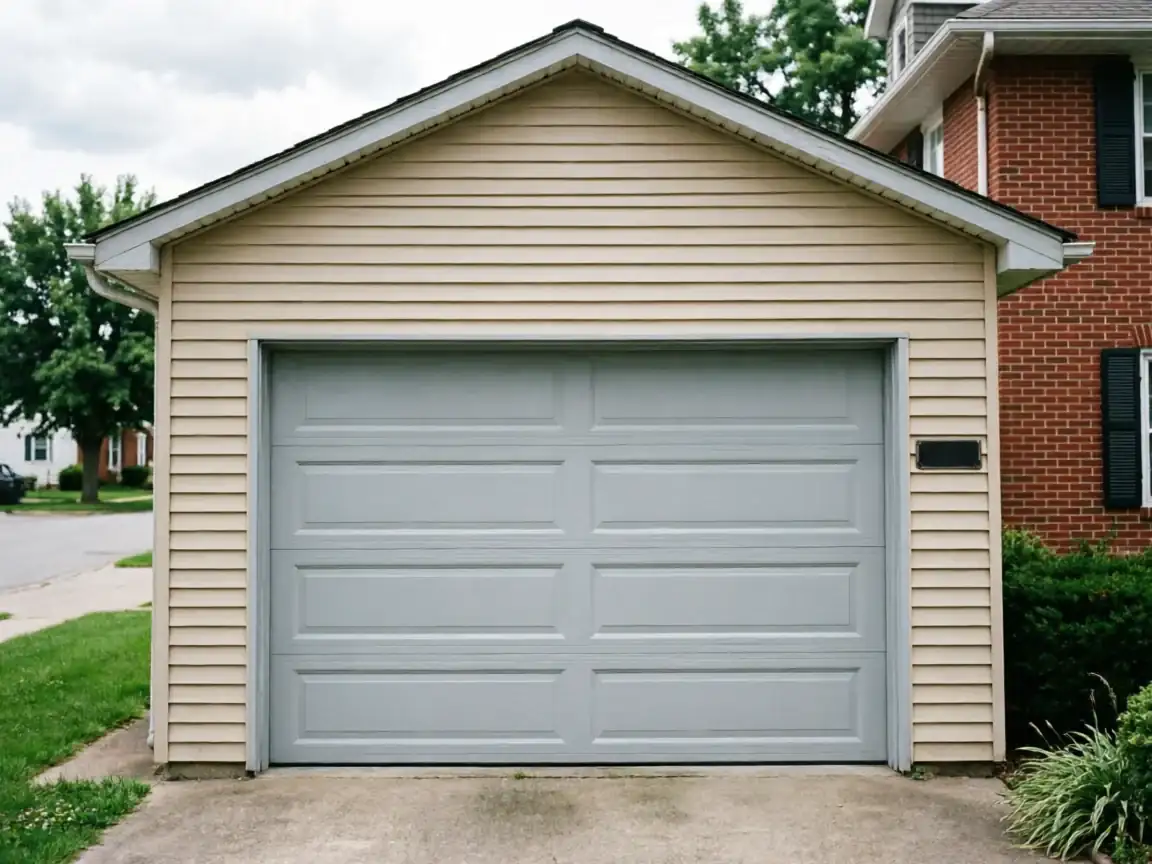
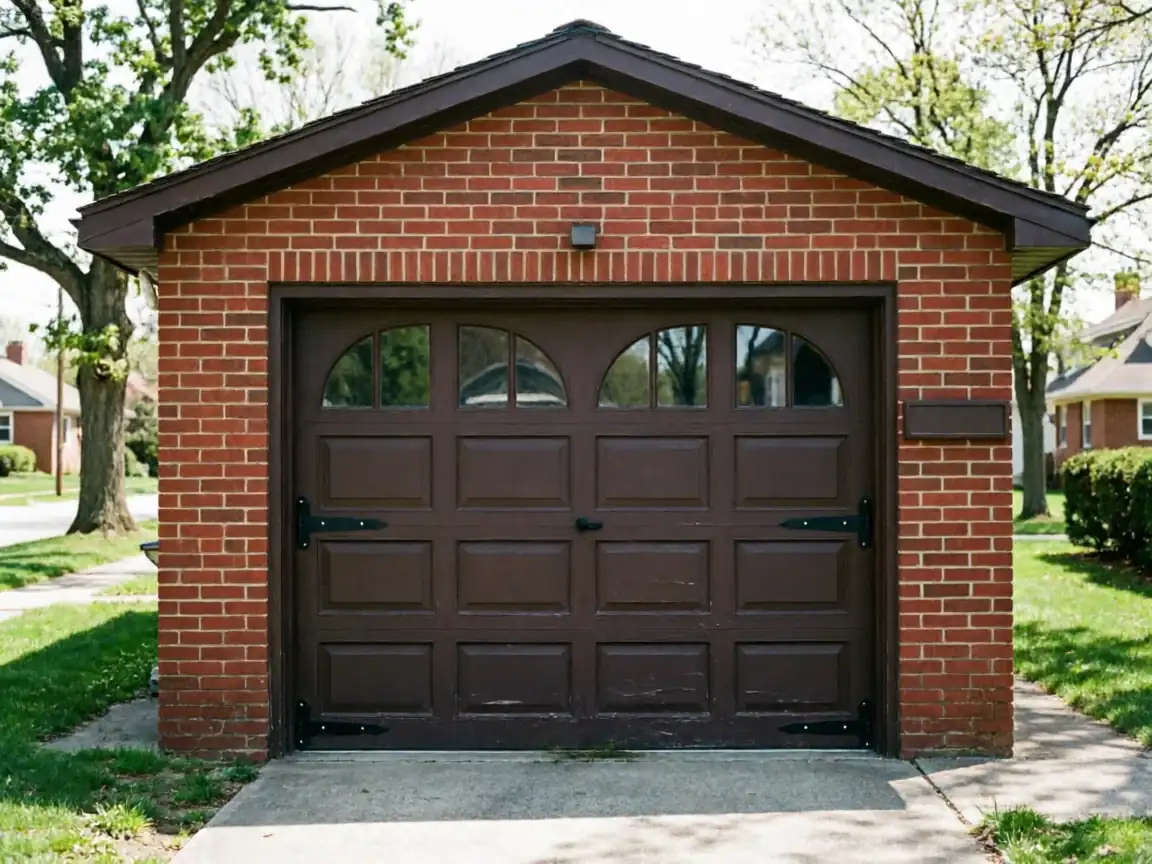
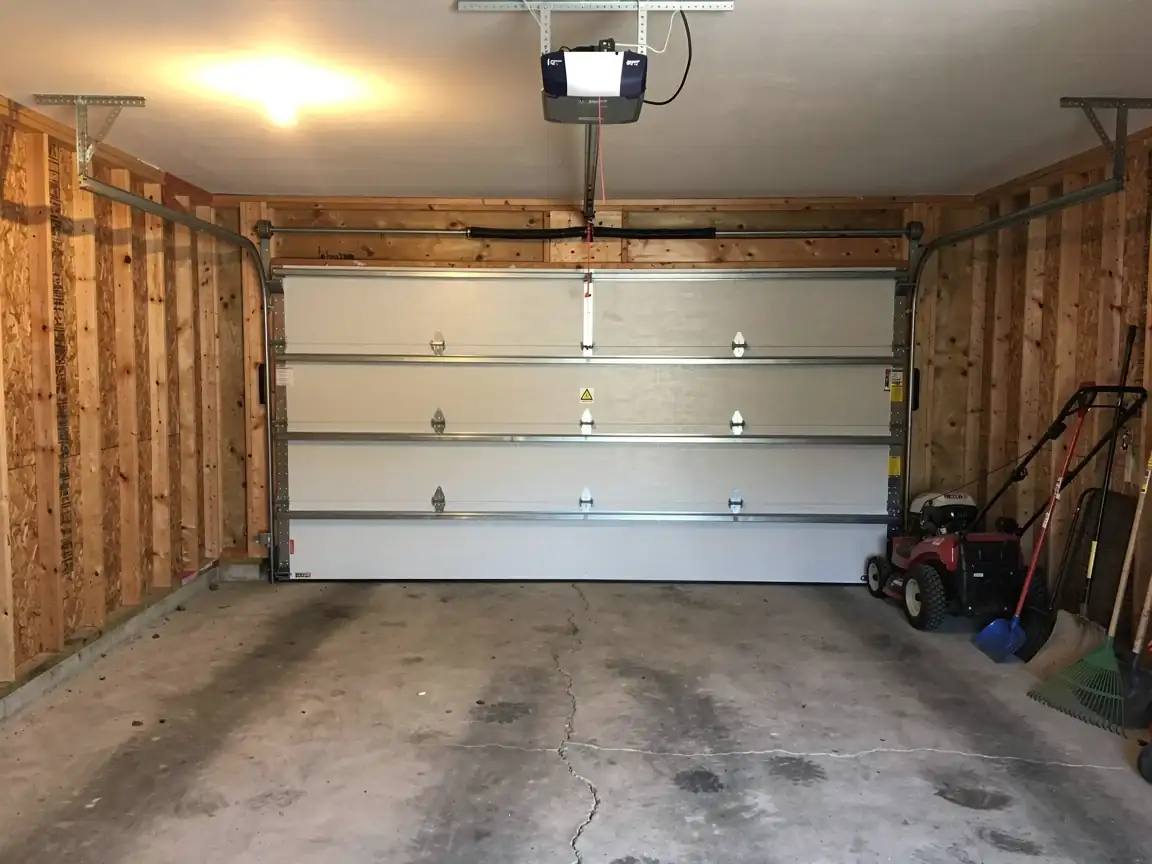
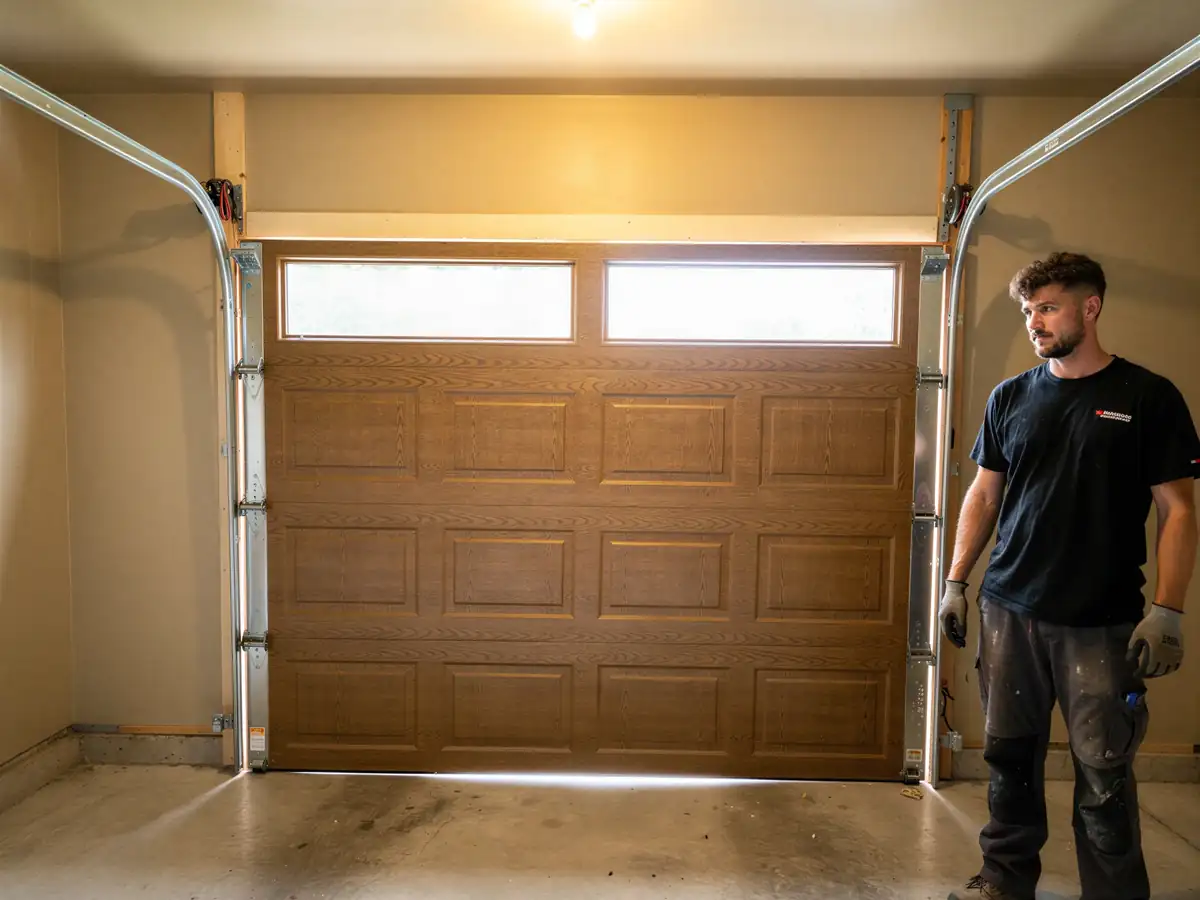
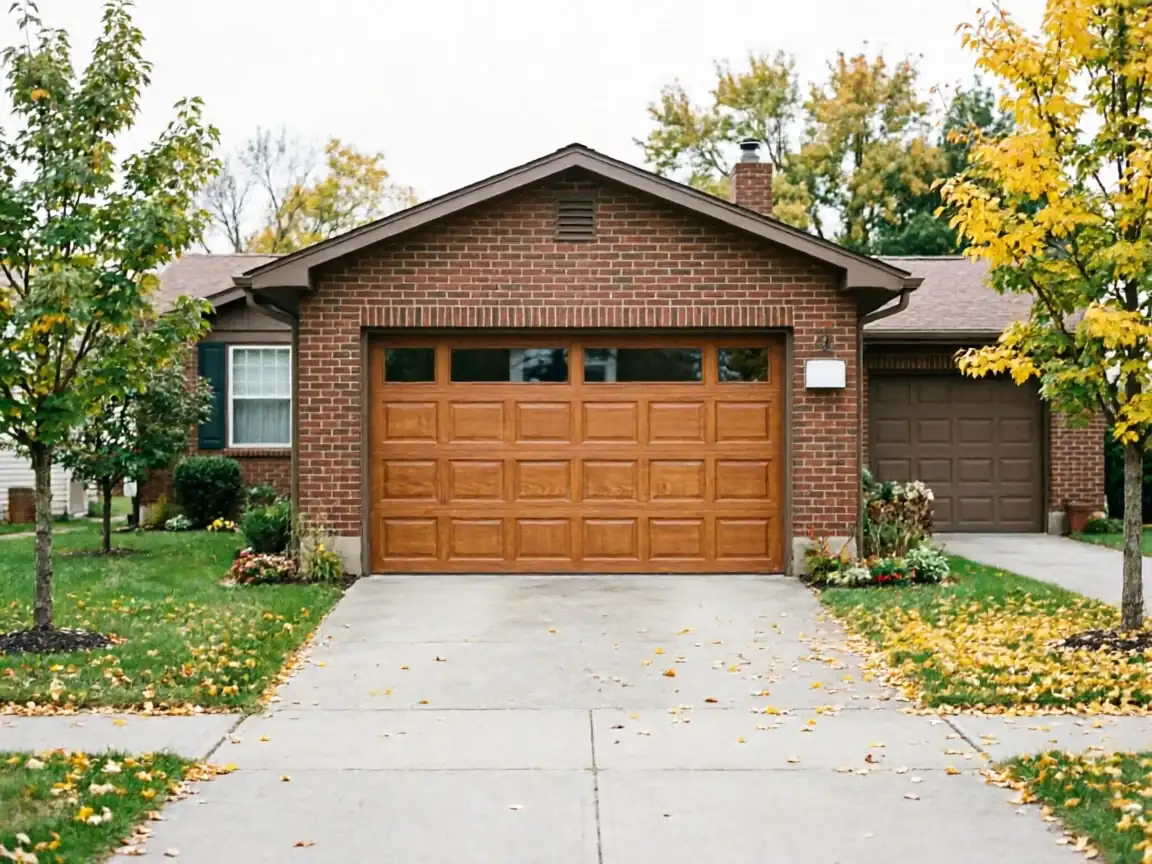
Start with the door itself. Robbinsdale's median home dates to around 1957, a good two decades older than the 1980 median across the wider Brooklyn Park service area. That means a lot of single-car openings - 8 feet wide, sometimes narrower - fitted with steel or wood sectional doors hung on track that was built to a narrower radius than what gets installed today. The rollers are often plain steel, the hinges u-bar style, and none of it matches current hardware dimensions without some fitting.
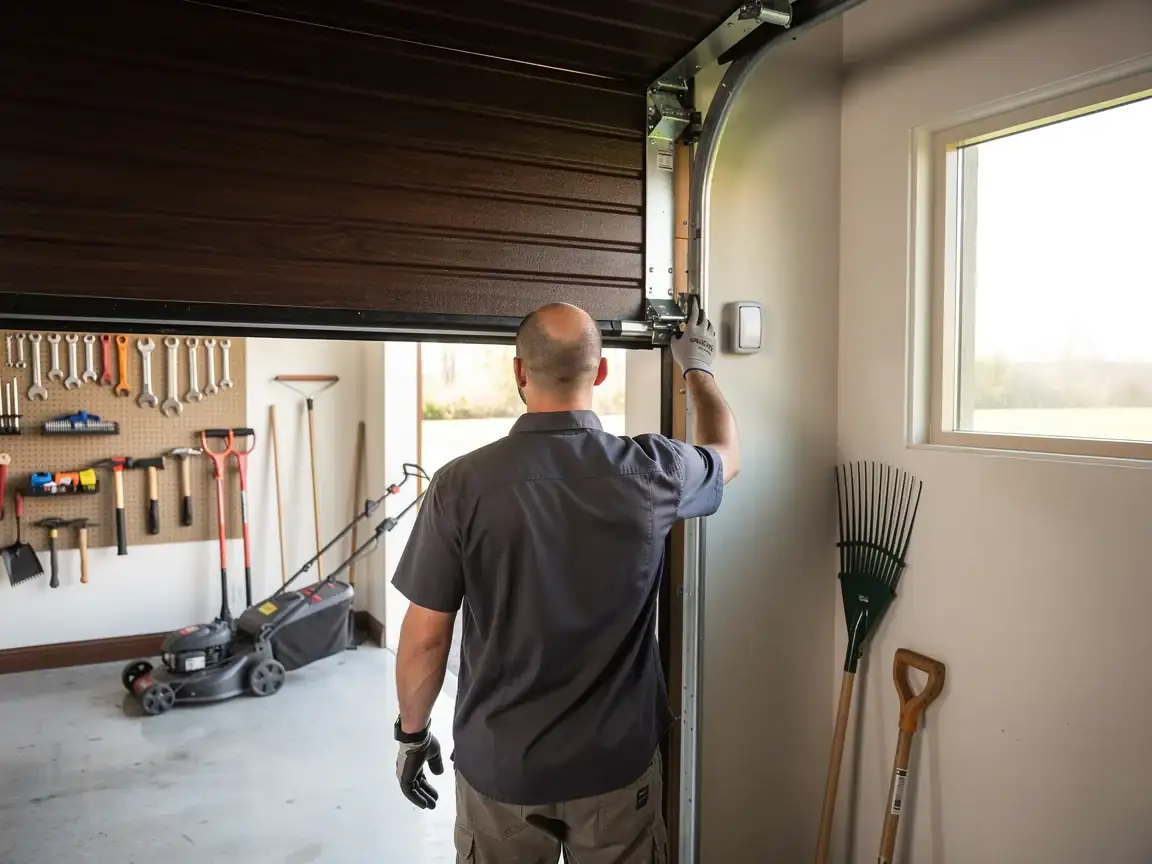
Off-track on a door like this usually comes from one of two places: a bent section of rail from a bump or a slammed opener, or a roller that's worn its groove down until it slips the lip of the track on one side. Once one panel jumps the rail, the door racks out of square and binds, and the opener will keep trying to force it until something else gives - a cable, a hinge, sometimes the panel itself.
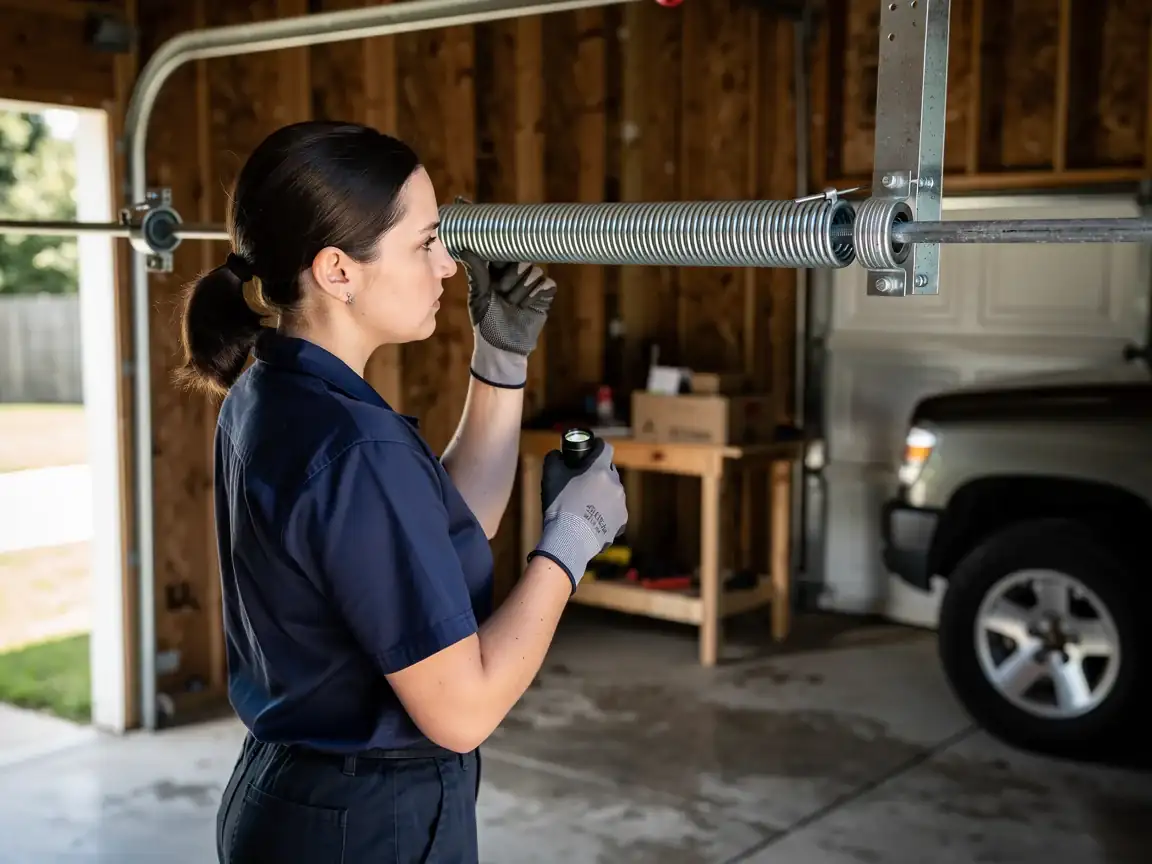
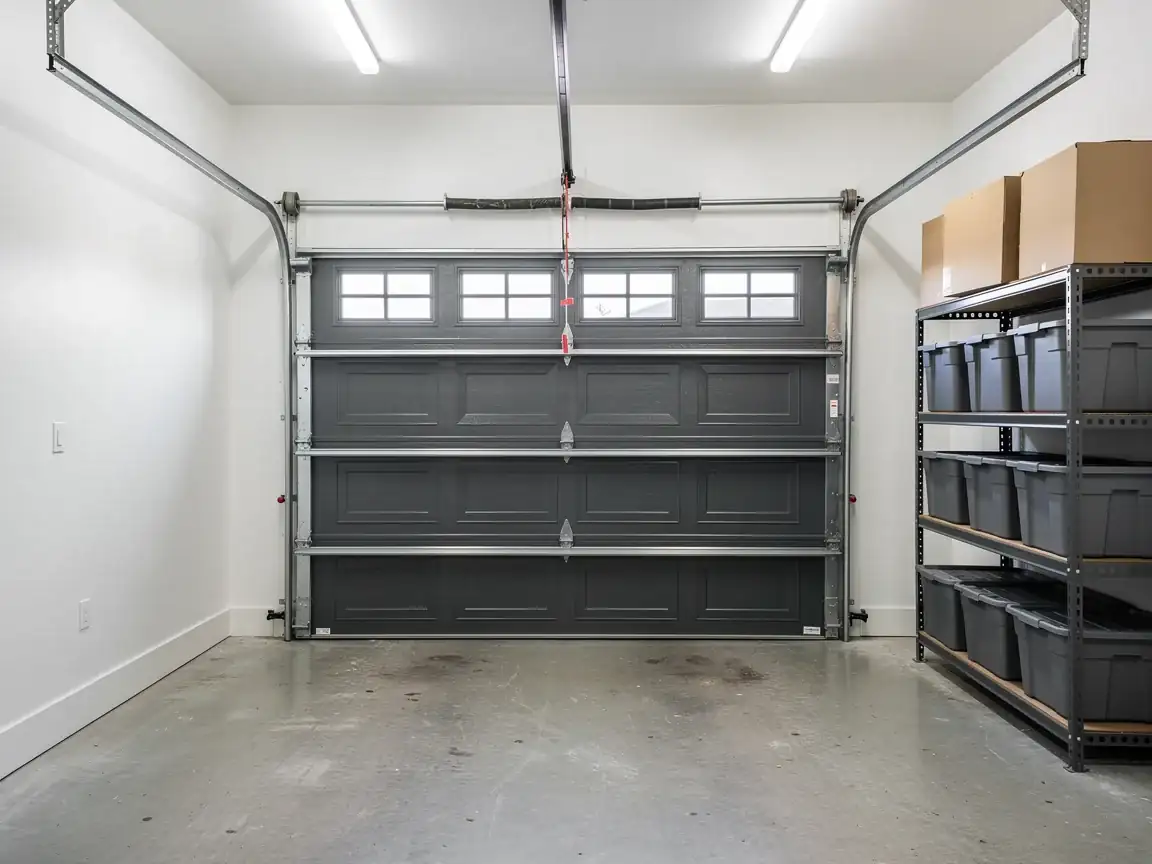
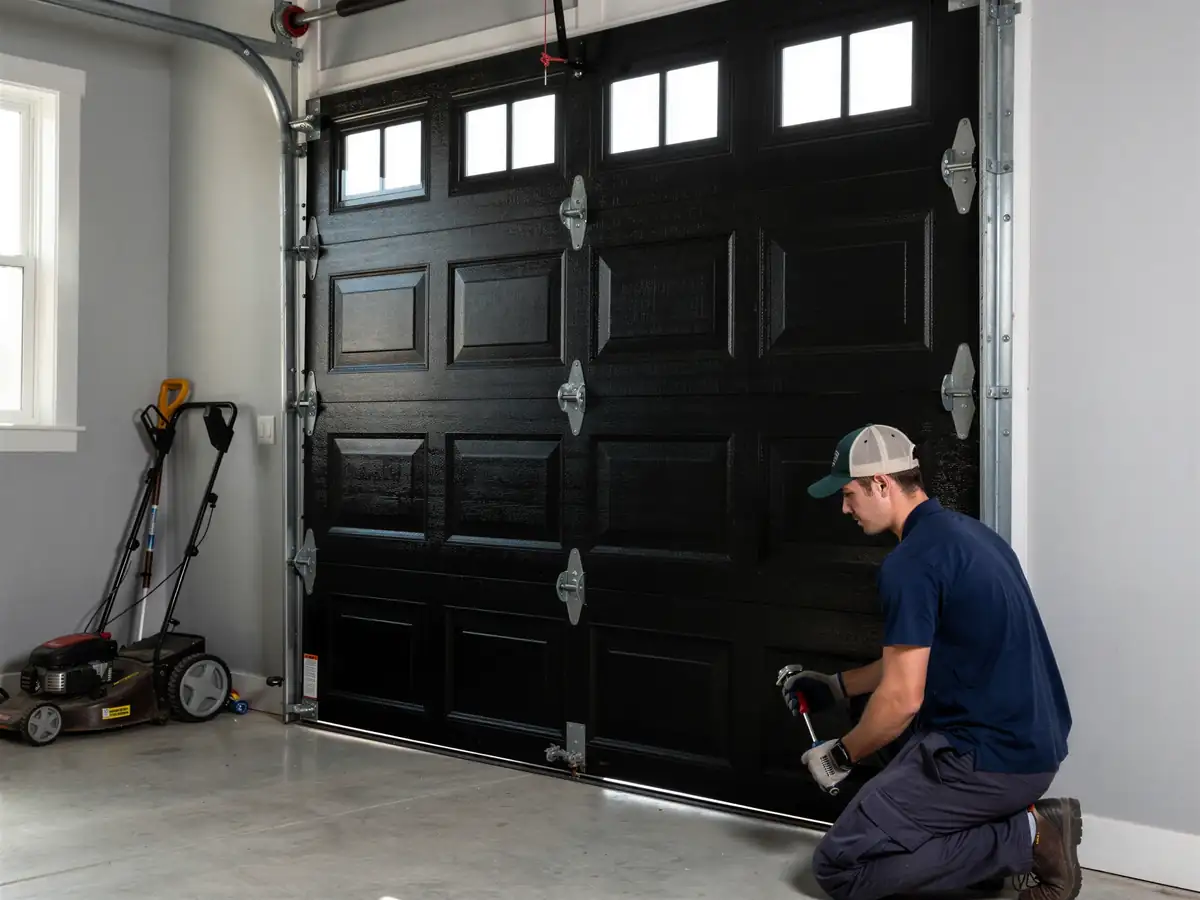
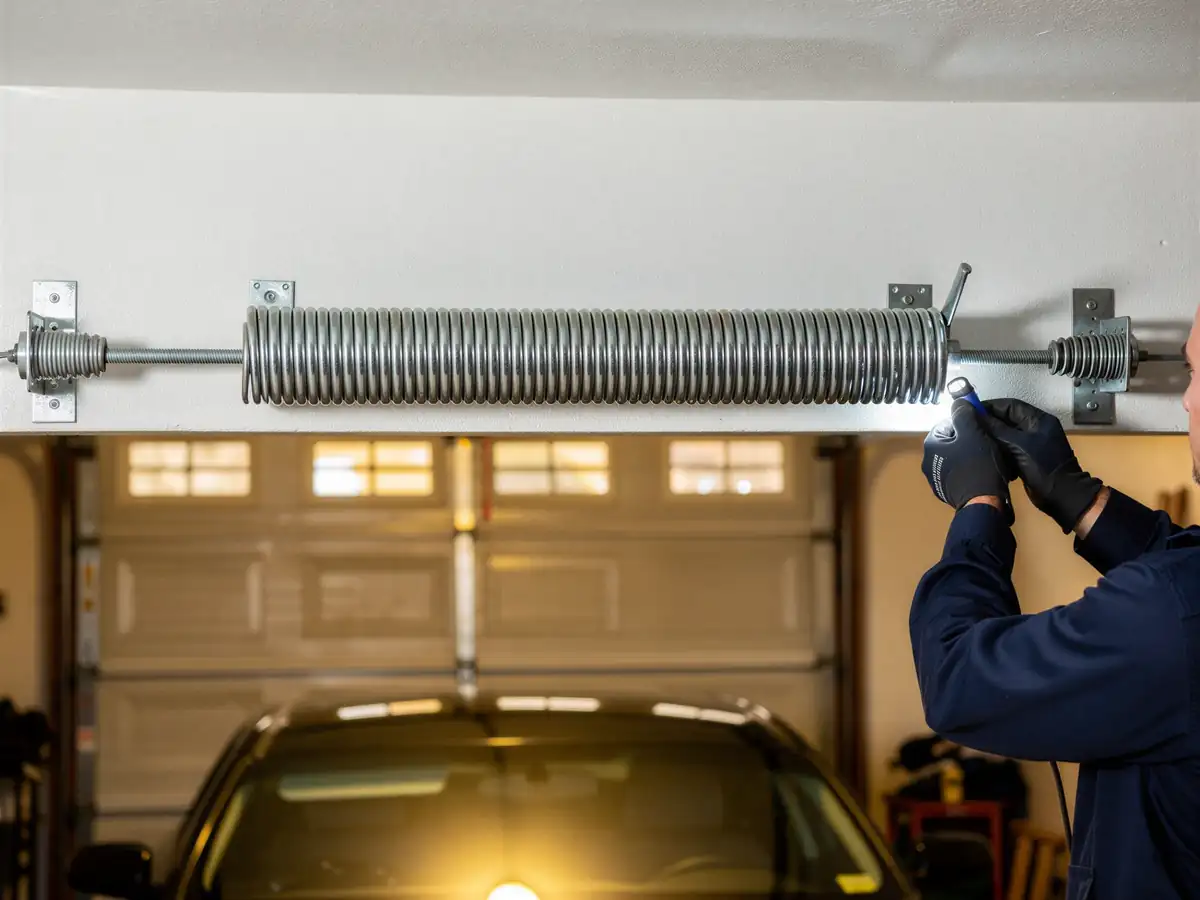
The fix is straightening or swapping the bent run of track, replacing the worn rollers and hinges, and re-hanging the door square before checking spring tension, since a door that's been fighting its track for a while often has a spring that's been working harder than it should. We cover this as part of regular garage door service for Robbinsdale.
The Cost of This Job
Robbinsdale's median household income runs $84,719
Noticeably below the $110,833 average across the broader service area. That gap matters here because track and hardware for a door this old isn't always a straight swap - matching width and radius to 1957-era rail sometimes means more labor than a same-day part change, not more expensive parts necessarily, just more fitting time.
We won't quote a number sight unseen
What drives the cost up on an off-track call is usually how far the panel racked before anyone noticed - a door caught early is a roller and hinge job, a door run on the opener for a week after it jumped can mean a bent panel or a stripped track bracket, and that's a different bill. What keeps it down is catching the symptom (a door that scrapes or shudders a few inches up) before it fully leaves the rail. We'll walk the door with you and tell you straight which category yours is in before any work starts.
Doing It Yourself
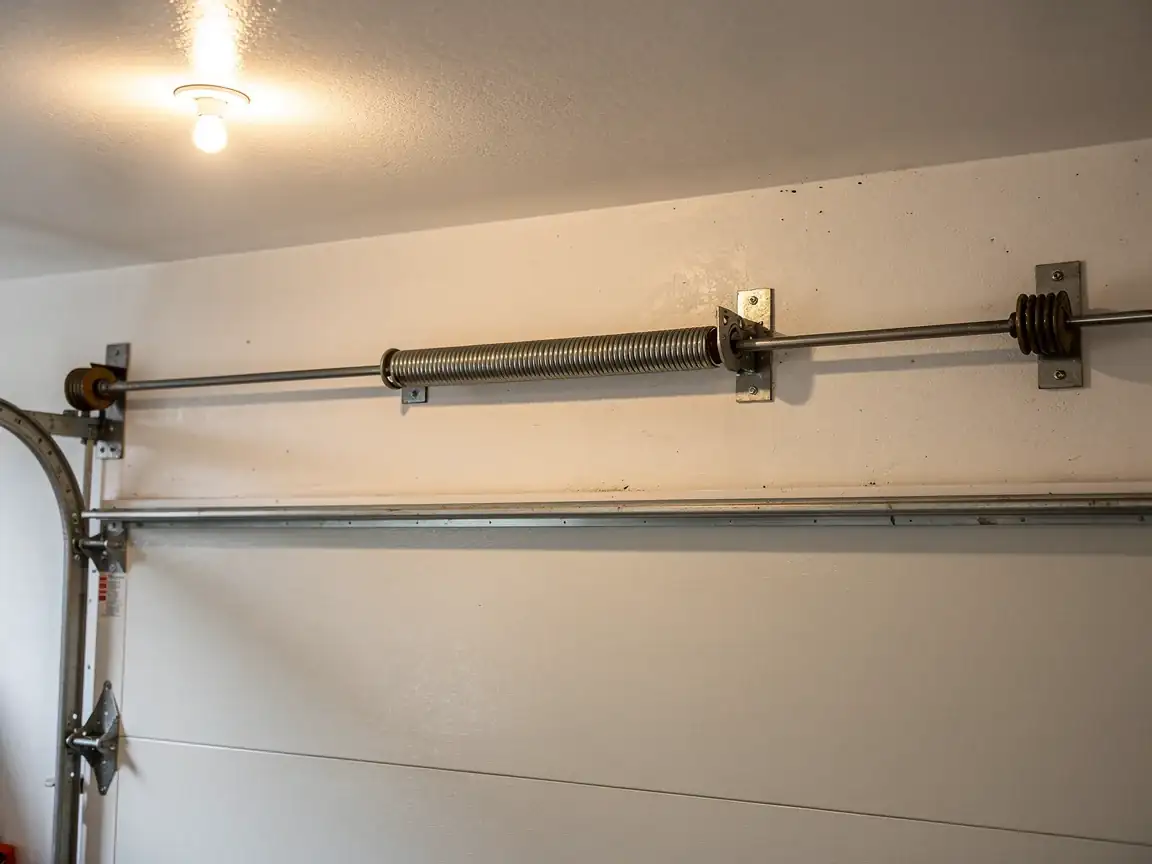
A door that's jumped its track is under spring tension the whole time it's hanging there, even if it looks still. On a wood sectional door from this era, that tension is carrying real weight - these are heavier doors than a lot of current steel builds, and a spring that lets go while someone's hands are on the track is not a minor mistake.
If the door is only slightly off - a roller barely riding the edge of the rail, door still closing - you can sometimes guide it back by hand with the opener disconnected and the door held in place, nothing more. That's the limit of what's reasonable without training. Anything past that - a hinge torn loose, a panel visibly racked, a cable hanging slack - needs someone who does this regularly, because forcing a heavy wood door back onto bent rail by hand is how people get hurt or turn a roller job into a full panel replacement. We'd rather tell you to leave it alone than have you call us after it's worse.
Where This Job Goes Sideways
Minnesota's cold runs hard enough that steel track gets brittle and rollers can pack with ice in the groove, and on a door with original 1957 hardware that's already thinner-gauge than modern rail, winter cold turns a minor misalignment into a full jump a lot faster. A door that's been quietly rubbing track all fall can go off completely on the first hard freeze.
The other way this goes sideways: the opener. If a door jumps track and the opener isn't shut off right away, it keeps pulling against a rail that's no longer guiding the panel straight. That's when a simple re-track turns into a bent bracket, a stripped gear, or a cable that's jumped its drum. On these older single-car doors specifically, the panels are also heavier per square foot than most current steel doors, so a rack-out puts more strain on the remaining good hinges than it would on a lighter door. The honest fix at that point is often full track replacement rather than straightening the old rail back into shape - bent steel that's been forced back once rarely holds a second time.
How Long You Are Without the Door
We run this job from Brooklyn Park, about 6 miles out
So there's no branch sitting in Robbinsdale and no promise of a set arrival window here - the drive is a real part of the math on timing, not a formality. Once we're on site, most off-track repairs on these doors are a same-visit fix: re-track, roller and hinge swap, spring check, done in one trip.
- 6 miles
Where it stretches out is parts
If the track on a 1957-era door needs a section that isn't a stock width, or a panel's cracked and needs matching, that part may need to be ordered rather than pulled off the truck, and that's a day or two you're working around a door that's either propped shut or taped off from the opener. In the meantime, the safest move is disconnecting the opener and securing the door by hand rather than trying to run it through the motor - that's generally true no matter what rail or hardware you've got, and it's the one piece of advice worth more than our drive time. For the general repair call before it's narrowed down to off-track specifically, see off-track garage door repair from Brooklyn Park.